



We’ve certainly been hearing a lot lately about tiny electronic devices that can do things such as delivering medication after being implanted in the body, measuring structural stress upon being attached to a bridge, or monitoring pollution after being placed in the environment. In all of these cases, the device has to be retrieved once it’s served its purpose, or just left in place indefinitely. Now, however, an interdisciplinary team of researchers have demonstrated “transient electronics,” which dissolve into nothing after a pre-determined amount of time.
The actual electronics are made mainly from porous silicon, with magnesium conductors. They’re encapsulated in a layer of magnesium oxide, which in turn has an outer coating of silk. All of the materials are biocompatible (they shouldn’t be rejected by the body), and are reportedly harmless once they are absorbed – in the case of implanted devices.
The amount of time that they last is determined mainly by the thickness of the encapsulating layers. The silk and magnesium begin to disintegrate as soon as they’re exposed to water, and continue to do so at a predictable rate. Once they’re gone, the electronics themselves proceed to dissolve.
One thing that the researchers haven’t developed yet is water-soluble batteries. Instead, the transient electronics need to receive power wirelessly, via nearby induction coils.
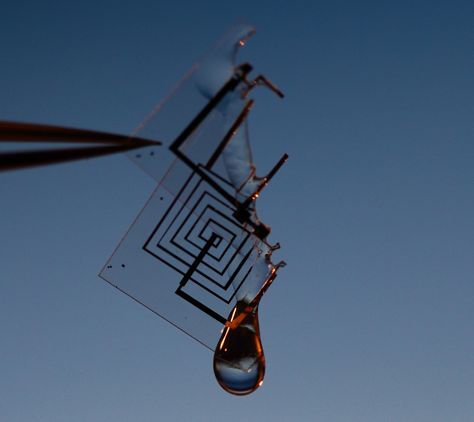
So far, the technology has been used to create dissolvable devices such as field-effect transistors, resistors, diodes, a heater and a strain sensor. In lab tests, these were placed in water and in a phosphate buffered saline liquid, which simulates the chemical conditions inside the human body. The heater, which could conceivably be used to kill bacteria, was also implanted in a mouse. In every experiment, the electronics dissolved at the expected rate.
According to the scientists, almost any type of electronic system could be created, and could be made to last anywhere from a few days to several months.
The research is being conducted by a team from Northwestern University, the University of Illinois at Urbana-Champaign and Tufts University.
Source: Northwestern University