NEW TECHNOLOGY & SCIENCE NEWS

Video of super-fast, super-smooth humanoid robot will drop your jaw
April 26, 2024
While it seems that another humanoid robot is being released every week, we've yet to see one move as quickly or with as much precision as the model just released by Chinese company, Astribot. We dare you to not be impressed.

The world’s first million dollar motorcycle?
April 26, 2024
We’ve always said that if one of these came up at the right time, it would become the world’s first million dollar motorcycle. Well, it’s gonna happen next month and … this will be worth watching.
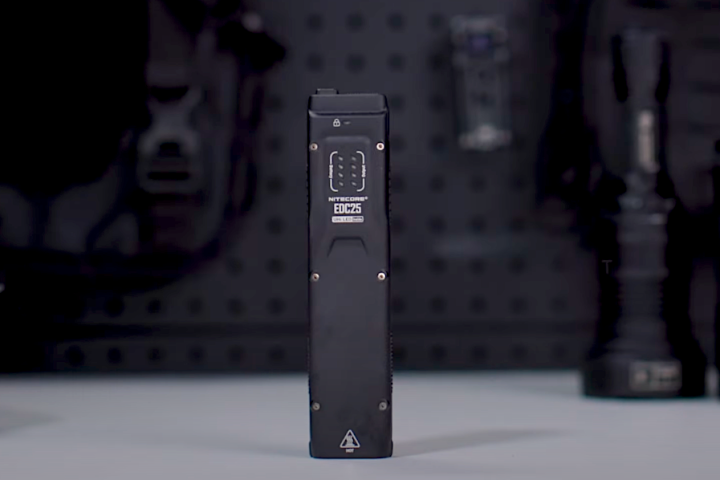
Nitecore's ultra-slim, 3,000-lumen pocket torch flattens EDC
April 26, 2024
Last year, Nitecore put a new emphasis on "flat light" with its EDC27. After a little electronics tinkering, it's bested itself with the EDC25, a slightly lighter flashlight that fires out 3,000 lumens with more throw, intensity and overall runtime.
Top Stories



Latest News
-
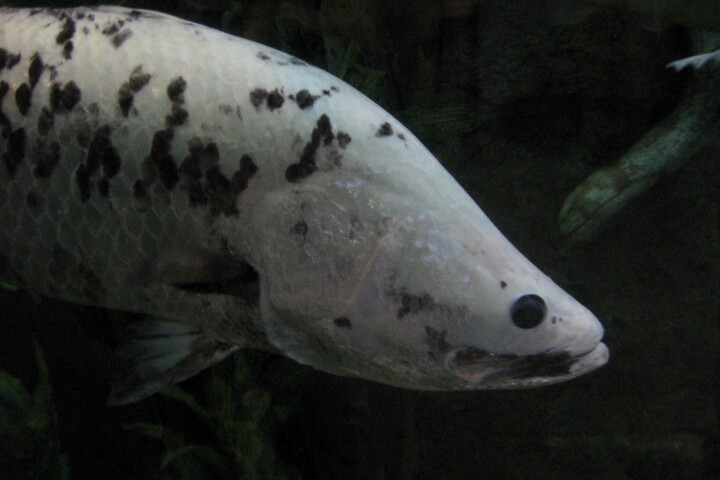 April 26, 2024Fish farming may be getting much more eco-friendly, courtesy of soybean processing wastewater. Microbes in the liquid have been used to produce proteins that could replace the fishmeal which is currently fed to farmed fish.
 -
 April 26, 2024The rapid progress of humanoid robot development is nothing short of astounding. Less than 12 months after introducing its 6th-gen general-purpose humanoid, Canada's Sanctuary AI has pulled back the curtains on the next iteration of Phoenix.
 -
 April 26, 2024The Pingora tiny house features a compact interior with an "upside-down" layout that positions the bedroom downstairs and the living room upstairs. It also has a relatively affordable price tag of $89,200.
 -
 April 26, 2024One of the most stunning concept cars the world has ever seen was shown for the first time at Auto Shanghai this week. The MG EXE181 concept electric hypercar boasts one of the best drag coefficients ever seen in any registerable, road-going vehicle.
 -
 April 26, 2024Many asteroids can be traced back to their parent body – the planet or moon they broke off from. But for the first time, scientists now claim to have traced the origins of an asteroid back to the specific crater it was birthed from.
 -
 April 26, 2024Cow’s milk contains nanoparticles that can be used to deliver RNA therapy orally, say researchers. With such drugs currently only administrable by injection, the discovery opens the door to cheaper, more accessible treatments for a range of diseases.
 -
 April 26, 2024TL;DR: OneAir offers lifetime subscriptions with Premium featuring economy deals and mistake fares for only $39.97 (reg. $290), while for $79.97 (reg. $790) Elite unlocks business, first-class options, and personalized flight planning.
 -
 April 25, 2024Adding rat stem cells to a mouse embryo resulted in a ‘hybrid brain’ in which the rat cells stepped in to restore function when the mouse’s sense of smell was removed. The new research represents a step forward in regenerative medicine.
 -
 April 25, 2024Airbus Helicopters has flown its high-speed concept copter, which dashes 50% faster than other commercial copters, for the first time. The 249-mph (216-kt, 400-km/h) Racer demonstrator is not only fast, but consumes up to 25% less fuel.
 -
 April 25, 2024Last August, CATL presented the Shenxing battery, an LFP pack capable of adding 400 km of range in 10 minutes. This year, the company has rolled the tech into the Shenxing Plus, which combines four-figure range and even faster charging rates.
Load More