
Wheelchairs
-
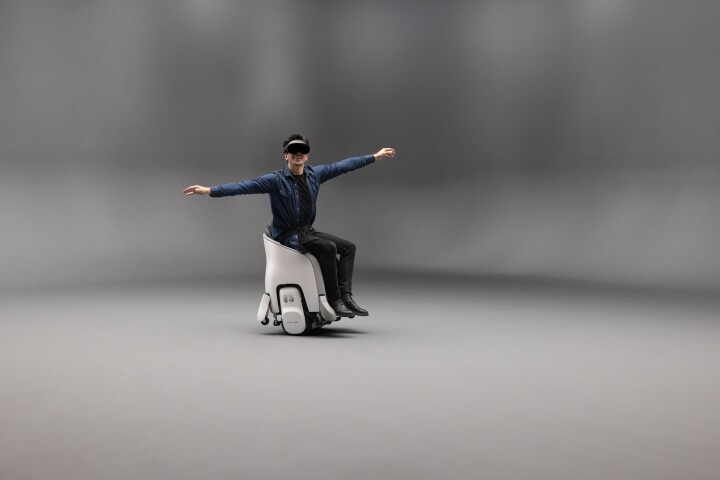 Honda has found a new application for its sit-down Segway for lazy shoppers. The Uni-One is being merged with VR goggles for "a first-of-its-kind extended reality experience that merges the joy of mobility with virtual reality adventures."
 -
 For many wheelchair users, one of the biggest problems with using a chair is not being able to stand as tall as other people. The Kim-e wheelchair was designed with that fact in mind, as it raises its user to an upright stance in just a few seconds.
 -
 Runners have treadmills for stationary indoor training, while cyclists have rollers and rowers have rowing machines, but … what is there for wheelchair users? Well, it turns out that they can utilize a li'l something called the Wheely-X.
 -
 For people such as Gary Lynn, cerebral palsy makes it nearly impossible to perform tasks like getting a sip of water without human assistance. He can now get those sips on his own, however, thanks to a student-designed device known as the RoboCup.
 -
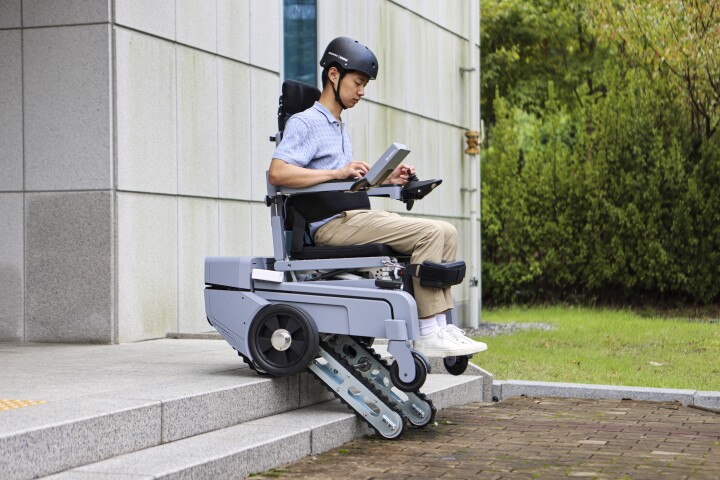 Most powered wheelchairs have at least two problems: they can't climb stairs, and the user has to remain in a single seated position. An experimental new robotic wheelchair, however, addresses both shortcomings.
 -
 When it comes to air travel, wheelchair users definitely face some challenges. That's where the Revolve Air wheelchair comes in, as it can be folded up – wheels and all – to qualify as carry-on baggage.
 -
 For wheelchair users, air travel can be a cumbersome and frustrating experience. That's where a new type of airliner seat is designed to come in, as it allows passengers to stay in their own wheelchair throughout the flight.
 -
 The ultimate in assistive mobility, Scewo’s Bro is the only self-balancing wheelchair able to rise up and climb stairs. This two-wheeled personal electric vehicle is delightfully intuitive to maneuver, as I found out first-hand at this year’s CES.
 -
 Garrett Brown invented the Steadicam, a tool that revolutionized the field of film production. His latest creation is a device known as the Zeen, which helps mobility-challenged users not only to get around, but also to stand up and sit down.
 -
 Although there are various systems that detect quadriplegics' head movements, most such setups are limited to the control of wheelchairs. Such is not the case, however, with the MagTrack system.
 -
 When wheelchair users are traversing loose or slippery surfaces (such as snow or wet sidewalks), it would help if their chairs had knobby, grippy tires. Well, that's what the reTyre Traction system is claimed to give them, within a matter of seconds.
 -
 Back in 2018, we heard about a full-size foldable wheel known as the Revolve. Its inventor, Andrea Mocellin, has now incorporated the technology into a wheelchair that folds down to fit inside an airliner's overhead baggage area.
Load More