
Velomobile
-
 Pedal-powered "velocars" certainly are fun, eco-friendly and even practical, but they can also be tippy. Canadian builder Wally Swarchuk has addressed that problem in his one-off Tilt4orce, which uses a clever tilting system to lean into turns.
 -
 When it comes to electric vehicles, there's definitely a gap between small, simple ebikes and larger, costlier electric cars. The new-and-improved Veemo velomobile is intended to firmly fill that niche – and I recently got to try it out for myself.
 -
 Within just the past week, we've told you about the VM45, Quadvelo and Velocity electric-assist quadcycles. If you'd like something a little less pedal-car-like, however, you might want to check out the Indimob e-trike.
 -
 While many folks are firmly in favor of forgoing a big gas-guzzling car, they still want something more capable and substantial than a plain ol' ebike. The four-wheeled Quadvelo was designed to nicely fill that niche.
 -
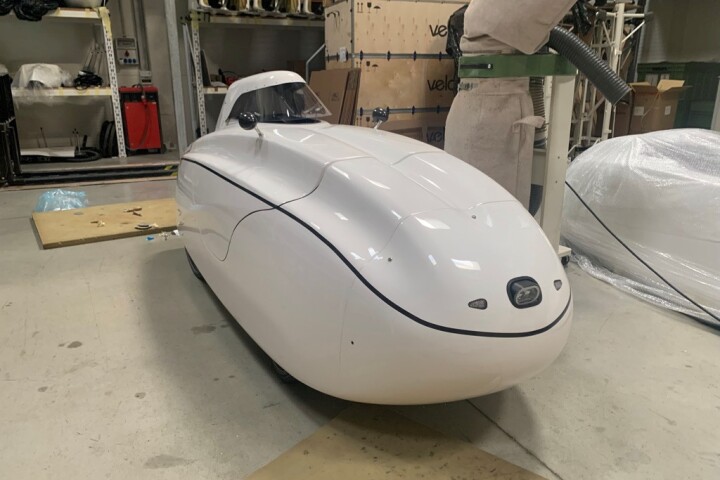 Although cargo ebikes are often referred to as replacements for cars, they usually can't match an automobile's urban cruising speed. The VM45 four-wheeled velomobile comes very close however, with a top electric-assist speed of 45 km/h (28 mph).
 -
 Back in 2017 we told you about a prototype electric-assist velomobile known as the Iris eTrike. Its designer has now provided us with images of the planned production version of the vehicle … and it's breathtaking.
 -
 It was just this week that we told you about the Kinner, a rather attractive Finnish velomobile. Well, another head-turner has now come to our attention – this one is called the Northern Light 428, and it looks like a human-powered rocket.
 -
 We've told you about quite a few velomobiles over the years, some more polished and professional-looking than others. The two-seater four-wheeled Kinner is certainly one of the most exquisite we've seen so far.
 -
 It was four years ago that we first heard about the Electrom, a one-of-a-kind two-wheeled pedal-electric vehicle with a unique dual drivetrain. Well, you will soon have the chance to buy one for yourself … although some assembly will be required.
 -
 Although velomobiles are known for being faster than bicycles, some of the more "practical" models can be rather ungainly. That doesn't apply to the Snoek, though, which is built first and foremost for speed.
 -
 Ebikes may indeed require less pedalling effort than regular bicycles, but most still offer little in the way of cargo capacity or protection from the elements. The CityQ is designed to provide both, along with four-wheeled stability.
 -
 Although commuting by bicycle certainly is good for one's self and the environment, there are days when it's just too wet or too cold. It's on just such days, though, that the four-wheeled, enclosed, motor-assisted DryCycle is intended to shine.
Load More