
Underwater
-
 Penguins are fast, fantastic swimmers, so why not make an underwater robot inspired by them? That's just what German underwater tech company EvoLogics has done, with its new-and-improved Quadroin AUV (autonomous underwater vehicle).
 -
 Because GPS doesn't work underwater, divers usually can't track their real-time position on a digital map. The new Diver Navigation System (DNS) gets around that problem, however, using both floating and wearable acoustic transponders.
 -
 A new underwater robot can swim through the water with fins, and walk or crawl along the bottom when necessary. These capabilities could really give it a leg up – pun fully intended – at outperforming its traditional thruster-powered counterparts.
 -
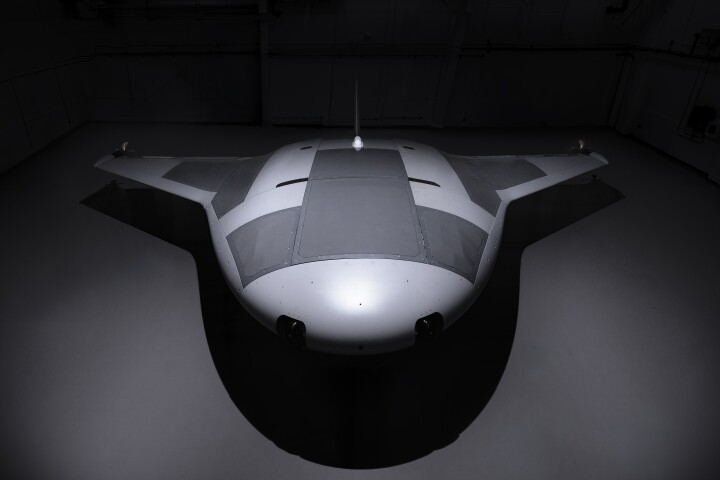 Northrop Grumman introduces its first completed prototype Manta Ray Uncrewed Underwater Vehicle that it is developing for DARPA. The extra-large submarine glider is designed to carry out long-range undersea missions without human assistance.
 -
 Unlike most other ROVs, the Boxfish Luna is designed specifically for underwater filmmaking. It records video at a resolution of 8K/30fps and can descend as deep as 1,000 m (3,281 ft) – so all you giant squids out there, get ready for your close-up.
 -
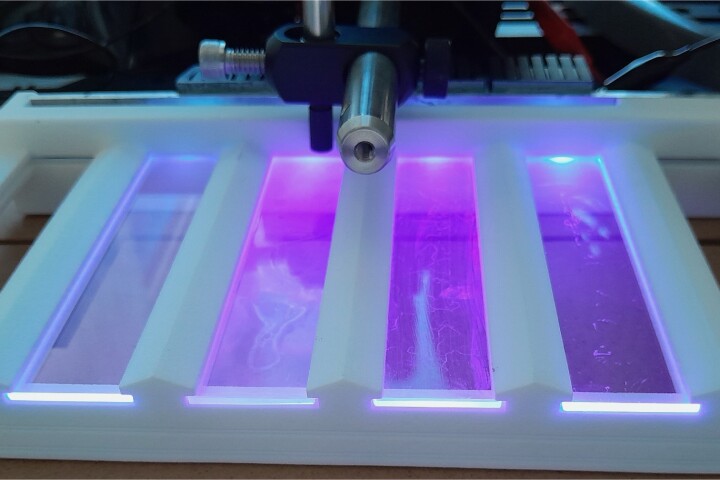 Scientists are using UV-emitting glass to keep problematic undersea biofilms at bay. The technology may find use in applications such as underwater viewing ports and camera lenses, and perhaps even one day the hulls of ships.
 -
 The uOne underwater robot may soon be taking on risky, labor-intensive tasks currently performed by human scuba divers. It boasts a unique combination of traits from two different types of undersea bots.
 -
 An experimental new undersea robot shows great promise for use in the upkeep of offshore renewable energy platforms. Because it has the ability to climb vertical underwater surfaces – and paint them – it's known as the Crawfish.
 -
 Minesto's fully operational Dragon 12 looks like some sort of futuristic military drone – but it behaves remarkably like a kite underwater. It uses lift generated by tidal flows to fly patterns faster than the currents, harvesting renewable energy.
 -
 Canadian firm Deep Trekker is probably best known for its Revolution, a top-of-the-line underwater ROV (remotely operated vehicle). The company is now offering a much smaller, less pricey yet still very capable model, however, called the Photon.
 -
 Although most smartphones are now waterproof, you definitely shouldn't take them snorkeling without an underwater housing. The Universal Lite is one such device that fits a wide range of phones, allowing them to serve as underwater cameras.
 -
 Space agencies often put space-suited astronauts in swimming pools, so they can learn to perform tasks in an outer-space-like environment. The UHAB is intended to take things further, by simulating the habitats in which astronauts may someday live.
Load More