
Ultrasound
-
 A simple little sticker could soon be saving the lives of patients recovering from gastrointestinal surgery. The clever device is designed to detect the presence of leaking digestive fluids sooner than otherwise possible.
 -
 Scientists have boosted the motility of slow sperm by blasting the cells with 40-MHz ultrasound waves to induce movement. Capturing the technique's impact on individual sperm cells, the study opens the door to new non-invasive fertility treatments.
 -
 In order to keep surgeries minimally invasive, it would be great if implants could be injected into the body in liquid form, then solidified once in place. Well, a new ultrasound-based 3D printing process may one day make that very thing possible.
 -
 Researchers have developed a bubble microrobot capable of being guided around the tiny complex blood vessels of the brain using ultrasound. The ‘microvehicle’ holds potential as a means of delivering drugs to treat brain cancer and stroke.
 -
 MIT researchers have designed a wearable ultrasound patch that can image the bladder as well as a conventional ultrasound does, without the need for cold gel or an operator. The device could also be adapted to image other internal organs.
 -
 Earlier this year, we introduced solid-state micro-speaker technology from California's xMEMS Labs that's designed to replace coil-based drivers in wearable audio products. Now the company is aiming for satisfying low end with the Cypress speaker.
 -
 Smartwatches that can monitor a wearer's heart rate use light pulses to detect changes in blood volume. But research from Google proposes using ultrasound from an earphone's speaker driver to look for tiny deviations in the surface of the ear canal.
 -
 For some time now, industrial ultrasonic knives have been utilized for precision cutting tasks in places like laboratories and factories. The 369Sonic, however, is claimed to be the first such device designed specifically for use in home kitchens.
 -
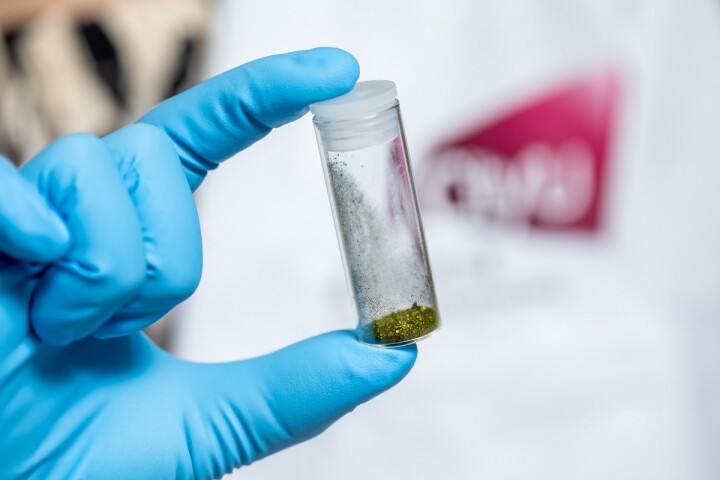 When fighting cancer, chemotherapy is still a bit of a blunt instrument. By combining it with soundwaves, however, researchers have found a way to turn it into more of a scalpel than a club, sparing damage to nearby tissue and the body as a whole.
 -
 Two studies have used focused ultrasound to open up the blood-brain barrier, generating a positive immune response and allowing for the admission of gene-editing technology. The technique could be a non-invasive way of treating neurodegenerative diseases.
 -
 A study has found that targeting specific brain areas with ultrasound causes functional changes that last up to an hour. It paves the way for developing non-invasive methods of treating mental health conditions such as depression and anxiety.
 -
 As climate change, market demand and other variables impact vino supply and quality, winemakers have turned to using ultrasound on grapes to get a better drop. Now, for the first time, scientists have studied its effects on the increasingly popular rosé.
Load More