
Supercomputer
-
 If you think things have happened fast in the last year, hold on: Cerebras Systems present the Wafer Scale Engine 3 (WSE-3) chip, which powers the Cerebras CS-3 AI supercomputer with a peak performance of 125 petaflops. It’s scalable to an insane degree.
 -
 Australian researchers are putting together a supercomputer designed to emulate the world's most efficient learning machine – a neuromorphic monster capable of the same estimated 228 trillion synaptic operations per second that human brains handle.
 -
 While AI systems amaze and alarm the world in equal measure, they’re about to get even more powerful. Nvidia has announced a new class of supercomputer that will train the next generation of AI models, and put us all out of work far faster.
 -
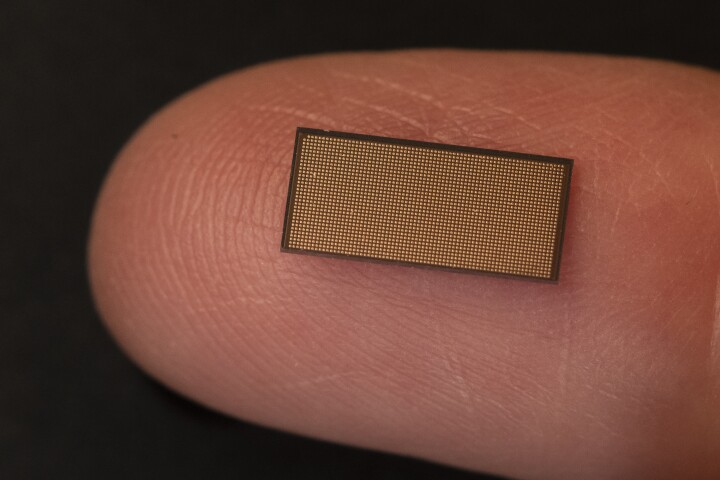 Computers destroy humans at chess, but there's not a single one that could go into a house and feed the dog. Intel's research-grade Loihi 2 neuromorphic chips are working on it though, drawing inspiration from nature's greatest necktop supercomputer.
 -
 A quantum processor, developed by German-Australian start-up Quantum Brilliance, runs at room temperature, and will now work in tandem with classical supercomputers at the Pawsey Supercomputing Research Centre.
 -
 The US Department of Energy's Frontier supercomputer has been crowned world's fastest at the International Supercomputing Conference 2022 in Hamburg, Germany, and is the first system to enter the exascale era of computing.
 -
 Meta has unveiled the AI Research SuperCluster (RSC), a new supercomputer that’s among the fastest in the world. And it’ll only get faster – by the end of the year it should rank number one, with computing power on the exascale.
 -
 Teams tasked with managing tsunami risks may soon have a powerful new tool at their disposal, in the form of a new AI model that enables near real-time predictions of how these events will shape the flooding of coastal areas.
 -
 Nvidia has announced that it has invested nearly US$52 million to build the UK's most powerful supercomputer, which is expected to be operational by the end of 2020, and will be made available to healthcare researchers and academics.
 -
 Britain has sent two satellites smaller than a microwave into space that are the smartest produced by the UK. Four Glasgow-built Spire nanosatellites lifted off atop a Soyuz launcher, two of which are equipped with supercomputers for tracking shipping.
 -
 The world’s most powerful supercomputer has just fired up. A newcomer named Fugaku has nabbed the number one spot in the Top500 list of supercomputers, surpassing Summit, the reigning champion of the past few years.
 -
 Google has announced that it has achieved “quantum supremacy,” the point where a quantum computer successfully performs an operation considered impossible for traditional computers. But rival IBM disagrees that this has been achieved at all.
Load More