
Sunlight
-
 Thanks to a recent discovery regarding marine algae, scientists have developed crop plants that absorb a fuller spectrum of sunlight, resulting in better growth. The finding could also lead to increased production of biofuels.
 -
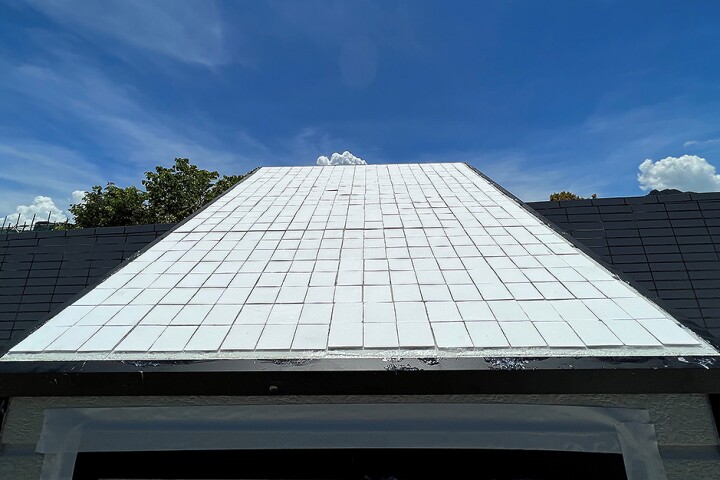 Scientists have demonstrated a new ultra-white ceramic material that drastically cools buildings, with record-high sunlight and heat reflectivity. The beetle-inspired material gets its ability from its nanostructure and should be easy to mass produce.
 -
 Scientists have discovered that the Sun produces higher energy light than was thought possible. An unusual type of telescope detected gamma rays with energies of over 1 tera electron volt, at least five times more energetic than previously known.
 -
 If you leave a clear bottle of water in the sunlight, the UV rays will kill any microbes in that water, making it drinkable … but it has to sit in the sun for at least six hours. A new sunlight-activated powder, however, does the job in one minute.
 -
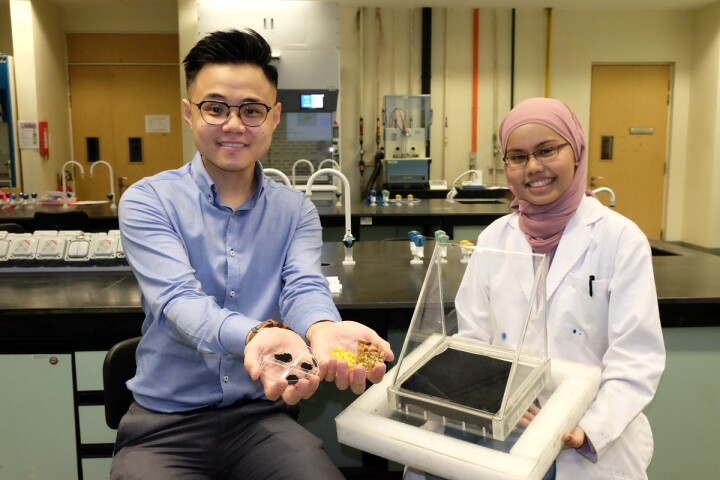 Solar stills provide a clever and simple means of purifying dirty or salty water, but they work at a rather slow rate. A new material has been shown to boost their performance, and it's made from fruit waste which would otherwise be discarded.
 -
 There are already "smart" windows that can be electronically switched between either letting sunlight through or blocking it. A new multi-layered one, however, can be set to several energy-saving light filtration modes.
 -
 We've already seen systems that wirelessly transmit data via patterns of flickering light. A Saudi Arabian team has created a less energy-intensive alternative, that could use modulated sunlight in place of traditional Wi-Fi.
 -
 Finding a scratch on your car is a special kind of heartbreak, but in the future they might be gone before you even notice. Scientists in Korea have developed a coating that self-heals scratches in as little as 30 minutes when exposed to sunlight.
 -
 University of South Australia scientists have found a link between vitamin D deficiency and an increased risk of dementia and stroke. The study found that a decent proportion of cases of dementia may be prevented by boosting levels of the hormone.
 -
 It's a sad fact that many sea turtles now suffer from fibropapillomatosis, a disease in which tumors grow on various parts of the body. There may be new hope, however, as a study suggests that sunlight exposure could help afflicted turtles recover.
 -
 There are many parts of the world in which fresh water may be plentiful, but it's also full of harmful microbes. An experimental new filter is able to purify such water for drinking, and it's powered solely by sunlight.
 -
 It's possible that someday in the future, sunlight-powered robots may be able to swim across marine oil spills, soaking up the oil as they go. A tiny prototype has already been created, and it was inspired by both the steam engine and an insect.
Load More