Submarine
Anti-paparazzi lasers being fitted to the world's biggest private yacht
By Loz Blain
05:34 September 22, 2009 PDT

Chelsea football club owner Roman Abramovich rose from obscurity and successfully navigated the shady world of early Russian privatization to become one of the world's wealthiest self-made billionaires. His 40-man private army of security personnel make him one of the best-protected businessmen in the world, and when his private gigayacht the Eclipse is handed over in time for Christmas this year, it will be the largest (at a staggering 560ft) and most expensive (at US$1.2 billion) private yacht the world has ever seen. Security will be as tight as you'd expect, with missile defence and intruder detection systems - but the Eclipse's most notable feature is a privacy system that can detect the digital cameras of snooping paparazzi and blind them with laser bursts, ruining spy photos. Read More
Unmanned mini sub will prowl ports and coasts for hidden threats
06:03 July 8, 2009 PDT

It used to be that shipping was most under threat on the high seas. But now authorities warn that terrorists are targeting vessels in port or close to shore. Which is exactly why BAE Systems have launched a tiny, unmanned autonomous submarine to detect and deal with such threats: the Talisman L weighs only 50kg, has a top speed of 5 knots, and can patrol at depths of up to 100 metres for up to 12 hours. Read More
US$70,000 pedal-powered submarine for two
By Darren Quick
21:36 April 16, 2009 PDT

For most of us, the world deep below the ocean’s surface remains a place we have only had the pleasure to experience vicariously, primarily through watching nature documentaries. It's not as if we can just hop in a submarine and go take a look. Well, perhaps we can, if a Russian company's plan to market a two-seater submarine driven by pedal power to the tourist industry is successful. The new underwater vehicle (UV) from Marine Innovation Technologies (MIT) will not only be cheaper to buy and run than existing submersibles, it will be simpler to operate, requiring no special training or expertise. Read More
The solar powered submarine
23:10 November 23, 2008 PST

It's an idea we've seen applied to motoryachts, trimarans and even speedboats, but until now, using solar power as an energy source for submarines wasn't on our radar. Swiss energy company BKW has aims to make this scenario a reality with Project Goldfish, a tourist attraction planned for Lake Thun that would see a 20-30 meter long submarine carry groups of visitors on tours of the underwater landscape. Read More
Raytheon and US Navy demonstrate submarine-compatible UAS
By Kyle Sherer
17:30 October 30, 2008 PDT

Raytheon and the US Navy have demonstrated unmanned aircraft system capability for submarines. The Submarine Over the Horizon Organic Capabilities (SOTHOC) program is developing a specialized UAS designed for collection of intelligence, surveillance, and reconnaissance in a complex littoral environment. Read More
Two new recreational submarines – the luxury CQ2 and Personal Tour CQ3 submersibles
By Jack Martin
02:30 September 15, 2008 PDT

September 15, 2008 The submarine was invented several hundred years before the automobile, but it’s not surprising that it is taking a little longer to reach ubiquitous recreational usage. A bent fender is small change indeed compared to the inconvenience of Decompression Sickness, asphyxiation or perhaps being crushed to death. The risk of such perils had to be comprehensively mitigated before recreational submarines could safely come to market and the Dutch U-Boat Worx was the first to get it all right with the C-Quester one-seater CQ1 and two-seater CQ2. Now the company is set to launch a completely revamped CQ2 aimed at the SuperYacht Market and a two-, three- and four-seater CQ3 (pictured) aimed at the tourism industry. Read More
Thales UK's optronic mast: the sonar invisible periscope alternative
By Kyle Sherer
18:17 April 30, 2008 PDT

Thales UK's optronic mast is a non-hull breaching substitute for a periscope, which rapidly captures a 360 degree scan and sends the image to the console screens in a sub’s operation center. The electro-optics system provides improved surface visibility, while allowing the ship to remain hidden from sonar detection. Read More
RemoteReality 360 degree periscope camera system
By Kyle Sherer
17:09 April 14, 2008 PDT

April 15, 2008 RemoteReality has designed a submarine periscope camera system that provides an instant, omni-directional view of surrounding waters. The system, which greatly outclasses the rotating periscope in terms of situational awareness and safety, will be trialled by the US Navy will on a Los Angeles class nuclear submarine later this year. Read More
Boeing achieves milestone in unmanned underwater vehicle recovery
18:00 November 26, 2007 PST

November 27, 2007 In a first of its kind operation,
Boeing has successfully demonstrated autonomous launch and recovery of a 21" Unmanned Underwater Vehicle (UUV) from a submarine. Read More
Autonomous, self-mooring buoy system

June 26, 2007 Both military and scientific missions stand to benefit from a new rapidly-deployable and autonomous mooring buoy system developed by Florida Atlantic University (FAU) and Lockheed Martin. Capable of being launched from air or sea, the system can self-moor in various bottom types - including sand, mud or rock - to depths of between 30 and 650 feet and has applications ranging from submarine detection to the collection of meteorological and oceanographic measurements. Read More
A modern engineering masterpiece - the nuclear sub that will go 25 years without refuelling
By Loz Blain

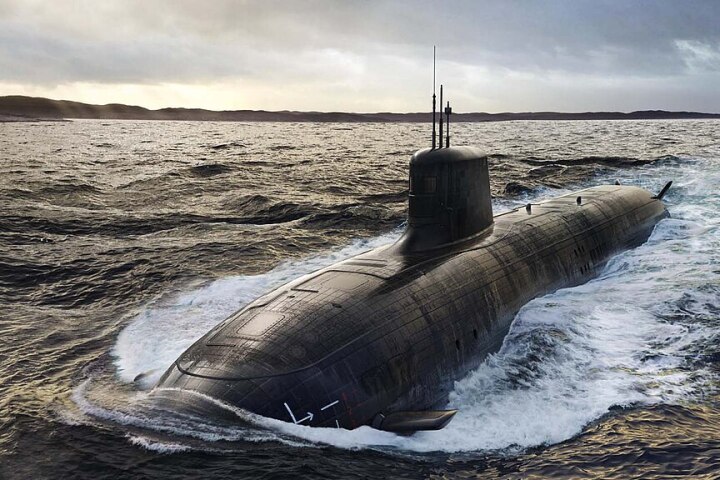
May 21, 2007 A hulking 100 metres long, the Astute is the largest, most heavily armed, stealthiest and most sophisticated submarine ever built for the Royal Navy. The massive nuclear sub, which will never need refuelling in its 25 year service life, is able to circumnavigate the globe underwater, producing its own fresh water and air for the crew - and its range is only really limited by the need for fresh food supplies. From every angle, it is an engineering masterpiece, spoken of as one of the great engineering achievements of all time and more complex than the space shuttle. Britain's Royal Navy is set to launch this new flagship in less than a month. Read More
The world’s first affordable recreational submarine
By Mike Hanlon

Yet another affordable and very compelling new water vessel has reached market. With a price in the region of an expensive sports car, the appropriately named Dutch company Uboatworx has begun producing the first affordable recreational submarine (U-Boat). Uboatworx currently builds a single seat version known as the C-Quester I with a two-seater due in June. Both C-Questers have a top speed of 3.5 mph, are safe to a depth of 50 metres and offer a dive time of 150 minutes. At just over 9 feet long, 6 feet tall and wide and weighing 1.1 tons, the submarine is small enough to trailer to the nearest boat ramp or launch from a yacht. Entry is jet fighter style through a canopy, steering is via a joystick and both the seating position and the experience are apparently quite similar to flight, though getting a license is much cheaper and less time-consuming than a pilot’s license - a three day course and an exam being the only obstacles, apart from the UKP65,000 price tag (more for the two-seater). The cabin is pressurized, a filtration system removes spent air, oxygen is added to maintain air quality and all the safety boxes appear ticked, so the C-Quester appears an out-of-the-box winner at such an affordable price. Motive force is supplied by three electric motors – so it’s a genuine plug-in electric boat which just happens to be able to operate below the surface too. Read More
Unmanned Underwater Vehicle to operate from the torpedo tubes of U.S. Navy Submarines
By Mike Hanlon

April 6, 2006 We’ve all held our breath in the movies as the submarine with the good guys in it slides between the mines, touching a chain here and there to heighten the drama. In the future, that scenario will need to be rewritten as it’s likely that an unmanned underwater vehicle (UUV) will be fired from the torpedo tubes well in advance of a minefield and scope out exactly where the mines are. Make that the not-too-distant future because Boeing is already into a second round of at-sea tests of its Long-term Mine Reconnaissance System (LMRS). The LMRS is a 20-foot UUV designed to be launched, torpedo-style, from Los Angeles- and Virginia-class submarines and can survey the murky waters ahead for up to 60 hours. Originally planned for use in detecting tethered and bottom mines, the vehicle is designed to gather data and, upon completion, to home and dock to the submarine's 60-foot robotic arm for recovery back through the torpedo launch tube, enabling operators to retrieve data collected and prepare the vehicle for another launch. The vehicle's intelligence gathering capabilities have been sequentially tested and validated. Read More
The Amfibidiver: an amphibious submarine
By Mike Hanlon

Belgian diving enthusiast and inventor Rene Baldewijns found that dive boats were rarely available when or where he wanted to dive and that a lot of dive time was lost looking for the area he wanted to dive in. So he conceived a boat that that could drive itself off the trailer, along the road and into the water whilst carrying larger quantities of air and equipment than any diver could carry. His dream boat could travel to the dive area like a speedboat and then literally ... pull the plug out and dive. Whilst dived, it had to be able to cruise around underwater until he found the right area, then park on the bottom as an underwater base to support diving activities for two. When finished, the idea was to blow the ballast, surface, and return to land at high speed, driving out of the water and onto its trailer. The prototype he built has achieved all those aims. Read More
The Human-powered Submarine
By Mike Hanlon

Swedish designer Milko Ozlu has always been intrigued by the concept of the powered exoskeleton and body amplifiers. When the US Military experimented with the springwalker concept in the late 1980s, Ozlu was fascinated, though it was long before he studied for his BA in industrial design at Konstfack in Stockholm. His ideas followed through and when he was studying for his masters degree at the vehicle design department of the world-renowned Royal College of Art in London, it resulted in one of the most interesting degree projects we’ve seen – the U-Scull, a new type of human powered sports-submarine that operates in shallow depths. Read More
Cornelis Drebbel built three submarine in the 1620s - they all worked
By Mike Hanlon

The world's first practical submarine was built in 1620 by Dutch engineer Cornelis Jacobszoon Drebbel, under the patronage of James 1 of England. Drebbel built three submarines according to the sketchy information available from that time, each larger than the last and the third being capable of carrying 16 people, of which 12 were the oarsmen. The oarsmen rowed one oar each, with the oars protruding from the side of the boat through waterproofed leather seals. Air was supplied by snorkel-like tubes that were held above the water's surface by floatation devices, enabling the submarine to be underwater for long periods. Accounts suggest the boat could travel from Westminster to Greewich and back under water, completing the return journey in three hours at a depth around 15 feet below the surface. Read More
Fuel cell submarines offer underwater stealth
By Gizmag Team

November 7, 2004 While fuel cell automobiles promise reduced emissions on land, the high seas have long enjoyed a virtual amnesty from air emission regulations. There is no effective way to regulate pollution emmissions from ships, yet the fuel cell has a bright future under the water as the best alternative to nuclear energy. The fuel cell has many advantages for submarines, the most compelling being that of completely silent running. A fuel cell submarine such as the new 212 and 214 from HDW can lurk beneath the waves invisibly for three weeks at a time. Unlike other non-nuclear submarine variants such as gas turbine and diesel engines, fuel cells can also be distributed throughout a ship for increased design flexibility, which in turn reduces shipbuilding costs. The company that makes this new monster also made the world's first wartime submarine, and is now offering retrofits. Read More
Deep Flight submarine
By Mike Hanlon

Deep Flight is a radical new design approach to underwater vehicles that uses wings instead of a traditional ballast system to "fly" through the ocean depths. Read More


Terotech
- November 21, 2009 @ 19:38 UTC