
Spacecraft
-
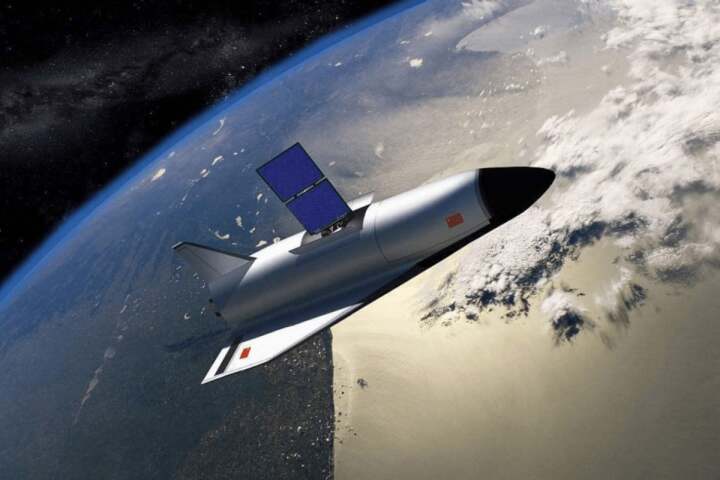 Rockets being passé, China is working on using an electromagnetic railgun to launch crewed spacecraft the size of a Boeing 737, weighing 50 tonnes, into orbit. This remarkably ambitious project is even more ambitious than it seems at first glance.
 -
 Third time's the charm! SpaceX's Starship roared into orbit today from the company's Starbase near Boca Chica, Texas. Larger and more powerful than the venerable Saturn V, the giant rocket lifted off into the history books at 8:25 am CDT.
 -
 NASA engineers are working to correct a new fault in one of the computers aboard the Voyager 1 deep space probe that is preventing the 46-year-old spacecraft from transmitting any scientific or engineering data back to Mission Control on Earth.
 -
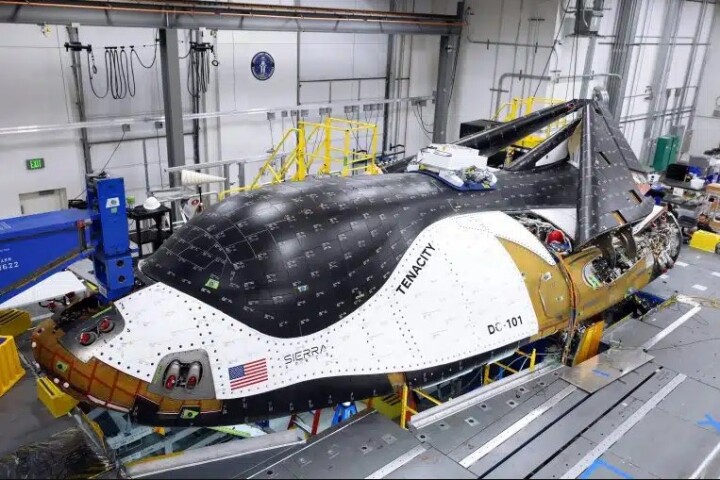 Sierra Space has rolled out its first Dream Chaser spaceplane, called "Tenacity," that will be used to ferry cargo to and from the International Space Station (ISS) after it is shipped to NASA’s Neil A. Armstrong Test Facility for environmental testing.
 -
 Blue Origin has taken the wraps off Blue Ring, its multi-orbit, multi-mission space platform that will provide a wide variety of logistical services to commercial and government customers, from medium Earth orbit to interstellar space.
 -
 Solar wind – charged particles from the Sun – pervades our solar system, but the exact mechanism behind it remains murky. Now ESA’s Solar Orbiter spacecraft has observed previously unknown tiny flares on the Sun’s surface spewing plasma into space.
 -
 NASA has lost contact with its Voyager 2 deep-space probe. On July 21, 2023, Mission Control at the Jet Propulsion Laboratory (JPL) sent a series of commands that "inadvertently" caused the robotic spacecraft to turn its antenna away from Earth.
 -
 In cramped spacecraft or space stations, there isn't room to store multiple robots that are each designed for a specific task. The Mori3 system was designed with that fact in mind, as it can be used to create different types of robots as needed.
 -
 ESA is preparing to test a very cool new fold-out heat shield for protecting spacecraft on re-entry. The Pridwen won't burn away like ablative heat shields, and it'll also slow falling satellites down enough to be caught in a hover net.
 -
 NASA's Juno deep space probe has made its closest flyby yet of Jupiter's volatile moon Io. During its 51st orbit of the giant planet, the solar-powered robotic spacecraft came within 22,600 miles (35,500 km) of Io's volcanic surface.
 -
 ESA's Juice Jupiter mission is back on track after Mission Control in Darmstadt, Germany managed to shake loose and deploy the stuck ice-penetrating Radar for Icy Moons Exploration (RIME) antenna that was stuck due to a tiny pin.
 -
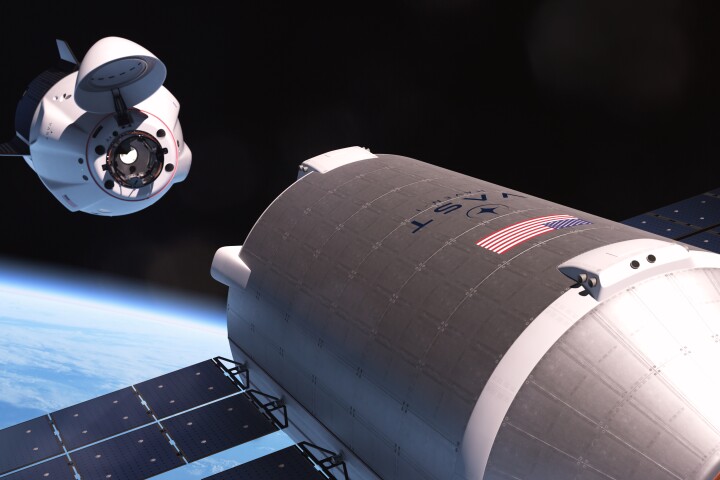 Space startup Vast has announced that it intends to launch what it calls the world's first commercial space station, Haven-1, sometime after August 2025 atop a SpaceX Falcon 9 rocket as the first element of a 100-m (330 ft) rotating station.
Load More