
Solar Powered
-
 A futuristic-looking electric vehicle that was launched way back in 2007 is finally on the road to production. Following a year-long crowdfunding effort, the first 2,000 Aptera Launch Edition solar EV production slots have now been taken.
 -
 Dutch micromobility startup Squad Mobility is gearing up for the 2025 production launch of its Solar City microEV with a visit to Las Vegas next month for CES 2024, where the company will also show off a special edition Buggy version.
 -
 For the second consecutive time, a team from Belgium has landed in first place in the Bridgestone World Solar Challenge, a competition that sees dozens of innovative solar vehicles race across the often punishing continent of Australia.
 -
 Researchers have developed a new solar-powered desalination system that produces high amounts of drinkable water and uses a technique inspired by the movement of deep-ocean currents to avoid the common problem of salt clogging.
 -
 The TU Eindhoven Solar Team has taken a few leaps into the future, showing how EV technology will one day provide for boundless mobility. It's followed up its 2021 solar RV with an all-electric off-road car that rides on pure solar-electric power.
 -
 A new academic-industry initiative is developing lightweight solar panels to harvest natural energy from all that solar-soaked truck real estate to decrease operational costs, emissions and the imperative of a sustainable transport system.
 -
 Plans have been revealed for an unusual new project in Houston, Texas. Described as the worlds largest freestanding sundial by architect and artist Riccardo Mariano, it will be covered in solar panels, generating significant amounts of electricity.
 -
 Skidmore, Owings & Merrill has revealed plans for a new development on NYC's Governors Island that will focus on promoting ideas to tackle climate change. It will boast impressive green technology and produce its own power and non-potable water.
 -
 Since we first got wind of Saildrone's autonomous USVs back in 2018, they've mapped miles of ocean floor, chased hurricanes, and surveyed remote regions. Now the company is adding a new vessel to tackle near-shore mapping and maritime surveillance.
 -
 Expanding its Island Solar Transit System, Ride Solar has converted a 1967 Montreal Expo water taxi into a solar-powered cruise vessel for sight-seeing tours of Charlottetown Harbour on Prince Edward Island, which are due to begin from May.
 -
 In July last year, Saildrone launched one its sensor-packed unmanned aquatic drones on a voyage of discovery in the North Pacific, tasked with filling in ocean mapping blanks around Alaska's Aleutian Islands as well as off the coast of California.
 -
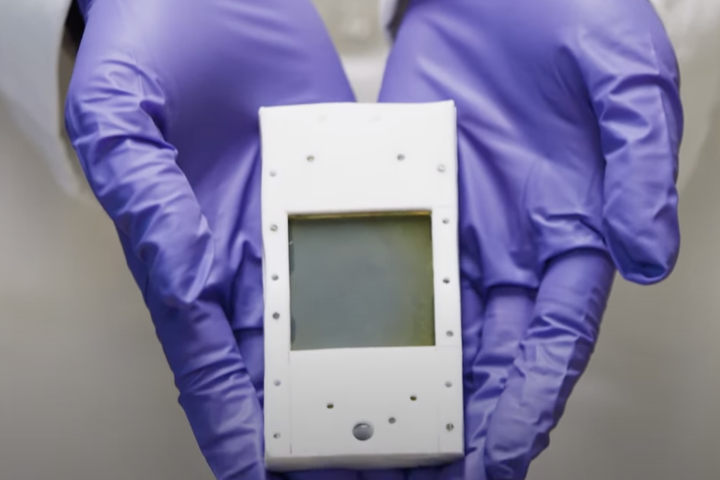 UMich researchers have demonstrated an artificial photosynthesis device 10 times more efficient and one hundredth the size of previous devices of its kind. This green hydrogen production method also improves over time, and can split seawater.
Load More