
Software
-
 Warp drives are among the more plausible of science fiction concepts, at least from a physics perspective. Now, a group of scientists and engineers has launched open-source software that lets you design and test scientifically accurate warp drives.
 -
 It can autonomously plan and execute thousand-step tasks. It can build and deploy entire software projects all by itself. It can research and fix bugs 7x better than OpenAI's GPT-4, and it trains and deploys its own custom AIs to solve problems.
 -
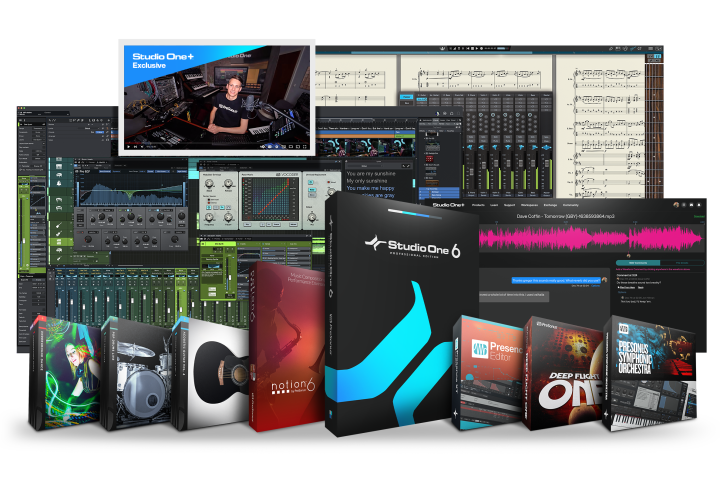 Fender is pushing hard to expand and refine its flagship DAW software package, a recording-studio-in-a-box packed with everything you need to write, record, mix, master, perform, livestream and present music, podcasts and videos. It's a monster.
 -
 On June 26, ESA's OPS-SAT space lab went into Earth orbit with a computer running the European Ground System – Common Core (EGS-CC) "space brain" software that will be common to all European space missions from 2025.
 -
 For more than five years, a team has been developing and testing control software under Alphabet's X moonshot factory, aimed at making industrial robots smarter and easier to use. Now the project has branched out into a new company called Intrinsic.
 -
 Following the Kickstarter launch of a personal holographic image display, the Looking Glass Factory has announced a new cloud-based service capable of adding depth to any 2D photo to create a 3D holographic image for viewing in its Portrait device.
 -
 LuminarAI will be the first image editing tool of its kind: a creative direction engine that harnesses artificial intelligence to work over your images in a variety of dramatic and impressive ways with full control but no hands-on work whatsoever.
 -
 Boston Dynamics’ dog-like Spot robot can now be remotely controlled from anywhere in the world thanks to a partnership with Rocos. To demonstrate its new capabilities the US team remotely monitored the robot working on an isolated farm in New Zealand.
 -
 After the death of Larry Tesler this week, New Atlas takes a brief look back at the invention of those now-ubiquitous computer commands: cut, copy and paste.
 -
 Though there are a few notable exceptions, most headphones will deliver a "one size fits all" sonic experience to listeners. But that's not how we hear sounds around us. Genelec is looking to inject more realism into headphone sound reproduction with some software and a smartphone camera.
 -
 There are compelling reasons to use open source software. There's the obvious benefit that it's free to use. It's arguably more secure. And it's built solely for the benefit of users. This in mind, here are 10 of the best open source alternatives to the software we use on our computers every day.
 -
 On Sunday, ESA uploaded a software update into the Mars Express' computers, where it will remain stored in memory until a scheduled restart on April 16. If successful, it will take the burden off the aging gyroscopes used to keep the spacecraft's vital high-gain radio antenna pointed at Earth.
Load More