
Self-healing
-
 Concrete may seem strong, but it can be surprisingly vulnerable to the elements. Now researchers at Drexel University have demonstrated a type of self-healing concrete embedded with “BioFibers” that use bacteria to patch up cracks as they form.
 -
 Japanese scientists have developed a new type of plastic that can easily break down on demand into its base components. In seawater it starts to break down into food for marine life, and just to top it off, it can self-heal and remember past shapes.
 -
 It's long been assumed that when a metal structure like a bridge or an engine develops a crack, it will only get worse over time. But that might not be the case, based on what researchers have just observed happening in a piece of platinum.
 -
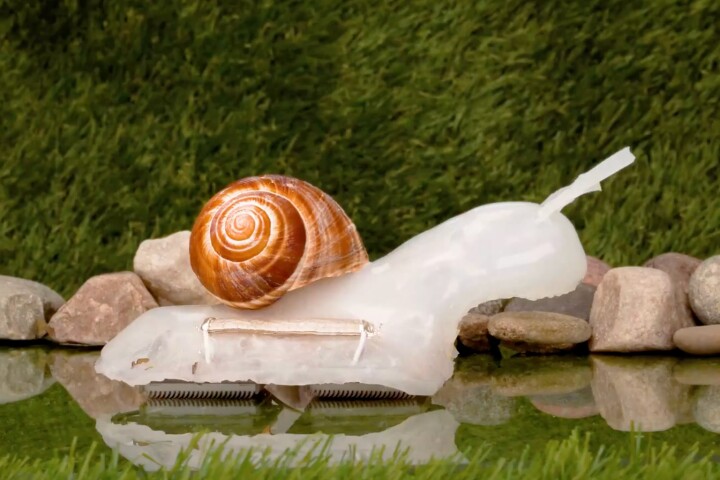 In order to reach their full potential, soft robotic devices can't just consist of rigid electronic components encased in squishy rubber. A new material could help in that regard, as it's soft, self-healing and electrically conductive.
 -
 A versatile new material helps in the ongoing battle against corrosion. The polymer coating not only protects against corrosion, but highlights cracks as they form, automatically repairs damage to itself, and can be recycled at the end of its life.
 -
 Concrete sewage pipes lead a hard life, constantly being exposed to corrosive acid produced by bacteria in wastewater. A new additive could allow such concrete to self-heal – and it would do so using water treatment sludge.
 -
 Finding a scratch on your car is a special kind of heartbreak, but in the future they might be gone before you even notice. Scientists in Korea have developed a coating that self-heals scratches in as little as 30 minutes when exposed to sunlight.
 -
 An experimental new material could help rehabilitate the injured and allow the nonspeaking to "speak," among other potential uses. It's also highly elastic, electrically conductive and self-healing – and it's known as CareGum.
 -
 Although carbon fiber can be repaired and recycled to a certain extent, it's typically just discarded once damaged. According to a recent study, however, a new type of the material can be easily fixed or reused through the simple application of heat.
 -
 Ceramic materials are strong and can stand up to heat very well, but they’re notoriously fragile. Now, researchers at Texas A&M have uncovered a previously unknown self-healing mechanism in a certain type of ceramic, which works at room temperature.
 -
 Soft robots and flexible electronics aren't as protected as their rigid-shelled counterparts, so they're more likely to get ripped or punctured. A new stretchable, self-healing conductive material was designed with this limitation in mind.
 -
 There are now a number of materials designed to give robots or prostheses a sense of touch. And while most of them are thin and skin-like, a new alternative takes the form of a spongey foam – and it combines several desirable qualities.
Load More