
RQ-4
-
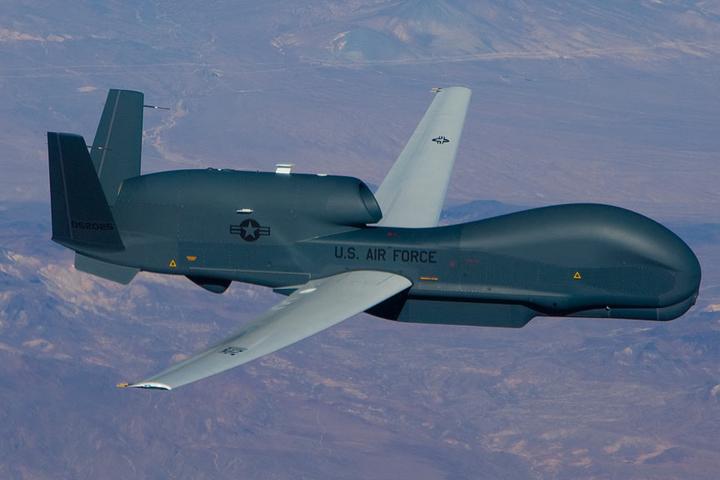 The first of the next generation of Northrop Grumman’s Block 40 configuration RQ-4 Global Hawk has successfully taken to the air for the first time with a flight lasting around two hours.
 -
 The MQ-9 Reaper, a hunter-killer UAV with long loitering capability, has completed its first operational mission in Iraq.
 -
 Britain's most sophisticated unmanned surveillance system, the Reaper UAV, has been deployed in Afghanistan.
 -
 September 11, 2007 Using new solar array technology and a tailor-built autopilot system, QinetiQ's Zephyr High Altitude Long Endurance Unmanned Aerial Vehicl
 -
 August 31, 2007 The US Airforce has announced the deployment of a new squadron of unmanned aerial vehicles (UAV) into combat zones in Afghanistan and Iraq. Capa
 -
 August 10, 2007 Northrop Grumman has announced that it will equip its unmanned aircraft with technology that makes it safer to share airspace with piloted aircr
 -
 December 15, 2006 Australia’s new military helicopter is currently being checked out by France's Délégation Générale pour l'Armement (DGA) in Australia and par
 -
 November 2, 2006 Raytheon has unveiled what it calls its Universal Control System (UCS) - a first of its kind unmanned aerial system (UAS) 'cockpit' that revol
 -
 October 20, 2006 Aircraft AI-001, the first Army I-GNAT ER unmanned aircraft produced for the U.S. Army, is continuing the illustrious General Atomics Pred
 -
 September 14, 2006 The Air Force has announced 'Reaper' has been chosen as the name for the MQ-9 unmanned aerial vehicle, the Air Force's first hunter-killer
 -
 November 11, 2005 The Global Hawk UAV was still in its development stages when the needs of the war in Afghanistan saw it pressed into service. Since then, Gl
 -
 February 2, 2005 - Northrop Grumman has successfully completed the first phase of flight testing a demonstrator version of a new medium altitude endurance unman
Load More