
Photovoltaic
-
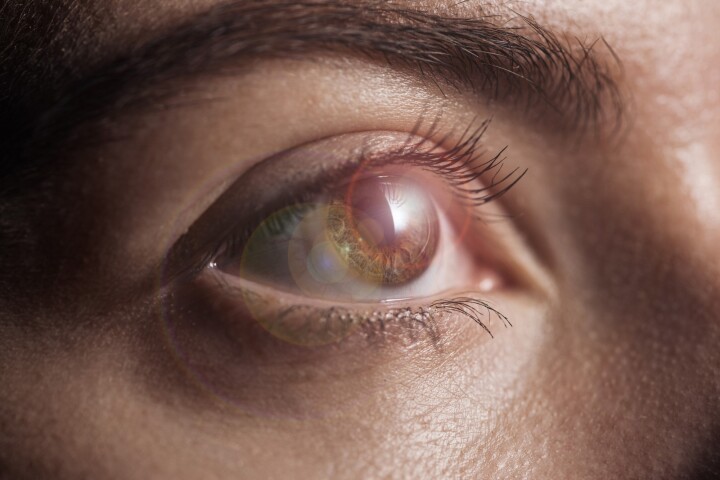 Implanting tiny solar panels into people's eyeballs may sound like science fiction, but that's exactly what a team of Australian scientists are working on. The next-gen tech could vastly improve quality of life for people with incurable eye diseases.
 -
 A new pacemaker is thinner than a human hair, wireless and operated entirely by light from an optic fiber. The non-invasive device could help regulate heart activity or even stimulate neurons in a set pattern to treat conditions like Parkinson’s.
 -
 Solar cell efficiency may get a bump from bumps. New research suggests that building tiny domes into the surface of organic solar cells could boost their efficiency by up to two-thirds, while capturing light from a wider angle.
 -
 Portable photovoltaic systems are great for generating electricity while off the grid, but constantly moving them to keep them in the sunlight can be a hassle. Jackery's Solar Generator Mars Bot offers a solution to that problem, as it moves itself.
 -
 The Dutch love to cycle. So much so that there are more than 35,000 km of cycle paths snaking through the Netherlands. Two of those bike routes have now been topped with photovoltaic cells to produce renewable energy while they face skyward.
 -
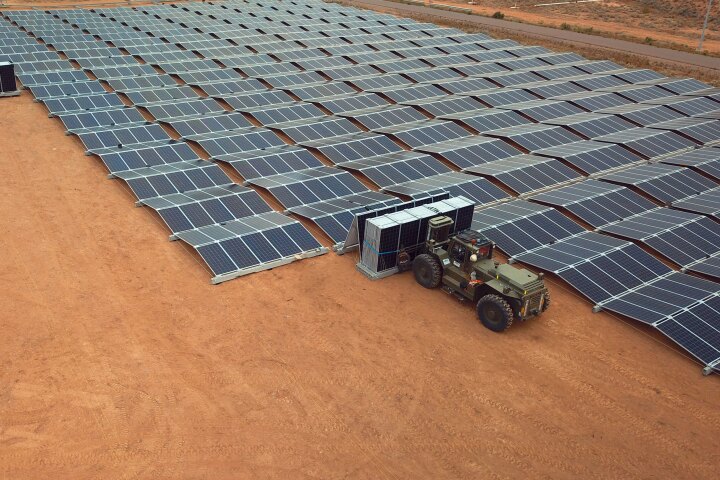 Australian company 5B has developed a hinged, folding solar array for ridiculously quick and easy installation at industrial scale. In May, 5B showed just how quick: a team of 10 covered the area of a soccer field with a 1.1-MW array in a single day.
 -
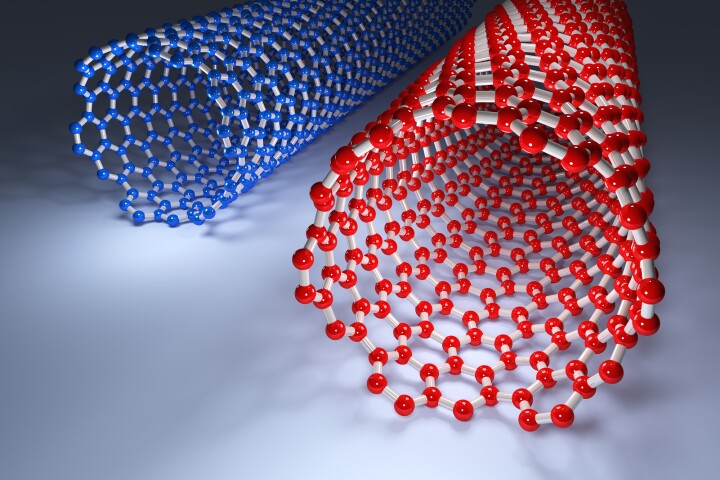 Engineers at EPFL have inserted carbon nanotubes into photosynthetic bacteria, greatly improving their electrical output. They even pass these nanotubes down to their offspring when they divide, through what the team calls “inherited nanobionics.”
 -
 Dutch company Lightyear has unveiled what it claims is the world's first production-ready solar car. The Lightyear 0 is a family sedan with 5 sq m (53.8 sq ft) of solar panels built in, capable of generating up to 70 km of charge-free driving a day.
 -
 German automotive startup Sono Motors has announced that 37 series-validation prototypes are being produced to take the Sion solar electric family car through validation and certification, ahead of planned series production in 2023.
 -
 Ordinarily, water is used to clean off the layer of dust that continuously accumulates on solar panels. In arid regions, however, doing so can be challenging. A new system addresses this problem, by substituting electrostatic repulsion for water.
 -
 In order to keep running at peak efficiency, solar panels regularly have to be cleaned of accumulated dust and other debris. Such panels can be difficult to reach, though, which is why the Helios system uses not one but two drones to do the job.
 -
 While solar farms are a source of green energy, many people don't like the fact that they occupy land which could be otherwise utilized. A new project is exploring an alternative, by placing solar panels over canals that will benefit from the shade.
Load More