Optical
What invisible objects will actually look like
By Darren Quick
19:52 November 12, 2009 PST

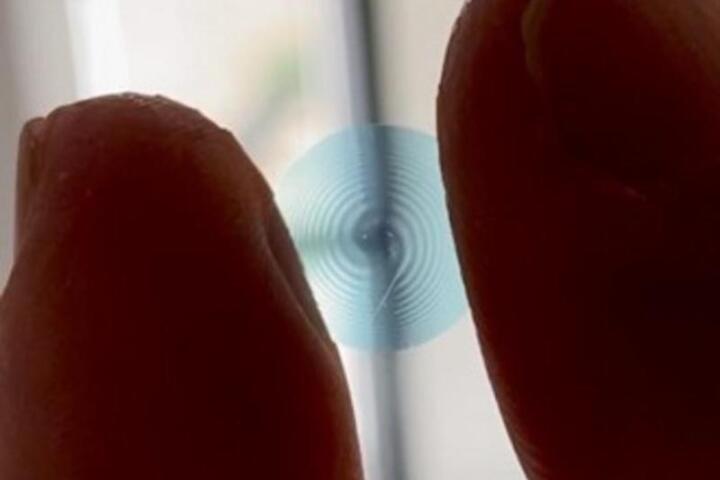
Over the last few years we’ve covered the development of “invisibility cloaks” using metamaterials – man-made structured composite materials exhibiting optical properties not found in nature that can guide light to achieve cloaking and other optical effects. In 2006, scientists at Duke University demonstrated in the laboratory that an object made of metamaterials can be partially invisible to particular wavelengths of light - not visible light, but rather microwaves. A few groups have even managed to achieve a microscopically-sized carpet-cloak. Now researchers have developed software that can show what such a cloaked object will actually look like. Read More
'Hyperspectral Remote Sensor' senses disasters from space
By Darren Quick
23:59 October 25, 2009 PDT

Combining sophisticated sensors in orbit with sensors on the ground and in the air has led researchers at Tel Aviv University (TAU) to create a “Hyperspectral Remote Sensor” (HRS) that can give advance warnings about water contamination after a forest fire, alert authorities of a pollution spill long before a red flag is raised on Earth, or inform the population where a monsoon will strike. Read More
A cheap way to increase capacity and improve download speeds of strained broadband networks
By Darren Quick
23:19 October 18, 2009 PDT

A new technology that applies the same principles used by ADSL to improve the capacity of data transfer over copper and wireless broadband could potentially increase the data capacity of optical fiber cables tenfold. It’s creators say the technology, known as optical Orthogonal Frequency-Division Multiplexing (oOFDM), offers an inexpensive way drastically boost the capacity of increasingly strained broadband networks and improve download times around the world. Read More
MIT's one-way road for microwave light makes efficient lightwave circuits closer
19:13 October 13, 2009 PDT

Light normally bounces off obstacles in its way, and the part of the beam that is reflected back and captured by our eyes contributes to our perception of the world around us. However, every reflection dissipates a small part of the beam's energy, and can eventually weaken it significantly. A team of MIT researchers have developed an innovative waveguide that allows microwave light to travel one way only and without reflections, paving the way to much more efficient lightwave circuits and connections. Read More
Replicating nano structure of butterfly wings could lead to better solar cells
By Darren Quick
20:19 October 11, 2009 PDT

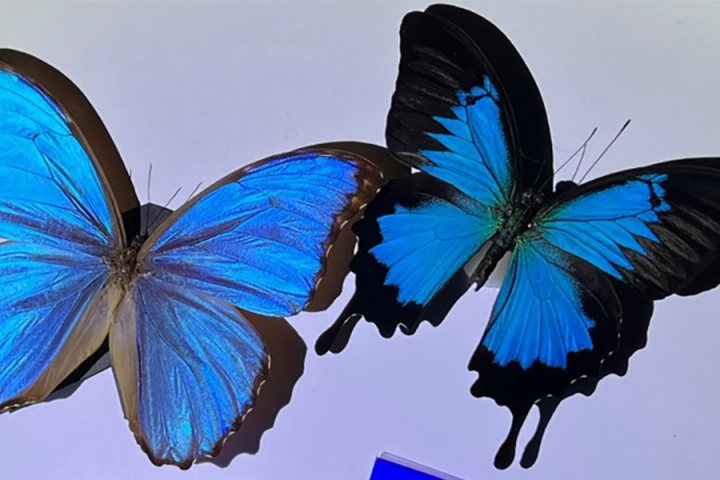
Researchers have developed a technique to replicate biological structures, such as butterfly wings, on a nano scale. They focused on the tiny nano-sized photonic structures that are found in the insects’ cuticle, and which give insects their iridescence - that slightly metallic sheen that also seems to shift in color depending on the viewing angle. By replicating the biotemplate of butterfly wings, the researchers hope to be able to make various optically-active structures, such as optical diffusers or coverings that maximize solar cell absorption. Read More
'Time telescope' speeds up optical transmission by 27 times
22:17 October 4, 2009 PDT

Most of today's telecommunication data is encoded at a speed of 10 Gbit/s, but researchers are constantly looking for new ways to push this limit even further. A group of researchers at Cornell University have recently come up with the "time telescope," a sophisticated system that can speed up optical communication by 27 times to an outstanding 270 Gbits/s by squeezing more information into a single flash of light and that, unlike previous solutions, does so in an energy-efficient manner. Read More
New advances in excitonics promise faster computers
16:44 October 1, 2009 PDT

Much of today's research in electronics is geared towards obtaining faster computing and higher communication speeds. Researchers at UC San Diego are no exception, and have recently announced they have made another important step towards achieving exciton-based computation at room temperatures. Excitonics exploits the unique properties of excitons instead of the usual electrons, and promises much faster performance by interfacing more naturally with optical communications such as fiber optics. Read More
Intel predicts optical future for consumer gadgets with 10Gb/s Light Peak interface
By Paul Lester
06:44 September 28, 2009 PDT

Though it may not make it into everyone’s ‘top ten’ list of most desirable technological developments, replacing the spaghetti-junction of wires that typically gathers behind a desk or workspace would undoubtedly be a welcome advance. Wireless peripherals are helping the situation somewhat and wireless power will be a massive boon once perfected but, in the meantime, we’re looking to technologies like optical cables to handle high-volume data transfer. Intel’s recent research in this area should be of particular interest, since it’s designed to replace or augment connections used in consumer-based electronics, such as USB2.0, HDMI, Firewire, DVI and the like. Read More
Nanoscale lasers continue to shrink, heralding new era in optical science
By Darren Quick
20:28 August 31, 2009 PDT

Breakthroughs are coming thick and fast – or should that be thin and fast – in the field of nanoscale lasers. It wasn’t even a month ago that we reported on the development of a laser emitting 'metal-semiconductor-metal sandwich', made up of a semiconductor as thin as 80 nanometers laying between 20-nanometer dielectric layers. But now researchers at the University of California, Berkeley, have reached a new milestone in laser physics by creating the world's smallest semiconductor laser, capable of generating visible light in a space smaller than a single protein molecule. Read More
Tiny lasers hold key to nano-circuitry
18:31 August 23, 2009 PDT

Researchers at Cornell, Purdue and Norfolk State University have reported the successful creation of a 'spaser', a new kind of nanoscale laser that breaks dimensional limits previously thought to be insurmountable, leading the way to significantly faster and more efficient computer processing and data transfer rates. Read More
Ytterbium times its run for next-gen atomic clocks
By Darren Quick
23:44 August 17, 2009 PDT

Technically, no clock can be more accurate than cesium standards such as NIST-F1 – the cesium fountain atomic clock that serves as the United States' primary time and frequency standard. But researchers have managed to develop an experimental atomic clock based on ytterbium atoms that boasts precision comparable to that of NIST-F1. The humble second was chosen as the International System of Units' (SI) base unit of time since it is based on the properties of the cesium atom (one second is the duration of 9,192,631,770 cycles of the radiation corresponding to the transition between the two hyperfine levels of the ground state of the cesium 133 atom). Read More
Harnessing blowflies to teach robots how to see
19:24 August 11, 2009 PDT

One of the biggest challenges facing robotics is teaching machines to perceive surroundings and make sense of what they see. Attempting to duplicate the complexity of human perception is next to impossible, so researchers at Cognition for Technical Systems (CoTeSys) in Munich are, instead, studying how blowflies process images using a 'flight simulator'. Despite having a brain the size of a pinhead, a fly can process and interpret 100 discrete images per second – four times better than humans. Read More
Wink Glasses - there won't be a dry eye in the house
By Mick Webb
19:49 August 4, 2009 PDT

The eye strain and resulting damage that often afflicts those who forget to blink while on a gaming marathon or glued to the Internet is a widespread problem. To combat this, Japan’s Masunaga Optical Manufacturing has unveiled Wink Glasses, which feature blink-sensing lenses that start to fog if the wearer neglects to keep their peepers hydrated. Read More
Canon announces new Hybrid Image Stablization technology
By Jeff Salton
01:41 July 23, 2009 PDT

Canon has developed optical image stabilization technology that compensates for angle camera shake and shift camera shake. The Hybrid Image Stabilizer (IS) technology will be incorporated in interchangeable single lens reflex (SLR) camera lens planned for commercial release before the end of 2009. The company says this is the first lens of its kind to incorporate technology that addresses both types of camera shake. Read More
Vikuiti Rear Projection Film turns shop windows into very big screen TVs
By Darren Quick
01:31 July 13, 2009 PDT

Taking a stroll through your average city shopping precinct will see you bombarded with a plethora of advertising messages. Making their particular message cut through the visual noise can be a tough prospect for advertisers and plain old billboards and static signs just don’t seem to cut the mustard anymore. Those looking to grab people’s attention might want to take a look at 3M’s Vikuiti Rear Projection Film, which can be laminated onto transparent glass or plastic to act as an eye-catching rear projection screen. Read More
Quantum computer closer: Optical transistor made from single molecule
23:51 July 6, 2009 PDT

Quantum photonics is a particularly attractive field to scientists and engineers alike in that it could, once some core issues have been resolved, allow for the production of integrated circuits that operate on the basis of photons instead of electrons, which would in turn enable considerably higher data transfer rates as well as dramatically reduced heat dissipation. Now in yet another important achievement on the road to quantum computing, researchers from ETH Zurich have managed to create an optical transistor from a single molecule. Read More
Video perfection tool catches up with TV cop technology
By Darren Quick
03:39 July 3, 2009 PDT

Anyone who has watched CSI or any of the Law & Order franchises has no doubt witnessed a well groomed police technician magically clean up fuzzy security camera vision, thereby providing the detectives with the vital number plate or the face of a criminal at the push of a button. The truth is, of course, far removed from such TV fantasy – at least it has been until now. A new video “perfection tool” developed by researchers at Tel Aviv University (TAU) helps investigators enhance raw video images to improve the quality at which the images were originally recorded. Read More
Researchers create acoustic metamaterial ‘superlens’
By Jeff Salton
04:48 July 1, 2009 PDT

A team at the University of Illinois, Chicago, has developed the world’s first acoustic ‘super lens’. It is proposed that this innovation could be used for high-resolution ultrasound imaging, non-destructive structural testing of buildings and bridges, and underwater stealth technology or "acoustic cloaking". Read More
Mini OLED projector prototype for mobile phones
By Darren Quick
03:42 June 26, 2009 PDT

A new mini projector prototype could see mobile phone users hosting impromptu movie screenings on makeshift screens such as white towels or walls... without killing the battery. Unlike conventional projectors the prototype doesn’t need an additional illumination system. Instead it relies on a lens system to project images produced by an OLED onto a wall or other flat surface. Read More
Sharp launches first notebook PC with optical sensor LCD pad
By Paul Best
01:06 May 19, 2009 PDT

Sharp Corporation is releasing a new notebook PC with an innovative optical sensor built into an LCD touch pad – which the company claims is a world first – at the end of the month. While Sharp’s Mebius PC-NJ70A netbook will only be released initially in Japan, the 4-inch track pad, which recognizes input by pen or touch, clearly signals the direction notebooks are headed. According to Sharp, a pen can be used to input drawings and text, while finger gestures on the LCD pad can enlarge, shrink or rotate items on the notebook screen – all in addition to the conventional ways a mouse is used. Users can sign their name to a photo before emailing it, for instance; or they can use two fingers to zoom in and out of internet websites to adjust them for the best view. Read More
World's fastest camera captures images at six million frames per second
By David Greig
18:06 May 14, 2009 PDT

Using a new approach based on more than 10 years of research, engineers at the UCLA Henry Samueli School of Engineering and Applied Science have demonstrated a camera that captures images at 6 million frames per second - that's a thousand times faster than any existing conventional camera. This technique could lead to fresh insights into fast moving phenomena in physics, chemistry and biology. In medical research for example, it may lead to image capture of individual cells in blood streams, opening up the possibility of detection of unhealthy or cancerous cell forms. Read More
Geckos could hold the key to next-gen lenses
By David Greig
22:30 May 11, 2009 PDT

There’s a lot more to the Gecko than a cute little acrobatic creature that has sticky feet and can walk up walls. The helmet gecko - a nocturnal lizard - is among a few living creatures that can see colors at night. The trick to this unique characteristic is a series of distinct concentric zones of different refractive powers, according to a recent study published by the Association for Research in Vision and Ophthalmology. The research team hopes these studies may provide insight into creating better cameras and contact lenses. Read More
GE develops 500GB disc using holographic technology
By Darren Quick
22:05 April 28, 2009 PDT

Many pundits proclaimed Blu-ray would be the last optical disc based storage medium we would see before the seemingly inevitable move towards Flash-based drives and online storage. Apparently GE isn’t buying into that prediction, forging ahead with the development next generation optical storage technology that can store a massive 500GB of data before Blu-ray has even gained widespread adoption with consumers. Read More
Samsung launches AMOLED screened compact digital camera
By Matt Kennedy
23:46 February 25, 2009 PST

Samsung Electronics seem to be busy beavers of late, with new products landing on the shelves all over the place. The latest releases, just in time for PMA09, are the TL320 and HZ15W, the former featuring a hi-tech, hi-res three-inch AMOLED screen and the latter, a class beating 10x optical zoom. Read More


Terotech
- November 21, 2009 @ 19:38 UTC