
NIST
-
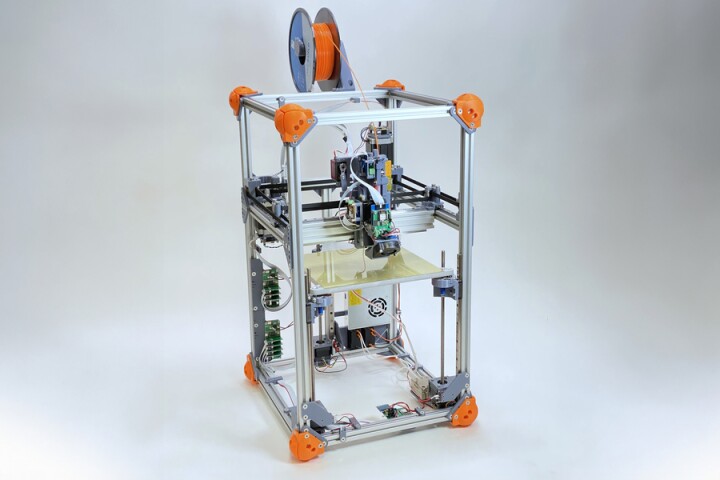 A recently developed system could revolutionize the world of 3D printing, by streamlining the adoption of new print media. Such materials could include ones made from all-renewable ingredients, or that are more recyclable than current options.
 -
 The magnetometer found inside your cellphone acts like a traditional compass to help you navigate your surroundings. Now, researchers are using it to map human biology, and it could ultimately make managing diabetes a lot cheaper and easier.
 -
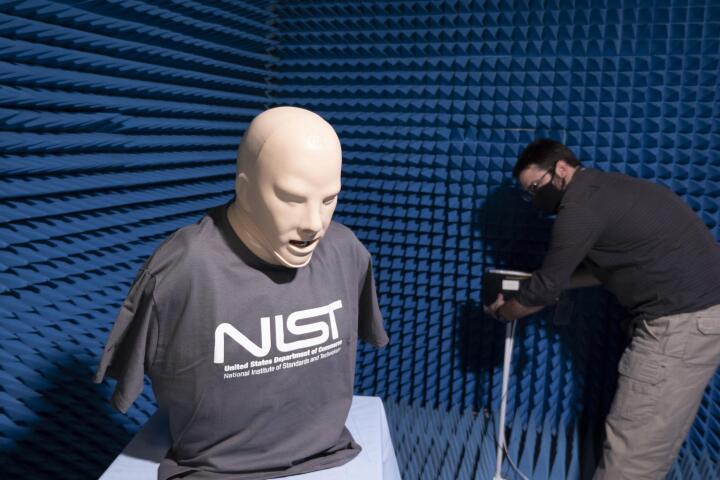 By modifying an off-the-shelf Wi-Fi router with a firmware update and using a deep-learning algorithm, scientists have been able to detect breathing patterns that indicate respiratory distress in a medical mannequin.
 -
 Ordinarily, the microcircuit patterns used in microchips are printed onto flat silicon wafers, potentially limiting their applications. A new technique lets such patterns be more easily applied to curved surfaces – and it uses "candy" to do the job.
 -
 Researchers at NIST have shown that a cloud of atoms can be used as a receiver to pick up video transmissions. The team demonstrated this “Atomic Television” by transmitting live video feed and even video games through the atoms to a monitor.
 -
 Researchers have developed a more precise design for "optical tweezers," using a metasurface lens studded with millions of tiny pillars which focus light to trap and manipulate individual atoms. It could pave the way for powerful quantum devices.
 -
 Inspired by the dual-focus visual system of a 500-million-year-old trilobite, researchers have created and tested a light field camera with the greatest depth of field ever demonstrated. Everything between 3 cm and 1.7 km from the lens stays sharp.
 -
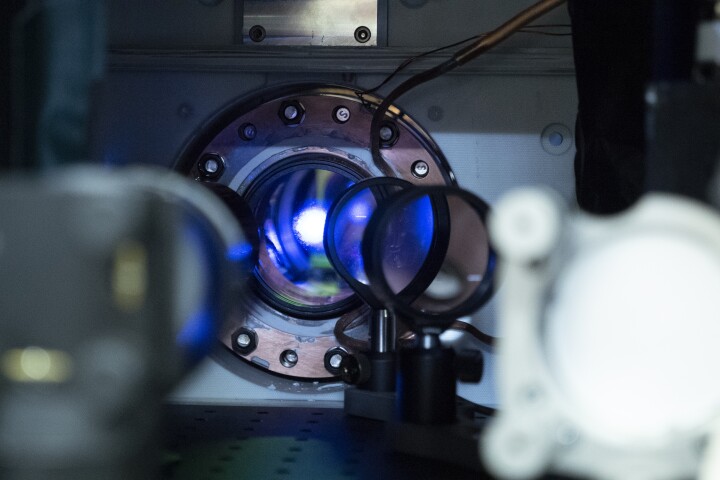 The flow of time isn’t as consistent as we might think – gravity slows it down, so clocks on Earth tick slower than those in space. Now researchers have measured time passing at different speeds across just one millimeter, the smallest distance yet.
 -
 Dark matter should be all around us, but the stuff is frustratingly elusive. Now physicists at NIST have developed a new sensor that could help us detect certain hypothetical dark matter particles, using a two-dimensional quantum crystal.
 -
 Flashover is a very dangerous phenomenon, in which all of the exposed combustible materials in an enclosed area near-simultaneously ignite. Thanks to a new AI-based system, however, firefighters may soon receive warnings when flashover is imminent.
 -
 The problem of microplastics pollution is getting worse, so it's important to monitor the amount of such plastic waste currently present in the world's oceans. According to a new study, a simple sea creature may better allow scientists to do so.
 -
 Scientists have created a synthetic single-celled organism that can divide and grow like a regular living cell. This breakthrough could lead to designer cells that can produce useful chemicals on demand or treat disease from inside the body.
Load More