
National University of Singapore
-
 Obstructive sleep apnea can cause or contribute to high blood pressure, so a new study examined which sleep apnea treatments – a CPAP machine or a mouthguard that keeps the airways open – was more effective at lowering blood pressure.
 -
 Scientists have devised a method of using fish scales to convey encrypted messages. Not only would the technology divert seafood industry waste from landfills, it should also be less costly than existing options such as special inks.
 -
 On the 215th anniversary of the birth of the world's most famous naturalist Charles Darwin, scientists have painstakingly completed an inventory of his eclectic, extensive personal library, and 9,300 titles are now available to view online for free.
 -
 There are many situations in which blind people don't necessarily have to see what they're holding, they just need it described to them. An experimental new wearable device, known as AiSee, is designed to do that very thing.
 -
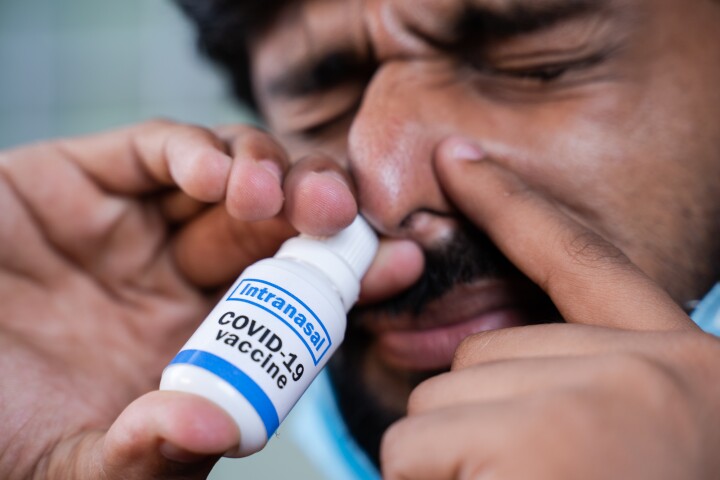 Researchers have developed a novel intranasal COVID-19 vaccine that enhances the immune system’s response to the virus, providing longer-lasting, greater protection than vaccine injections, even against new and emerging variants.
 -
 The skin ulcers that diabetics often develop on their feet are slow to heal, sometimes to the point that they become infected and require foot amputation. A magnetic gel could keep that from happening, as it triples the healing speed of such wounds.
 -
 Researchers have created a 3D-printed plant-based calamari ring that’s high in protein and looks and tastes like the real thing. The mock seafood has the potential to address issues of overfishing by offering a sustainable, vegan alternative.
 -
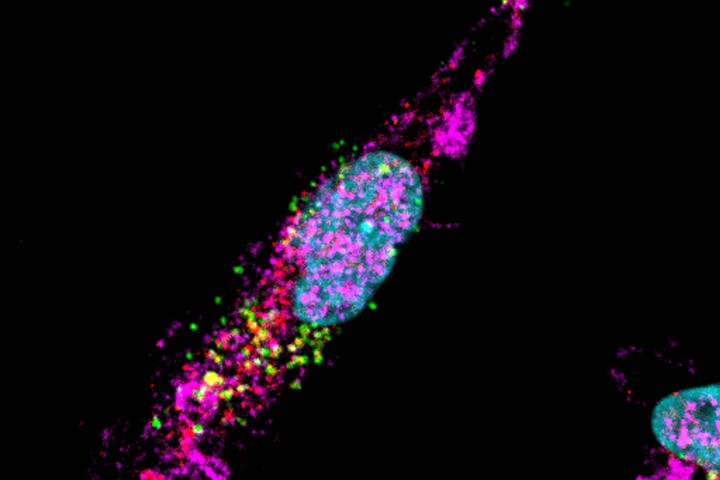 Researchers have discovered the way that red blood cell particles interact with white blood cells called macrophages to reduce the formation of fatty deposits on arterial walls, offering a potential treatment for this common condition.
 -
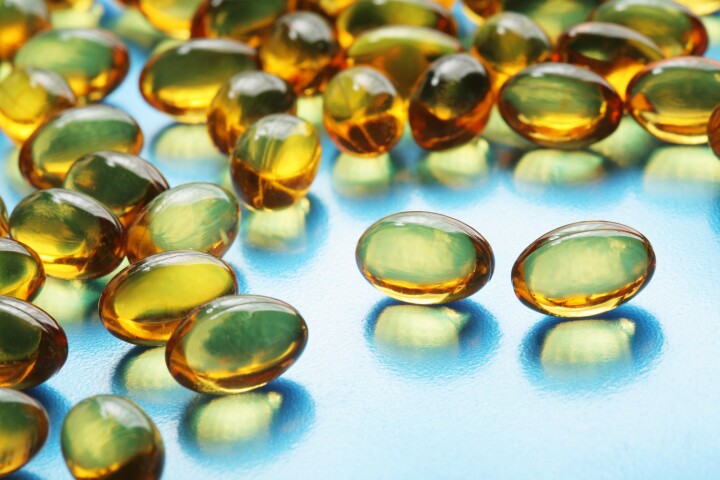 Researchers have developed an injectable form of DHA, an omega-3 fatty acid, that halts the progression of the arterial fatty plaques that can lead to heart attack and stroke. The novel treatment may one day be used to treat heart disease.
 -
 Scientists have developed a new way to tap into the incredible data storage density of DNA in a more scalable way. A “biological camera” imprints images into the DNA of living cells, tagged with barcodes to retrieve data.
 -
 Getting young children or the elderly to take medications, especially if they're yucky-tasting syrups, large tablets, or – worse – injections, can be tricky. Researchers have developed an oral film that offers painless, hassle-free drug delivery.
 -
 In recent years, we've seen wood used in the construction of traditionally non-wooden things like transistors, bicycles and drones. Now, scientists have used the stuff to create a robotic gripper … which definitely has its selling points.
Load More