
NASA
-
 We have to cut the 47-year-old space veteran some slack – it's faring much better than our 2019 laptops – but Voyager 1's five months of communicating nonsense to Earth may be over, thanks to Mission Control's 15-billion-mile remote IT fix.
 -
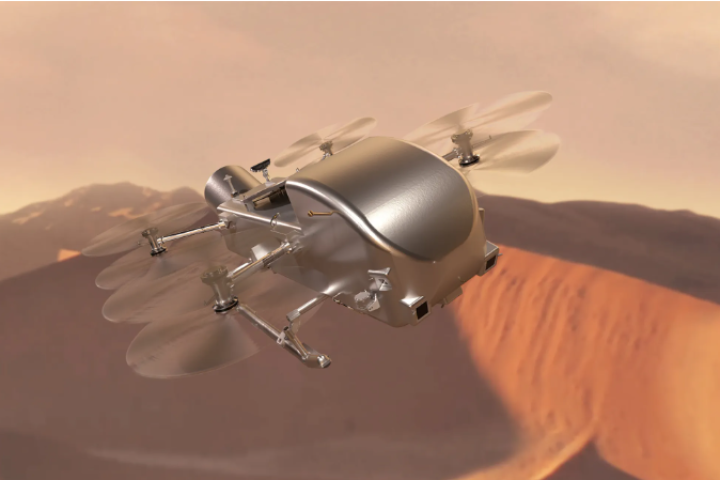 NASA has given the green light for the nuclear-powered Dragonfly rotorcraft to explore Saturn's largest moon, Titan. Approval for the 2028 interplanetary mission comes after years of delay due to COVID-19 and a series of cost overruns.
 -
 NASA has completed the analysis of a chunk of metal that crashed into the roof of a house in Naples, Florida, a few weeks ago. The agency says it came from a pallet of trash released from the International Space Station three years ago.
 -
 Future Moon bases may be a bit tidier thanks to an electric shield that protects equipment from destructive lunar dust. NASA's Electrodynamic Dust Shield (EDS) technology promises to tame the destructive dust that clings to equipment.
 -
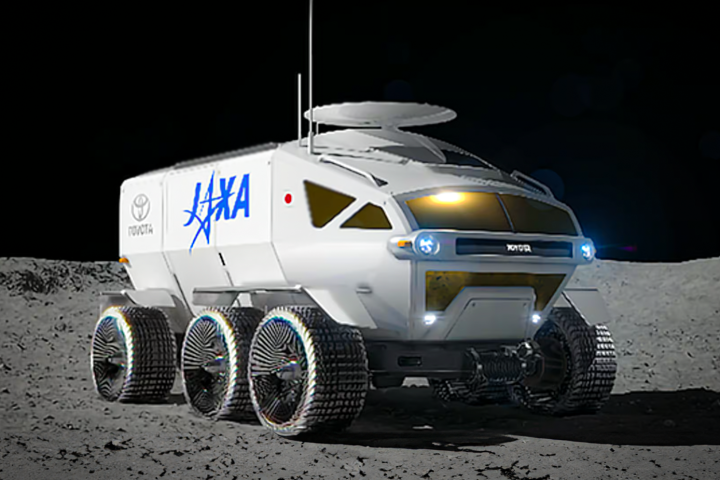 When NASA returns to the Moon, its astronauts will enjoy tooling around in a pressurized camper van courtesy of JAXA and Toyota. The two-person vehicle is part of a US/Japan agreement that includes putting the first Japanese astronauts on the Moon.
 -
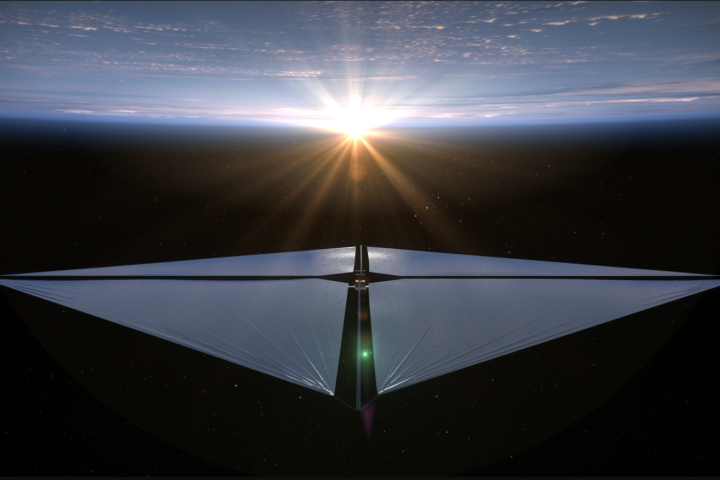 NASA is gearing up to launch an advanced solar sail spacecraft later this month. Using a new boom made of lightweight polymer composites, the Advanced Composite Solar Sail System is scheduled to lift off on April 24.
 -
 NASA engineers have narrowed down the problem with the Voyager 1 deep space probe to a single faulty chip. It may now be possible to work around the corrupted memory and return the 47-year old interstellar spacecraft to an operational condition.
 -
 NASA has selected three companies to develop extreme off-road vehicles that astronauts will drive on the Moon during Artemis missions starting in 2030, awarding US$4.6 billion in contracts to Intuitive Machines, Lunar Outpost and Venturi Astrolab.
 -
 We might find alien life as soon as 2030, suggests a new study. A lab experiment has shown instruments on a spacecraft headed to one of the most promising worlds to find life are sensitive enough to detect a single living cell in a single ice grain.
 -
 In preparation for a permanent human colony on the Moon, DARPA has awarded a contract to Northrop Grumman to develop a highly ambitious lunar railway concept. It's part of the agency's 10-year Lunar Architecture (LunA-10) Capability Study.
 -
 Sometime this year, the night sky will get a brand new 'star' that will be visible with the naked eye, even in the city. The celestial light show will be the result of an explosive interaction between two neighboring stars that occurs every 80 years.
 -
 NASA's Voyager 1 deep space probe may get a new lease on life thanks to an unexpected download from one of its onboard computers. After months of sending back gibberish instead of collected data, the craft may have provided a clue to its salvation.
Load More