
Molecules
-
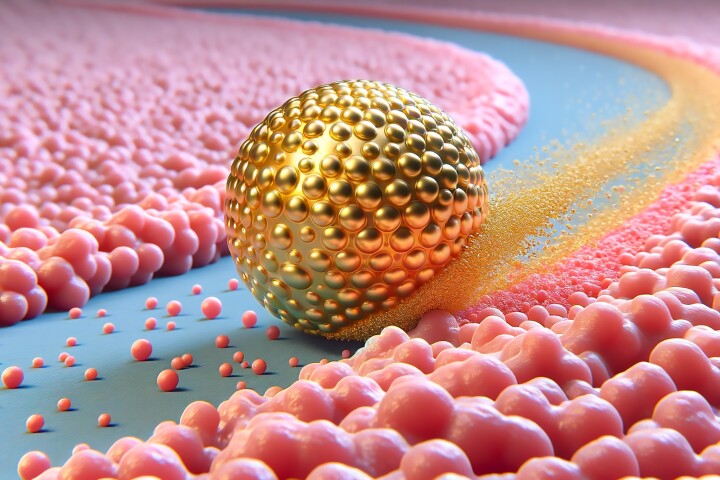 The body uses protein-based molecular motors to perform functions essential to life. Now, researchers have created ‘The Lawnmower,’ the first synthetic motor that propels itself by harnessing the energy it creates as it cuts through fields of proteins.
 -
 White blood cell numbers can be cut by health conditions or treatments like chemotherapy. Yale scientists have now discovered a molecule that can be given to quickly boost their numbers back up, to help fight off infections without antibiotics.
 -
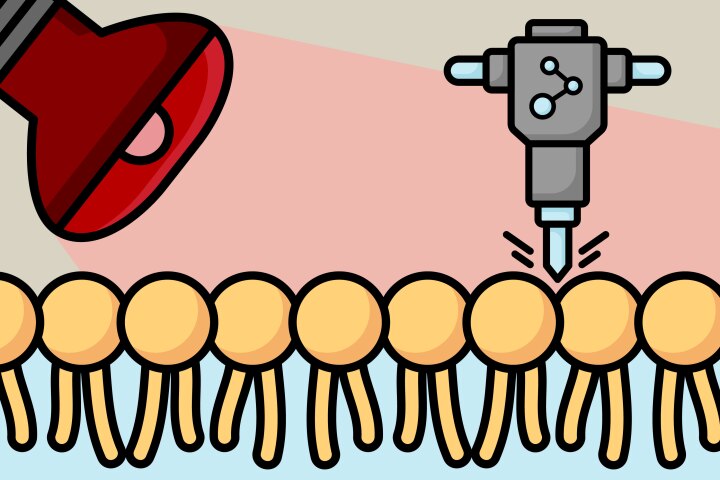 Scientists have demonstrated an intriguing new technique to treat cancer – “molecular jackhammers” that latch onto cancer cells, then vibrate vigorously to kill them when activated by infrared light.
 -
 Slowing down the dreaded aging process interests everybody, and now scientists have uncovered a new pathway to doing so. The team identified a feedback loop in the brain, and found that ramping up its activity helped mice live longer and healthier.
 -
 Scientists have developed a synthetic pathway that can capture CO2 from the air more efficiently than in nature, and shown how to implement it into living bacteria. The technique could help make biofuels and other products in a sustainable way.
 -
 Antibiotic-resistant bacteria are poised to become a global health concern. In the race to develop new weapons, scientists have created a new family of antibacterial polymers that can kill 'superbugs' in a way they can't evolve resistance to.
 -
 Saturn’s moon Enceladus continues to climb the list of best places to look for life beyond Earth. New NASA data has detected a molecule thought to be key to the origin of life, and suggests there’s more chemical energy for life to chow down on.
 -
 Implants and tiny machines could eventually help treat disease or monitor activity, but communication is tricky. Now scientists at EPFL have developed a system whereby devices can communicate by releasing molecules into a patient’s bloodstream.
 -
 After screening 27 million compounds, researchers have found a small-molecule drug that performed as well as a common painkiller with no side effects in rodent tests. The hope is that the finding could lead to better pain management for humans.
 -
 You can tell a lot about what's going on in undersea environments simply by seeing which compounds are being released into the water by marine organisms. An experimental new device could soon make that process quicker and easier than ever before.
 -
 Researchers have combined two microscopic imaging techniques in one microscope, providing scientists with a high-resolution method of tracking single molecules in a cellular context, letting them visualize, in minute detail, what’s happening inside cells.
 -
 Researchers have developed a molecule that inhibits the enzyme that spreads the cold sore-causing herpes virus. Their discovery could lead to a new virus treatments, as well as treating diseases that rely on this enzyme to spread, such as cancer.
Load More