
Microbes
-
 It's super-sustainable, easily made and nutrient-dense. And it puts all other food production to shame. Now, the first air-protein factory is open. It's the food of the future, and soon a $100 million industry – but will you be putting it on your plate?
 -
 It may not be to everyone's taste, but kombucha tea may be able to deliver the benefits of fasting, without the hardest part – the fasting. Its yeast and bacteria altered fat metabolism, without any other dietary changes, resulting in lower fat stores.
 -
 We might find alien life as soon as 2030, suggests a new study. A lab experiment has shown instruments on a spacecraft headed to one of the most promising worlds to find life are sensitive enough to detect a single living cell in a single ice grain.
 -
 Using an AI-based approach, researchers found a better way to create the drug galantamine, commonly prescribed to people suffering from Alzheimer's and other forms of dementia. The fermentation-based technique could boost the drug's availability.
 -
 Our bodies are home to trillions of microbes, including bacteria, viruses, fungi, and a whole host of others. Now, Stanford scientists have discovered an entirely new class of biological entities inside us, which they’ve ominously named “Obelisks.”
 -
 Researchers identified 317 million gene clusters belonging to oceanic microbes, creating the world’s largest open-source catalog that offers a tool for exploring how these genetic resources could be used in medicine, energy, food and other industries.
 -
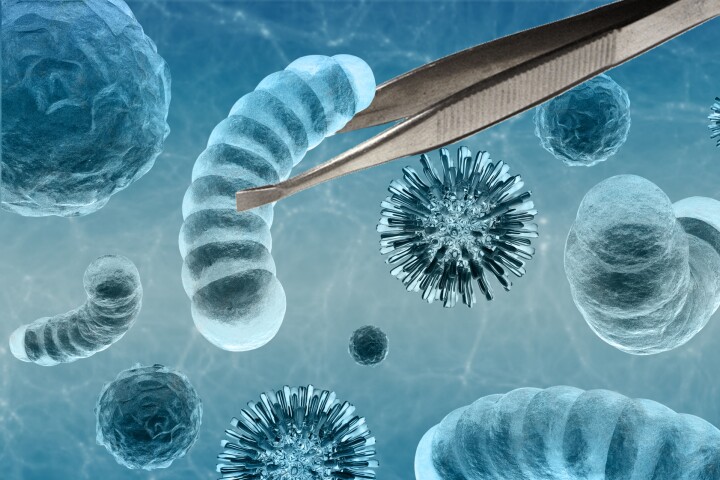 Researchers have developed a ‘smart tweezer’ that can pluck a specific bacterial strain from a microbiome of trillions and sequence its genome better than current methods allow. The tool could lead to breakthroughs in disease diagnosis and treatment.
 -
 The human body's microbe makeup is increasingly linked to the onset of many diseases, with a lot of the focus on the gut. A new study, however, has found that changes in the bug populations in not just the gut but in salivary and urinary microbiomes are linked to kidney stones forming.
 -
 Just like any other organisms, crop-destroying soil microbes die if they get too hot. With that fact in mind, scientists have developed a new system in which soil-heating microwaves are used to kill such pests. It could one day replace pesticides.
 -
 Hospitals are meant to heal people, but patients often pick up superbugs during their stay. Scientists have now developed long-lasting antimicrobial coatings for textiles that could allow hospital curtains to quickly kill viruses and bacteria.
 -
 A 15-year project trying to build a synthetic yeast genome has hit a major milestone – yeast cells with more than 50% synthetic DNA for the first time. The team created synthetic versions of almost all its chromosomes plus a completely new one.
 -
 Locating diamond deposits in the earth isn't always an exact science, so the greater the number of methods of doing so, the better. A new study now suggests that soil microbes may point the way to such buried treasures.
Load More