
Mars
-
 Abundant, diverse bacterial communities have been found deep beneath the almost uninhabitable surface of the Atacama Desert in Chile. The researchers who discovered them say they're likely 19,000 years old and could be linked to microbial life on Mars.
 -
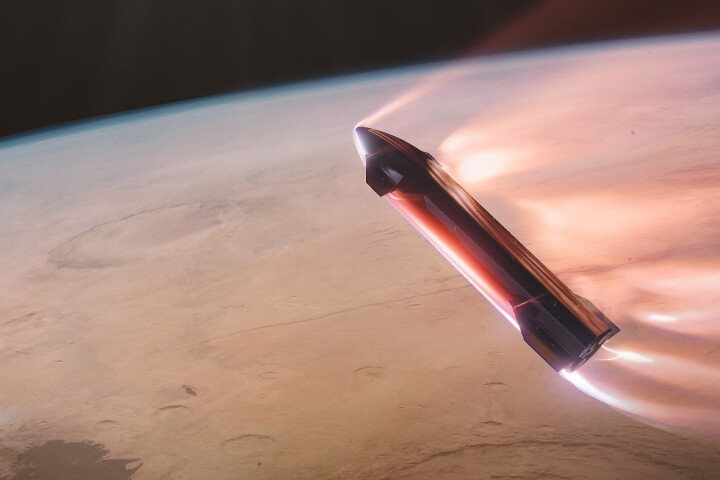 Elon Musk has given an update on Mars colonization plans, noting how the advances in SpaceX's Starship combined with plummeting launch costs could one day see thousands of ships heading for the Red Planet to support a colony of a million people.
 -
 A massive volcano has been hiding in plain sight on Mars, says new research. Not only is its sheer size noteworthy, but the team believes it might also harbor glacial ice that could be critical for further exploration and Martian settlements.
 -
 NASA has declared the end of its Ingenuity Mars helicopter mission. Originally scheduled to last a month with five flights, it lasted for three years with 72 flights before being grounded by damaged rotors after its last flight.
 -
 Data from ESA's Mars Express indicates that there may be subterranean ice deposits at the Martian equator that are up to 2.3 miles (3.7 km) thick. With enough water to fill the Red Sea, this could be a tremendous resource for future Mars colonies.
 -
 To address the prospect of parched astronauts on Mars, NASA is considering a proposal. The agency may develop a method of using synthetic biology to remove toxic perchlorates from Martian ice deposits, thus making water from those deposits drinkable.
 -
 Space is one of the most versatile and photogenic subjects, and this year was no different. From a sunrise captured by the International Space Station to the most distant star ever observed, here are some of the best space photographs taken in 2023.
 -
 The solar wind is constant in the solar system – except on Christmas Day 2022 when it suddenly vanished completely. The event was detected by a NASA spacecraft orbiting Mars, which found that the Red Planet’s magnetosphere tripled in size in response.
 -
 There aren't any organizations other than NASA that can claim they are operating on two different planets. The space agency is now using that reach to create better helicopter blades on Earth and to push its copter to greater heights on Mars.
 -
 NASA’s InSight listened out for seismic activity on Mars, and last year it picked up a marsquake so big it was suspected to be a meteoroid impact. Now, thanks to the cooperation of all agencies with orbiters around Mars, the source has been tracked.
 -
 One day on Mars is about 37 minutes longer than an Earth day – but it seems both planets are working to fix the gap. Data from NASA’s InSight lander have revealed Martian days are getting ever so slightly shorter, and scientists aren’t sure why.
 -
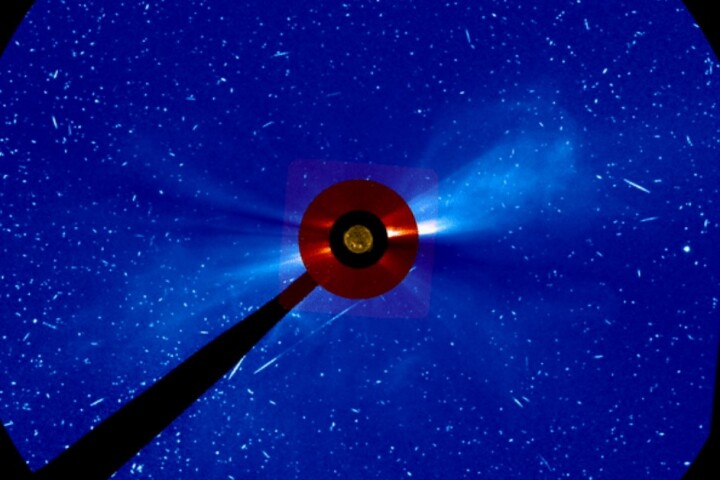 In a scary first, scientists have discovered a 2021 solar eruption so large that it was, for the first time, detected simultaneously on Earth, the Moon, and Mars, highlighting the radiation dangers posed by such events to deep space travelers.
Load More