
Magnetic
-
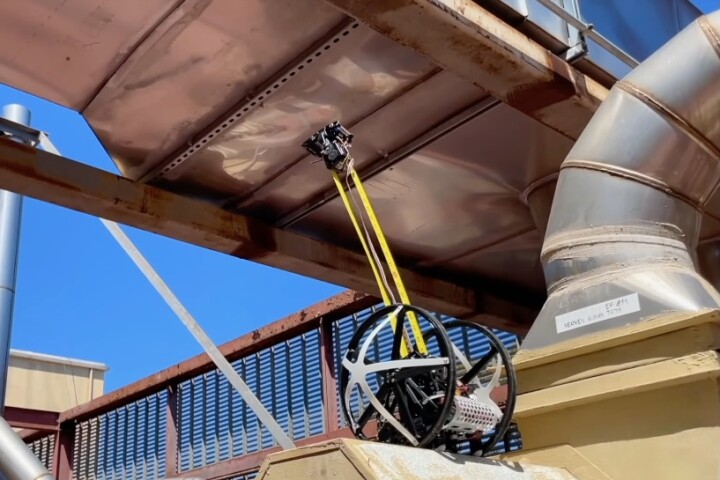 A new wheeled robot is able to climb metal structures in a clever and unique way – it uses an extendible tape-measure limb. Descendants of the bot may one day find use inspecting or repairing things like towers, bridges, power stations and ships.
 -
 Pens, flashlights and pry bars are all useful, and the BoltLite modular multi-tool packs all three into a waterproof titanium body. It can be carried as one solid unit or pulled into pieces as the situation dictates.
 -
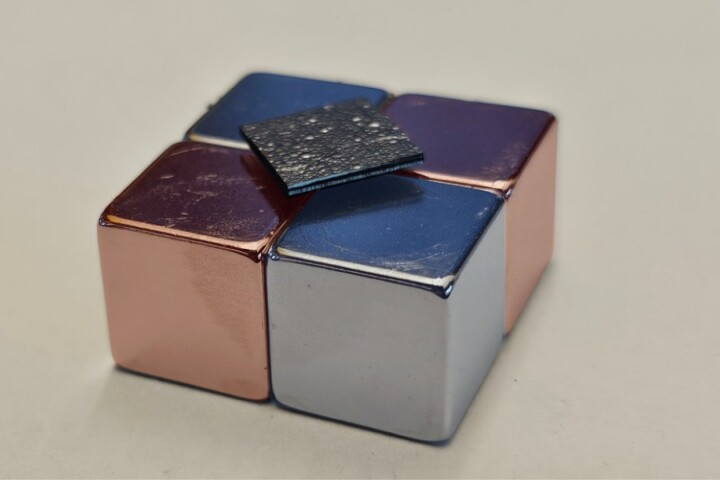 Magnetic levitation is used to float things like lamps and trains, but usually it requires a power source. Now, scientists in Japan have developed a way to make a floating platform that requires no external power, out of regular old graphite.
 -
 The Dynamic Duo "flashlight" is actually two flashlights – a wide-beam that illuminates a broad area, and a more focused narrow-beam. They can be used individually as needed, or magnetically joined together to form one dual-beam unit.
 -
 Maglev transport systems present an attractive option for the mobility mix. They're quick and quiet, and are low maintenance. But setup can be costly and complex. IronLev is looking to change that with a passive system that runs on regular rail tracks.
 -
 Carrying your camera could soon get a lot easier. The Swift-Lock system allows users to tote their DSLR in a stabler, more accessible orientation than otherwise, plus they can quickly pop their camera on and off of the thing as needed.
 -
 Scientists have confirmed the existence of a strange new form of magnetism. Hiding right under our noses, the team says that “altermagnetism” can be found in everyday materials and could have major technological uses.
 -
 While some blood clots can be removed via a tool that's inserted into the affected vein or artery, others are harder to reach. Those other clots could one day be treated using "millirobots" that auger their way through the patient's blood vessels.
 -
 Scientists at ETH Zurich have discovered a new type of magnetism. Experiments show that an artificially produced material becomes magnetic through a mechanism that hasn’t been seen before.
 -
 Interchangeable-bit ratcheting screwdrivers are very useful devices, but they're not something you'd typically stuff into a pocket. The folks from Logical Carry are out to change that, with the flat-form Ti-Mag.
 -
 Researchers have created a magnet-containing 'workout mat' that simulates the mechanical forces exerted on muscle cells during exercise. It may assist in testing treatments for people with muscle injuries and neuromuscular diseases.
 -
 Everybody’s favorite wonder material, graphene, continues to surprise. MIT physicists have discovered yet another brand new electronic state hiding in this overachieving little material – something they give the bizarre name of “ferro-valleytricity.”
Load More