
Lenses
-
 Tech company Beaverlab has launched a Kickstarter to raise funds for a smart super-telephoto camera called the Excope DT1 that can be had with a 400-mm zoom lens, and works with a smartphone to capture distant imagery.
 -
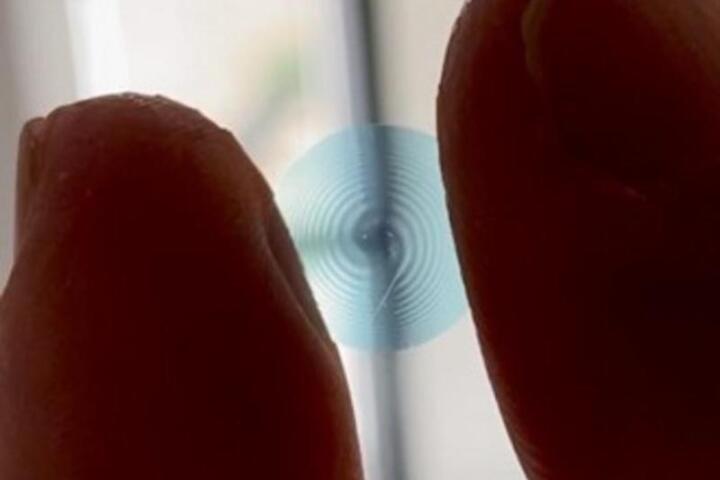 Scientists have developed a new type of lens that creates multiple focal points, which could make for glasses or contacts that provide a clearer view over a range of distances. The secret? Making the lens a spiral shape.
 -
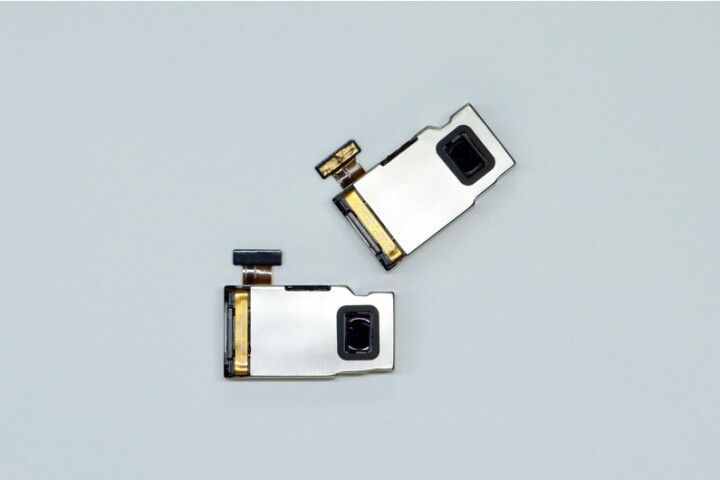 With a few notable exceptions, most smartphone cameras zoom either digitally or via a few optical zoom presets. That could soon change, however, as LG Innotek has announced its new Optical Telephoto Zoom Camera Module.
 -
 Xiaomi snuggled up with Leica back in June for the launch of the 12S Ultra smartphone featuring a 1-inch-type image sensor and Summicron optics. Now the companies have partnered again on a concept version with a lens adapter for mounting Leica glass.
 -
 Researchers have developed a new type of adaptive liquid lens that changes its focal distance when a voltage is applied. Made with an electrically responsive fluid, the lens is lightweight and could be easily manufactured for use in smartphones.
 -
 Researchers have modified the material used in re-writable CDs to create a new optical lens that shifts its focal point in response to heat, with no moving parts. It could enable miniature zoom lenses for drones, cellphones, or night vision goggles.
 -
 At its annual developer conference last week, Xiaomi announced an upcoming wide-aperture lens that retracts into the body of a smartphone when not in use, promising long optical zoom without increasing the girth of our ubiquitous mobile companions.
 -
 Researchers have developed a flat lens that's one one-thousandth the thickness and one one-hundredth the weight of a conventional model.
 -
 One of the oldest problems in optics has been solved. Rafael Gonzalez from the Tecnologico de Monterrey has come up with an almost comically dense equation that can be used to almost completely eliminate spherical aberration in optical lenses, and the effects could be widespread.
 -
 Lens filters are an important tool for many DSLR photographers, but dealing with different diameter lenses, stepping-rings, square filter mounts and the rest can be frustrating and expensive. But now, an ingenious filter system for mirrorless camera adapter mounts, looks to shake things up.
 -
 SciencePresbyopia is a common form of age-induced far-sightedness. Now a Stanford team has developed a pair of high-tech specs called autofocals, which use fluid-filled lenses, depth-sensing cameras and eye-tracking technology to make sure whatever a wearer is looking at stays sharp.
 -
 Before zoom lenses arrived on the scene, film makers used cameras featuring a few different lenses mounted to a rotating disc. Looking for a quick way to switch between different zoom ratios on large format modern cameras, Ian Kerr, CSC, tapped into the past to create the MultiTurret.
Load More