
JPL
-
 There aren't any organizations other than NASA that can claim they are operating on two different planets. The space agency is now using that reach to create better helicopter blades on Earth and to push its copter to greater heights on Mars.
 -
 As far as landscapes go, Mars is pretty dull – it’s mostly just rocks and craters. But now the Perseverance rover has spotted a couple of particularly weird rocks that have been hollowed out in eerie shapes.
 -
 A new discovery has boosted the chances of life soon being found on another world. NASA has announced the detection of phosphorus, the rarest element that’s essential to life, in the oceans of Saturn’s moon Enceladus.
 -
 NASA’s Jet Propulsion Laboratory has engineered a self-propelled, autonomous robot snake designed to explore extreme extraterrestrial terrain. Its first-of-a-kind propulsion system means it can boldly go where no robot snake has gone before.
 -
 The first aircraft to fly on another planet has hit a new milestone. NASA’s Ingenuity Mars Helicopter has recently clocked up its 50th flight, and achieved a new altitude record in the process.
 -
 It may look like a lightsaber sitting on the surface of Mars, but this titanium tube is a sample canister dropped off by Perseverance. This could eventually be the first pristine sample of Martian soil and rock returned to Earth in a future mission.
 -
 NASA’s InSight Mars lander has made two major new discoveries. By sensing seismic activity from the Red Planet, the craft has now detected a large meteorite impact, and found evidence of magma pools and volcanic activity still occurring today.
 -
 Subsurface oceans on moons are some of the most promising places to look for life beyond Earth. NASA is now funding a project to develop a swarm of small swimming robots that would explore these alien oceans for signs of extraterrestrial life.
 -
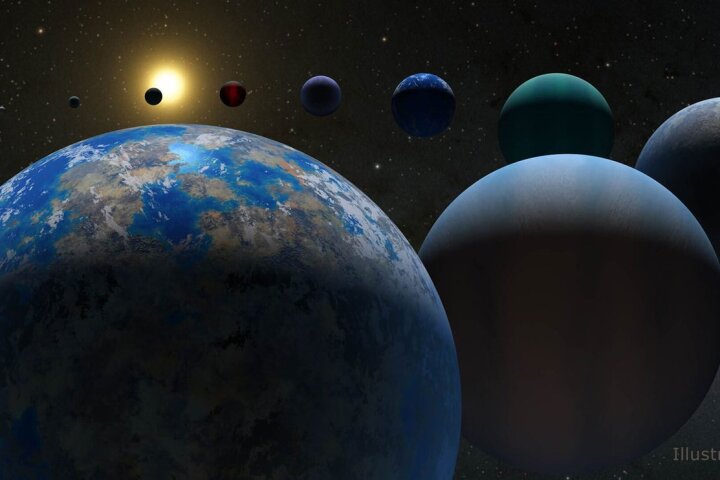 The hunt for planets beyond our solar system has now reached a major milestone. A new batch of 65 exoplanets brings the total number of confirmed planets beyond our solar system to over 5,000 – with potentially hundreds of billions left to find.
 -
 NASA has monitored potentially hazardous asteroids for decades, but some factors couldn't be accounted for. The new Sentry-II system has now gone online, allowing astronomers to calculate the orbits and impact chances of asteroids far more precisely.
 -
 In 2018 astronomers announced the discovery of lakes of liquid water on Mars at the south pole. Sadly, a trio of new papers refutes the claim, with new experiments suggesting that the “water” signal was more likely produced by frozen clay instead.
 -
 Editor’s note: New details about this fascinating object have emerged since we wrote this article – here's the latest update.
Load More