
International Space Station
-
 NASA has completed the analysis of a chunk of metal that crashed into the roof of a house in Naples, Florida, a few weeks ago. The agency says it came from a pallet of trash released from the International Space Station three years ago.
 -
 Among the cargo that just blasted off from Cape Canaveral, Florida, bound for the ISS were two firsts: the world’s first metal 3D printer designed especially for use in orbit and the first miniaturized surgical robot to be sent to the station.
 -
 2023 turned out to be a busy year in space and the general vicinity. New Atlas looks back at everything from rocket launches and cosmic tsunamis to asteroid samples and the latest astronaut fashions.
 -
 Space is one of the most versatile and photogenic subjects, and this year was no different. From a sunrise captured by the International Space Station to the most distant star ever observed, here are some of the best space photographs taken in 2023.
 -
 The European Space Agency (ESA), Airbus Defence and Space, and Voyager Space have signed a technology agreement that gives us a glimpse at space exploration and exploitation beyond the retirement of the International Space Station (ISS).
 -
 A resupply mission to the ISS is planned for next week, which will include a special delivery for Andreas Mogensen in the shape of a Vive Focus 3 VR headset intended to help the Danish astronaut cope with the stress of working in space.
 -
 In one small step for humankind, scientists have seen a fertilized mouse egg develop naturally and normally into early embryonic form. While a long way to go, it’s a positive sign that mammalian – namely, human – reproduction can take place in space.
 -
 NASA will soon demonstrate a laser-based communication system between ground facilities and the International Space Station. The technology will boost data transmission speeds by 10 to 100 times, potentially opening a new standard in deep space comms.
 -
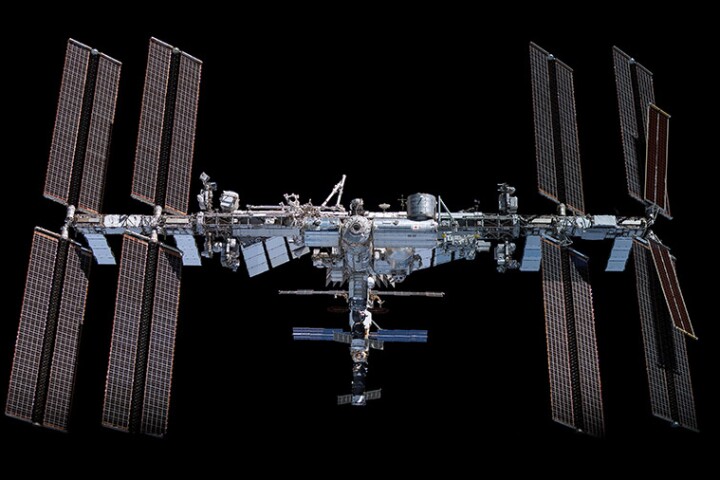 NASA's final plans for the International Space Station when it is decommissioned at the end of the decade have been revealed as it asks for proposals for a new spacecraft that will be used to guide the station to burn up in the Earth's atmosphere.
 -
 Six years after its initial launch date, the first crewed flight of Boeing's ill-fated Starliner spacecraft has been postponed once again until at least March 2024 due to ongoing issues with the capsule's reentry parachutes and related safety issues.
 -
 Astronauts on interplanetary missions will be a bit less thirsty after a new NASA system succeeded at reclaiming 98% of waste water aboard the International Space Station (ISS) by converting things like urine into a drinkable state.
 -
 Scientists are the first to take advantage of the unique environment of space to test two specific cancer drugs. Setting up on the International Space Station, they'll examine stem cells in low Earth orbit, also examining astronaut stem cell health
Load More