
Instrument
-
 A portable music production studio previewed at NAMM 2022 is now crowdfunding on Kickstarter. Playtime Engineering's Blipblox myTracks is designed to give young creators all the tools they need to start making music.
 -
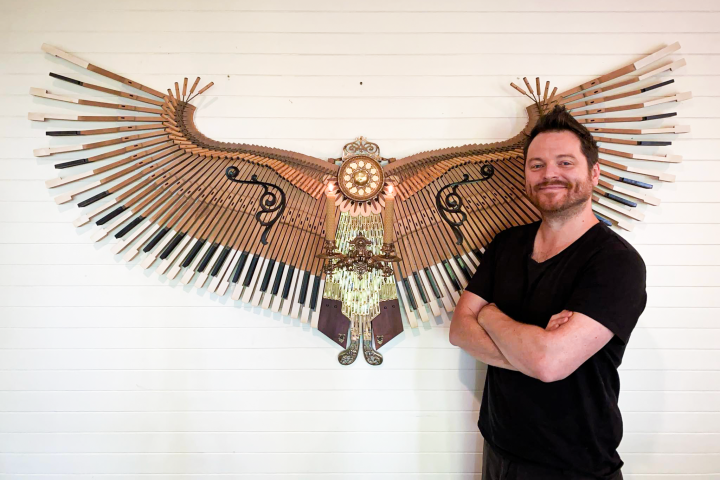 Pianos can become the heart of a home, and some become intergenerational heirlooms loaded with memories. Letting them go once they're unplayable can be very hard, but an Australian sculptor has found a way to resurrect them, to jaw-dropping effect.
 -
 Way back in 1981, Suzuki Music released a rather bizarre electric instrument called the Omnichord – a kind of synth you could strum. Now the company has relaunched the an updated kidney-shaped oddity at NAMM 2024.
 -
 The world's largest music gear expo is set to open its doors next week, and Yamaha has popped up early with a groove machine called the Seqtrak that could have jumped straight out of Teenage Engineering's design playbook.
 -
 Brit musical instrument maker Dubreq has released a number of key upgrades to its iconic pocket synth over the years, but the Stylophone CPM DS-2 is something of a departure from the usual playbook.
 -
 The physicist Lev Sergeyevich Termen may not be a household name, but the eerie sounds of the synthesizer he invented are instantly recognizable. Now Dubreq is inviting music makers to wave their arms about for its own take on the Theremin.
 -
 Back in 2015, Sweden's Teenage Engineering launched a bunch of pocket-friendly synths and samplers called, appropriately enough, the Pocket Operators. Now the team has announced a higher-end, almost pro-level version called the EP-133 KO II.
 -
 The Woovebox micro music workstation rocks a stripped-back design reminiscent of Teenage Engineering's Pocket Operators, but has more to offer the mobile groove creator – packing in a synthesizer, sequencer, sampler and beat maker.
 -
 Back in the late 1960s, creating music anywhere was made much easier with a now iconic toy-like pocket synth called the Stylophone. Now Dubreq is aiming to do the same for beat makers with a portable drum machine.
 -
 Back in 2019, Artiphon launched a Kickstarter for a battery-powered handheld music-creation tool called the Orba. Now the company has returned to the platform with Chorda, a portable synth, looper and MIDI controller shaped like a short guitar neck.
 -
 A new 16-string, single-fret acoustic instrument called the Hanago has launched on Kickstarter, which is designed to combine the best aspects of piano and guitar to make learning to play easy, while also laying down the foundations of music theory.
 -
 Collaborative music creation platform Endlesss has launched "the world's first beat-making arcade machine." The Beat Machine combines gamified music missions, live jamming online, social networking and powerful music creativity.
Load More