
Hydrogen
-
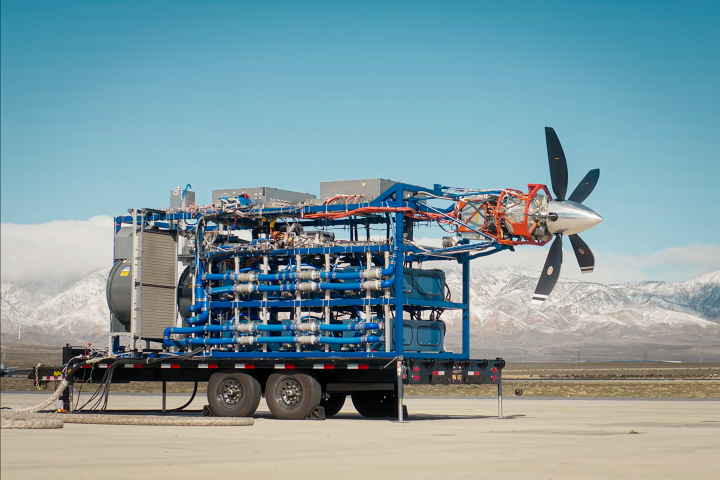 Universal Hydrogen is already flying the world's largest hydrogen airliner – and now the company has started testing swappable liquid hydrogen fuel modules that'll radically boost the range of clean passenger aircraft operations slated for 2026.
 -
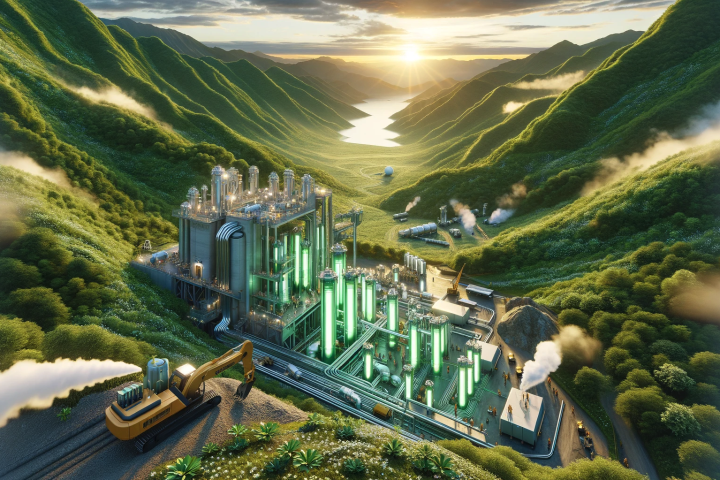 There's enough natural hydrogen trapped underground to meet all projected demands for hundreds of years. An unpublished report by the US Geological Survey identifies it as a new primary resource, and fires the starter pistol on a new gold rush.
 -
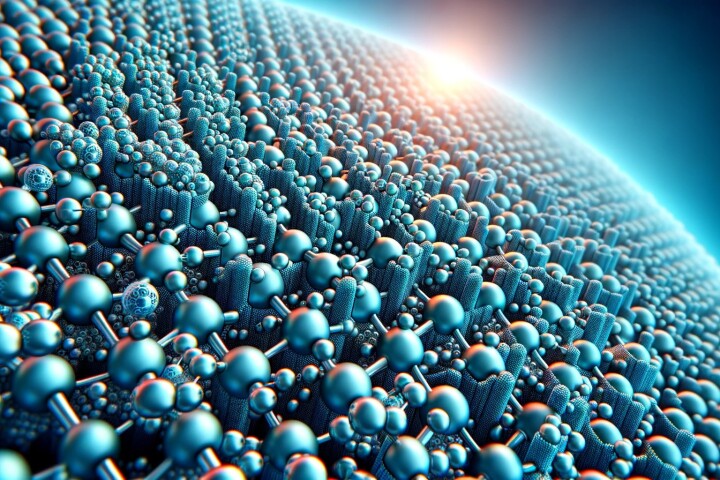 A nanoporous material that holds hydrogen at twice the density of cryogenic liquid H2 could address the challenges of large-scale liquid and gas storage that have held this clean fuel back.
 -
 ZeroAvia is working with San Francisco startup Verne to bring an even more energy-dense form of hydrogen to the clean aviation space. Cryo-compressed H2 could reduce costs, speed up fueling, and unlock 40% more flight range than cryogenic liquid H2.
 -
 The Sirius Jet will fly up to 1,150 miles (1,851 km) at speeds up to 323 mph (520 km/h) on a clean liquid-hydrogen powertrain. It'll rise vertically off a pad thanks to a deflected vectored thrust system using 20 smallish electric ducted fans.
 -
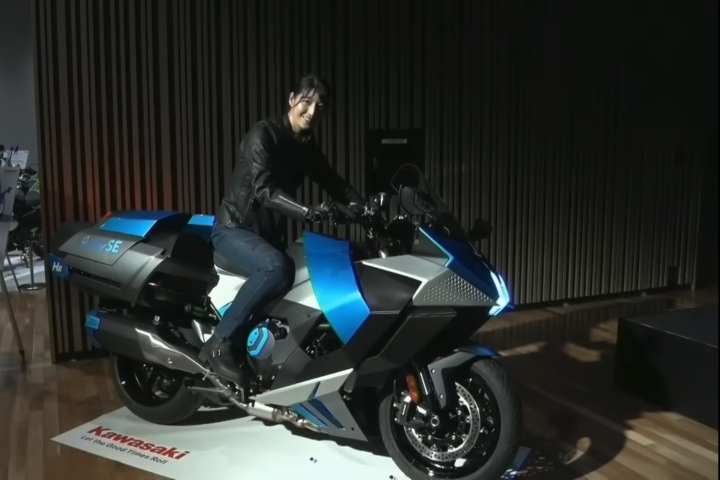 Kawasaki is doing some fascinating work toward decarbonizing motorcycles. After launching the world's first hybrid streetbike in the Ninja 7 Hybrid, it's now built a supercharged, zero-emissions, hydrogen-powered Ninja H2 SX. An H2 H2, if you will.
 -
 Saturn’s moon Enceladus continues to climb the list of best places to look for life beyond Earth. New NASA data has detected a molecule thought to be key to the origin of life, and suggests there’s more chemical energy for life to chow down on.
 -
 In a move that mirrors an Anglo American and Williams Advanced Engineering project from 2020, General Motors has partnered with Japan's Komatsu to develop a fuel-cell power module for the latter's 930E electric-drive mining truck.
 -
 Researchers have created a floating, solar-powered device that converts contaminated water or seawater into clean hydrogen fuel and drinking water. Because it works with any open water source, it could be used in resource-limited or remote places.
 -
 Launched in February of this year, BMWs iX5 pilot fleet of hydrogen-powered cars has been getting field tested in countries around the world. Most recently, the passenger car got put through its paces in the punishing conditions of the UAE.
 -
 On the largest scales possible, the universe resembles a web of light spun by an inconceivably large spider. Now, astronomers have detected very faint light from these cosmic web filaments in the deep, dark, distant universe.
 -
 Researchers have harvested hydrogen from waste plastics using a low-emissions method. They say it not only solves environmental problems, but the value of the graphene by-product could offset the costs of producing hydrogen.
Load More