
Headset
-
 Finland's Varjo has announced the latest edition of its mixed-reality headset for enterprise and military, which is claimed to offer "virtual and mixed reality experiences practically indistinguishable from natural sight."
 -
 After an athlete has suffered a concussion, it's important that they wait until the injury has healed before returning to the playing field. A new headset is designed to let them know when it's safe to do so, by monitoring their "headpulse."
 -
 While breathalyzers make it quick and easy to tell if someone is drunk, it takes more time and effort to determine if they're intoxicated by drugs such as cannabis. A new device known as Gaize could reportedly soon change that.
 -
 VR app company Bigscreen is moving into hardware with the launch of the Beyond headset, which is claimed to be the world's smallest – coming in at less than an inch at its thinnest point and said to weigh in six times lighter than other VR devices.
 -
 Following years of product teasers, Magic Leap finally made its augmented-reality headset available to a few select customers in 2018. Three years later, a second generation was announced, and now the Magic Leap 2 is going on sale from September.
 -
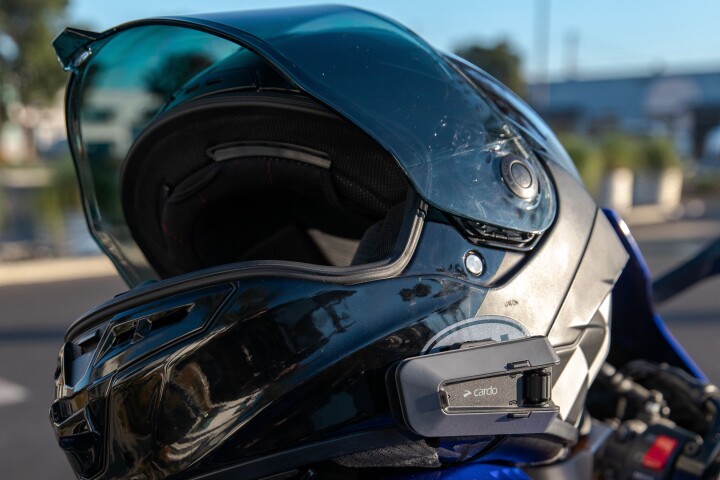 Cardo has overhauled its flagship dynamic-mesh intercom for motorcyclists. The new Packtalk Edge gets a magnetic "air mount," a slimmer design with no pop-up antenna, upgraded Bluetooth 5.2, improved JBL sound, USB-C and wireless updates.
 -
 We saw the first pair of Snapchat Spectacles in 2016, and now Snapchat parent company Snap has come out with its most advanced wearable yet: a pair of glasses with full augmented reality capabilities.
 -
 Coming later this year, the Cognixion ONE headset is promising something extra on top of the regular augmented reality experience: a brain computer interface that can turn thoughts into commands for the device.
 -
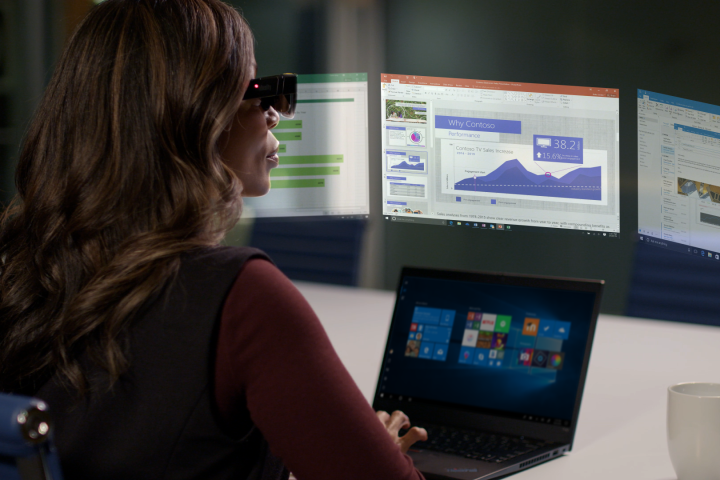 One display just isn’t enough for most people. If you’d rather not clutter up your desk with a whole bunch of screens, Lenovo has unveiled ThinkReality A3, a pair of augmented reality glasses that can project up to five virtual displays around you.
 -
 It's easier to keep pace or beat your personal bests when running with a partner, rather than alone. A new AR headset called the Ghost Pacer helps you do that even when your friends are busy, by pitting you against a virtual avatar only you can see.
 -
 Dreamworld is back with another pair of augmented reality glasses: the DreamGlass 4K. With an improved 4K resolution and 5G connectivity, these could be the perfect at-home entertainment system now that we're all spending more time indoors.
 -
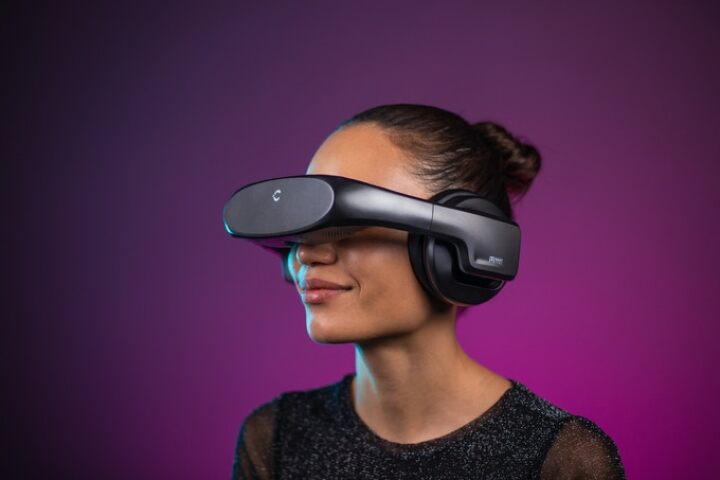 The Cinera Edge is a light personal cinema headset that packs a 5K(ish)-resolution display and Dolby Surround Sound. It uses two OLED displays measuring just 0.83 inches with 2560 x 1440 pixels each, creating the equivalent of almost an IMAX screen.
Load More