
Exoplanet
-
 Flat-Earthers might have been right all along – they were just a few billion years late. Scientists at the University of Central Lancashire have found that newly formed planets might take on a flatter shape, before rounding out.
 -
 A new NASA study has discovered a new exoplanet that is almost the size of Earth and orbits a star that's the same type as the Sun. Unfortunately, this promising candidate is also tidally locked and has one side so hot that it's one giant sea of lava.
 -
 Hubble has helped astronomers measure changes in the weather on an exoplanet. Forecasts for the planet Tylos predict a gigantic hurricane today with a top of over 3,000 °F (1,650 °C), followed by a strong chance of showers of molten iron tonight.
 -
 Look at the development of Earth-bound tech and you'll find fire at the heart of it, says a duo of researchers. And what does fire need to burn? Oxygen, whose chemical signature could provide clues to technological societies on worlds beyond our own.
 -
 Researchers from MIT and the University of Birmingham (UB) believe that they've cracked the formula for detecting habitable planets using currently available technology. It all has to do with an exoplanet's levels of carbon dioxide and ozone.
 -
 The James Webb Space Telescope has made the first direct analysis of clouds on a nearby alien world. These aren’t just made of water vapor but also sand, which would move around the planet much like Earth’s water cycle.
 -
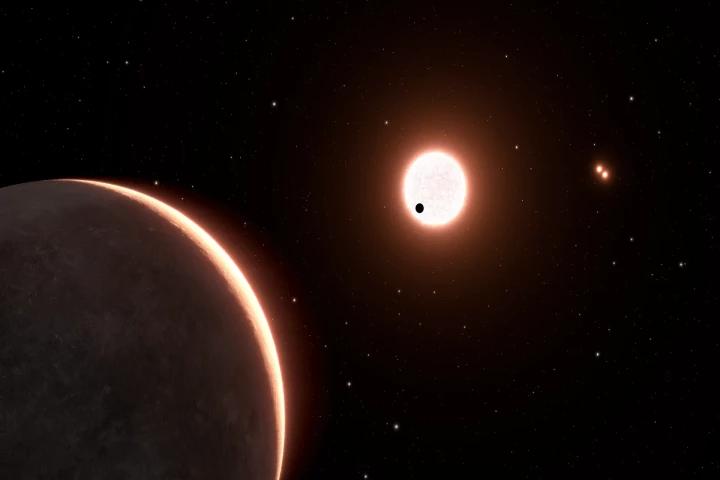 The chances of finding extraterrestrial life have improved slightly after NASA announced that its Hubble Space Telescope has confirmed the size of an Earth-sized exoplanet only 22 light-years from Earth, the nearest that passes in front of its star.
 -
 Move over TRAPPIST-1 – there’s an exciting new planetary system in town. Meet Kepler-385, home to seven Super-Earths that were just discovered in existing data.
 -
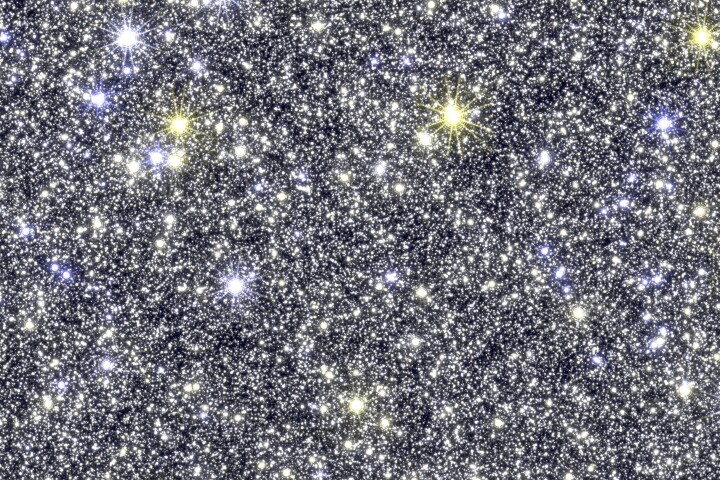 NASA’s anticipated Roman Space Telescope is taking shape, and will soon measure light from a billion galaxies, perform a microlensing survey deep in the Milky Way, monitor hundreds of millions of stars and peer into unseen galactic neighborhoods.
 -
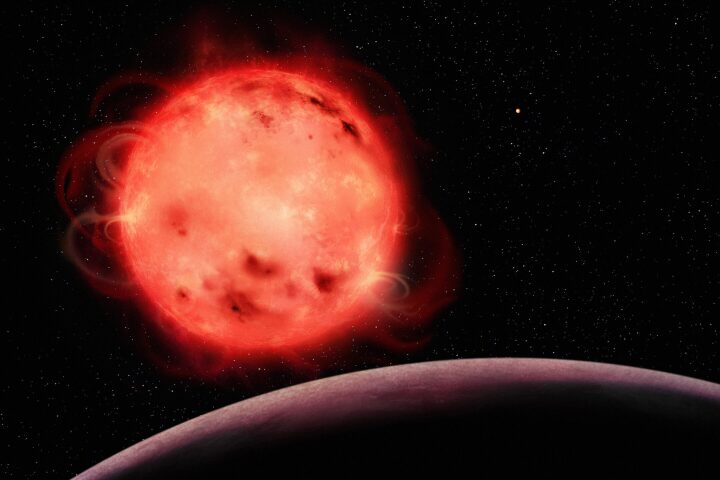 The James Webb Space Telescope has achieved one of the first major science goals announced for it way back in 2017. The infrared instrument has now probed the atmosphere around one of the TRAPPIST-1 exoplanets.
 -
 NASA's James Webb Space Telescope has scored another first, detecting evidence of water in a planet-forming disc circling another star where at least two terrestrial-class proto-planets seem to be forming.
 -
 Astronomers using an array of 66 radio telescopes have discovered what may be the first example of a star with two exoplanets circling it that share the same orbit, something that was thought to be theoretically possible but never seen until now.
Load More