
Electrical
-
 A new pacemaker is thinner than a human hair, wireless and operated entirely by light from an optic fiber. The non-invasive device could help regulate heart activity or even stimulate neurons in a set pattern to treat conditions like Parkinson’s.
 -
 An organic electrode that doesn’t require invasive surgery to implant and is resorbed by the body over time may be a novel way of using electrical stimulation to treat non-chronic conditions such as cancer, nerve injuries and pain.
 -
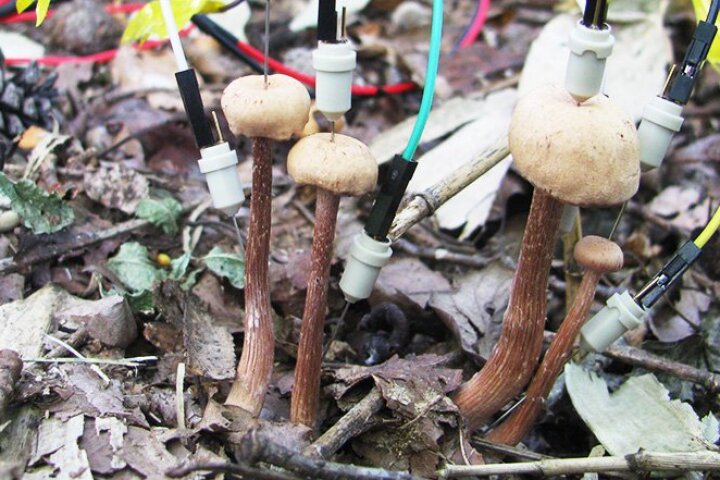 Whether they’re hacking the brains of bugs or mining gold, fungi are craftier than we give them credit for. Now researchers in Japan have studied how forest mushrooms communicate with each other, and found that they're mostly chatty when it rains.
 -
 Concrete is pretty useful, which is why it’s the most widely used construction material in the world. Now, engineers have made it even more useful, creating concrete that can conduct electricity and produce heat, by mixing in nanocarbon black.
 -
 “Strange metals” exhibit some unusual conductive properties and surprisingly, even have things in common with black holes. Now, a new study has characterized them in more detail, and found that strange metals constitute a new state of matter.
 -
 A prototype har-growth-stimulating device is self-powered and unobtrusive enough to hypothetically fit under a baseball cap.
 -
 It can be challenging, keeping track of multiple electrical devices to see which ones are currently running, and which may be about to fail. MIT's NILM (non-intrusive load monitoring) system is designed to help, tracking the status of devices in settings such as factories, high-rises or even ships.
 -
 In a first-of-its-kind study a new kind of non-invasive electrical brain stimulation has been trialed in patients with major depression. The results show this new technique to be promising in reducing depressive symptoms, with larger trials set to explore this novel treatment in greater detail.
 -
 ScienceIn a landmark study, researchers from Northwestern University and the Washington University School of Medicine describe a novel biodegradable implant designed to electrically stimulate damaged nerves, speeding up the healing process, before naturally dissolving into the body.
 -
 A new study describes progress in a groundbreaking technique that is helping paraplegic patients walk again. The experimental process, involving electrically stimulating the spinal cord, is proving increasingly promising as research works to improve the design of the treatment.
 -
 A new study by a team of international researchers from the University of Pennsylvania and Nanyang Technological University is suggesting that electrically stimulating the prefrontal cortex can reduce the desire to carry out violent antisocial acts by over 50 percent.
 -
 To cut down on the false alarms, an MIT team of engineers is working on new "smart outlets" that use neural networks to not only determine if a detected electric arc is dangerous, but also what type of devices are plugged into the outlet.
Load More