
EEG
-
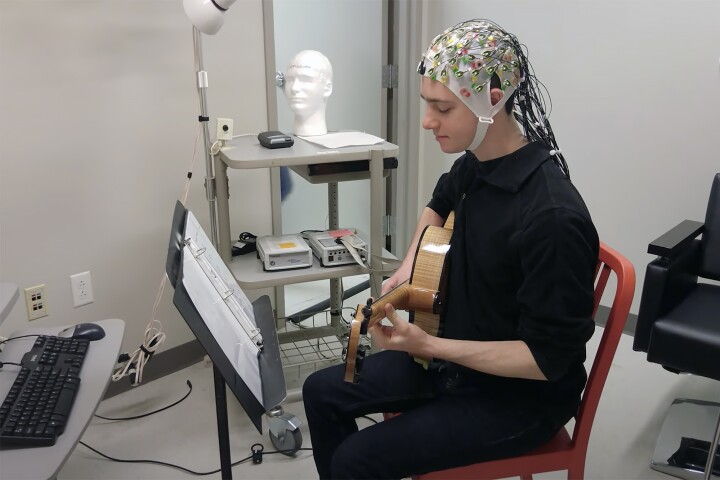 Analyzing the brain waves of improvising jazz musicians, researchers now understand how the brain achieves a creative flow state. The findings have practical implications for anyone wanting to get ‘in the zone’ to generate creative ideas.
 -
 Researchers have created an ultra-thin sensor that can wirelessly record deep brain activity down to a resolution of one or two neurons. The device has potential applications in conditions such as epilepsy, Parkinson’s disease, and chronic pain.
 -
 There may be new hope for stroke victims and other "locked-in" people who are unable to communicate by conventional means. It comes in the form of the experimental new BrainGPT system, which is able to read users' thoughts and convert them into readable text.
 -
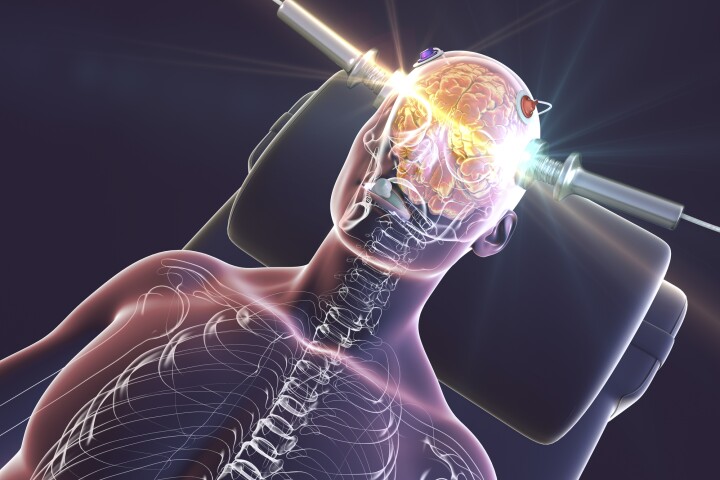 Two recent studies may have discovered how electroconvulsive therapy is so effective at alleviating some mental illnesses, especially severe depression, something that has puzzled psychiatrists and neuroscientists for decades.
 -
 When a person has suffered a stroke, the severity of that stroke has to be determined as fast as possible. A new brain-wave-reading cap was created with that fact in mind, as it allows strokes to be assessed before the patient reaches the hospital.
 -
 Earlier this year we heard about the ear-EEG, a special earbud that reads electrical activity in the brain. Well, scientists have now developed add-on sensors that allow regular earbuds to do so, and to analyze sweat to boot.
 -
 It is believed that long before Alzheimer's or Parkinson's diseases present obvious symptoms, the disorders may be noticeable in changes to a person's sleep patterns. A new project aims to see if such changes can be detected by an earbud-like device.
 -
 Scientists have a good understanding of how brain circuitry is affected by epilepsy, but not a lot is known about how epilepsy affects behavior. A new study has used AI on mice to catch epilepsy-related behavior that can be missed by the human eye.
 -
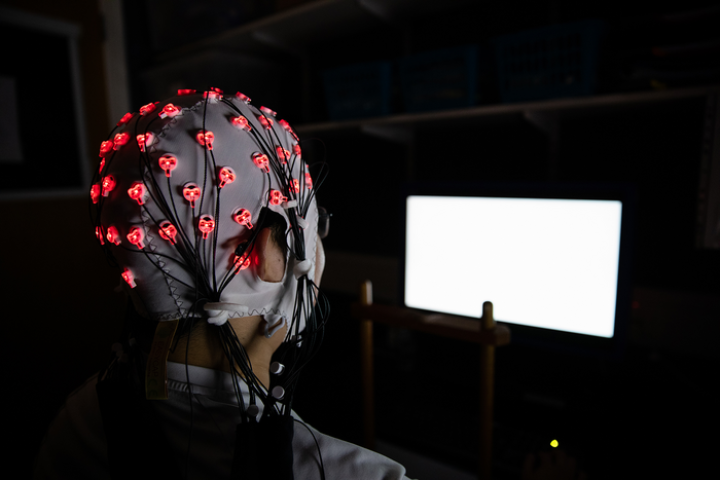 The human brain can be primed to learn more than three times faster, simply by flashing a light at its individual alpha brainwave frequency for 1.5 seconds, suggests a fascinating new neuroplasticity study from Cambridge and Singapore's NTU.
 -
 Sleeping while wired up with an EEG cap would be hard enough here on Earth, but can you imagine trying to do so in the zero-gravity environment of outer space? It could be quite awkward, which is why an earbud has been designed to do the same job.
 -
 X-ray vision has long been a superpower, but soon mere mortals could see hidden objects with help from AI. A new “ghost imaging” system reads the brainwaves of a person looking at light scattered off a wall to identify an object around a corner.
 -
 The phrase “my whole life flashed before my eyes” may have some truth to it. Scientists have recorded the activity of a dying human brain for the first time ever, revealing brain wave patterns related to processes like dreaming and memory recall.
Load More