
EADS
-
 The E-Fan electric trainer airplane developed by the Airbus Group has made its first public flight. Currently a demonstrator for electric aircraft technology, Airbus says that is will be used as the basis for building a new pair of electric training aircraft models.
 -
 Last Wednesday in Paris, a 75 year-old man received an artificial heart. That in itself might not be newsworthy, however, the gadget in question was the first Carmat artificial heart to ever be implanted in a human. According to its inventor, it's the world's first self-regulating artificial heart.
 -
 Gizmag's takes a look at the highlights from the 2013 Paris Air Show, both on the ground and in the air.
 -
 EADS has once again taken to the Paris Air Show to present a vision of commercial aviation in 2050, in the form of the eConcept airplane powered with its E-Thrust hybrid electric system.
 -
 Spain's ATLANTE Unmanned Aerial System made its maiden flight at the end of February.
 -
 The European designed nEUROn Unmanned Combat Aerial Vehicle (UCAV) demonstrator successfully completed its maiden flight on December 1, 2012 at Dassault Aviation’s flight test base in Istres in southern France.
 -
 The Vehicle Protection Jammer is designed to block radio signals being transmitted to roadside bombs.
 -
 Germany's DLR Institute of Robotics and Mechatronics flew its unmanned solar-powered ELHASPA aircraft for the first time this month.
 -
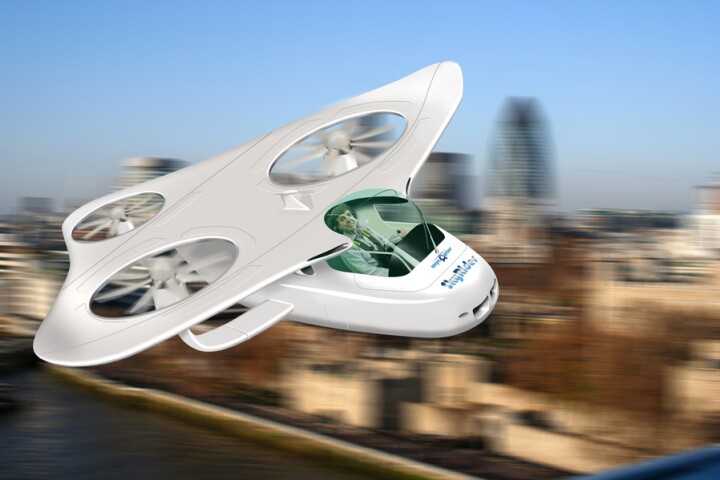 myCopter is an EU project that looks at taking vehicles off the road and launching them into the sky.
 -
 The VoltAir is a concept all-electric airliner, that could be flying within 25 years.
 -
 EADS has used the opening day of the 2011 Paris Airshow to showcase a high-speed aircraft of the future concept which contemplates speeds beyond Mach 4.
 -
 Scientists have created self-powered sensors, that could wirelessly transmit data on the status of aircraft parts upon which they were mounted.
Load More