
E-waste
-
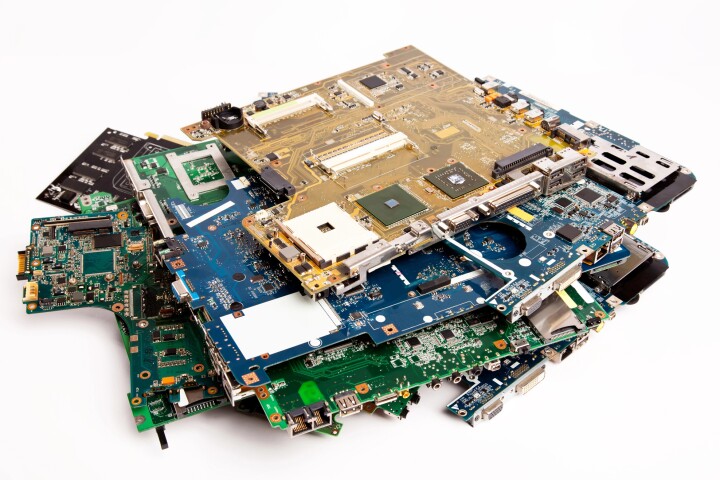 A new method for recovering high-purity gold from discarded electronics is paying back US$50 for every dollar spent, according to Swiss researchers – who found their all-important gold-filtering substance in cheesemaking, of all places.
 -
 The disposable nature of modern gadgetry is leading to a worrying e-waste problem. To highlight the issue, Envision Racing and artist Liam Hopkins teamed up to create a Formula E Gen3 racecar built from discarded phones, laptops, vapes and other tech.
 -
 Looking to tackle a significant part of our huge e-waste problem, Jiva has developed a PCB substrate that breaks down in water for easier recovery of materials. The startup is now partnering with manufacturers to demo and evaluate the Soluboards.
 -
 Discarded electronics can be a gold mine – literally. Researchers have developed an efficient new way to use graphene to recover gold from electronic waste, without needing any other chemicals or energy.
 -
 As 3D-printed electrical circuits become more widely produced, the problem of electronic waste could correspondingly get worse. That's why Swiss scientists have developed a new natural-source "e-ink" that biodegrades once discarded.
 -
 E-waste is a major environmental hazard, full of valuable metals. Engineers at Rice University have now shown that precious metals and rare earth minerals can be recovered by flash-heating ground-up electronics with a zap of electricity.
 -
 In reality, the inherent difficulties of recycling electronic devices creates many millions of tons of electronic waste each year, but new research shows how we might chip away at this problem by having key components dissolve in water.
 -
 As technology continues to evolve, we're going to see an increasing number of battery-powered connected devices – some of which will be single-use, like shipping packaging. A new biodegradable mini-capacitor has been created with such uses in mind.
 -
 Eyeing solutions to our e-waste problem, engineers have developed the world's first fully recyclable printed electronics, demonstrated in a transistor that can be reduced to its original building blocks with the help of baths and sound waves.
 -
 Californian startup Framework says that it was founded to provide quality products that can be customized, upgraded and repaired with ease. The company has today launched a 13.5-inch laptop aimed at ticking all of those boxes.
 -
 While there are now many appliances that can be controlled via the internet, each one of those has to incorporate Internet of Things (IoT) electronics. Engineers have now created a system that moves those electronics to the home's wall outlets.
 -
 E-waste is a growing problem, so if an electronic component can't be reused or recycled, it should at least be biodegradable. That's where an experimental new electronic display comes in, as it can be composted when no longer needed.
Load More