
Driving
-
 Older adults who are new to migraines are more than three times as likely to crash their motor vehicle in the first year after diagnosis than others. The findings highlight a new road risk for seniors who may benefit from counseling about safe driving.
 -
 After a hard ride, hike, paddle or whatnot, nobody wants to cover their car seat with sweat, dirt or sand. Scuvvers keep them from doing so, by simply flipping forward and folding down from the headrest.
 -
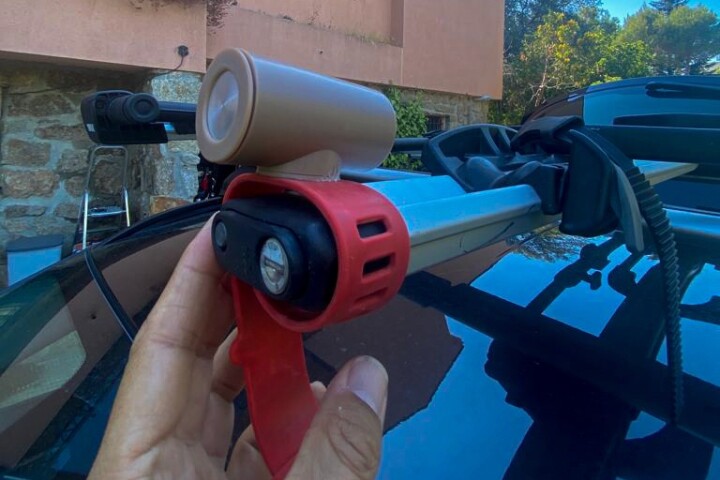 If you transport your bike on a car-top rack, there's a risk that you'll forget it's up there, and smash it into a low-hanging garage door or other overhead obstacle. The Veloroof system is designed to greatly reduce that risk.
 -
 If a driver is preoccupied, or if there's a disruption to their routine, they can forget and leave their baby in their car – if that car then gets too hot, the result can be lethal. The Infalurt Child Safety System is designed to keep such scenarios from unfolding.
 -
 A new study has identified a pattern of brain activity that seems to correlate with impairment from cannabis intoxication. The researchers suggest this novel brain-based biomarker could be a way to accurately measure THC impairment.
 -
 Although we've seen several systems that use vehicle-integrated cameras to detect intoxicated drivers, a team of Japanese scientists claim that such technology isn't always reliable. Their alternative? A drunk-driver-detecting car seat.
 -
 A new meta-study has concluded blood or saliva THC concentrations are not effective ways to measure cannabis-induced driving impairment. The findings indicate impairment tests should be developed instead of looking to develop a marijuana breathalyzer.
 -
 Machine learning has been used to develop algorithms that can analyze driving data and detect dementia in a driver. The researchers say it could be possible in the future to detect early signs of dementia using devices incorporated into car systems.
 -
 A study into the effects of cannabis on driving in a real-world context has found CBD alone does not impair driving ability. The landmark finding promises to be invaluable in guiding road safety regulations as cannabis laws shift across the globe.
 -
 Remember back when carabiners were designed solely for hanging one thing from another? Nope, us neither. Now, a new multi-purpose 'biner is claimed to help users get out of crashed vehicles.
 -
 We tested six popular models of cars and crossovers on the snow and ice at the Redline Ice Winter Driving Experience in Colorado to find the answer to the question: How good is your car on snow and ice? Here’s what we learned this year.
 -
 According to Bosch, sun glare is the biggest weather-related cause of accidents. The company therefore wants to rethink the sun visor, with a see-through model that blocks sun only where it’s reaching the driver’s eyes.
Load More