
Disasters
-
 Self-deploying sea barriers offer coastal towns some protection from the destructive forces of tsunamis – but one problem can arise when power goes out in a disaster scenario. Hence this Japanese proposal for a wall that generates its own power.
 -
 The search for survivors at disaster sites is one of the most commonly suggested uses for drones. If those people are buried under debris, however, they won't be visible. That's where LUCY comes in, as it could let drones locate survivors by sound.
 -
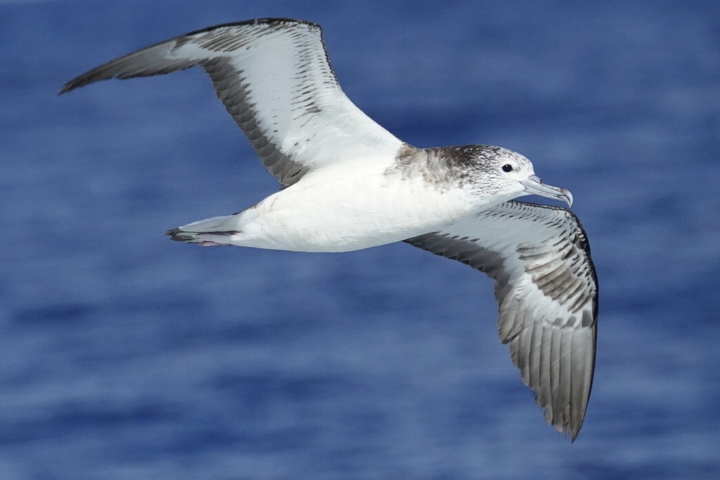 When a bold male seabird threw caution to the wind to 'ride' a typhoon, it was the start of an 11-hour, 712-mile journey, taking him 15,000-ft higher and three times faster than usual. The bird survived and didn't lose any points off his flying licence.
 -
 Humanitaria has created a cardboard bed for the critical first 24 hours of a humanitarian emergency. The beds can be manufactured at 1,000 units per hour for a 10th of the cost, assembled 200 times quicker, and landed where needed 100 times faster.
 -
 At disaster sites, it's not uncommon for both the water supply and electrical grid to be out of commission. That's where a new system may someday come in, as it utilizes just a small amount of electricity to desalinate seawater for drinking.
 -
 With the aid of arms control technology and artificial intelligence, a team of scientists at Cardiff University's School of Mathematics has developed a method that uses underwater microphones to provide early warnings of potentially deadly tsunamis.
 -
 We've all seen footage of disaster victims being hoisted into helicopters, in litter-type stretchers. It's not a good thing if those litters start spinning or swaying, though, which is what the thrust-vectoring Vita Rescue System is designed to stop.
 -
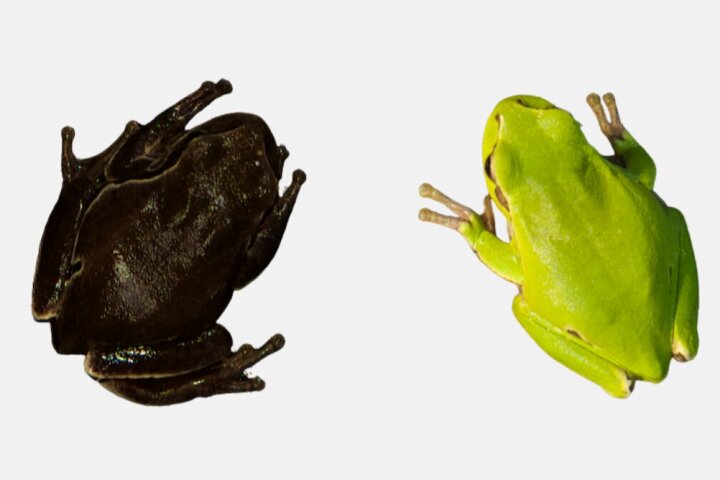 Evolution occurs as species adapt to environmental pressures, and few environments exert pressures like the Chernobyl exclusion zone. A new study shows evolution in action as frogs within the radioactive region are turning blacker than those outside.
 -
 While scientists have already created tight-space-exploring robots based on snakes and cockroaches, rats are also highly adept at squeezing through narrow openings. They now have a robotic equivalent of their own, in the form of the SQuRo.
 -
 When arriving at a disaster site, one of the most crucial tasks is to locate any survivors who may be trapped in the debris. A new module is designed to let drones do so, by detecting the radio signals of victims' mobile phones.
 -
 A startup created specifically to develop machines for first responders, Company Six, has now unveiled its first creation, a rugged, video-streaming robot called ReadySight that can be tossed into hairy situations.
 -
 The frequency of natural disasters over the past two decades is almost double that of the 1980-1999 period, a new report from the UN has revealed, with extreme weather events driven by climate change accounting for a large portion of the uptick.
Load More