
Crash
-
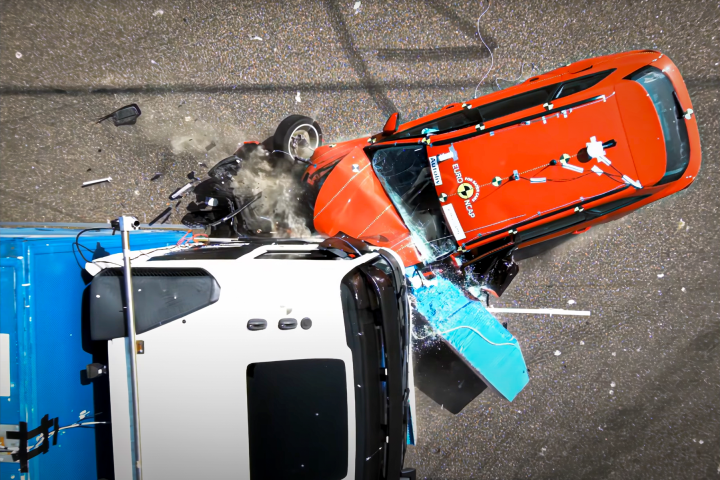 A new Swedish-designed front end for transport trucks could help reduce driver deaths in collisions with passenger cars. The structure is designed to both spread and absorb the force of impact between the two vehicles.
 -
 Older adults who are new to migraines are more than three times as likely to crash their motor vehicle in the first year after diagnosis than others. The findings highlight a new road risk for seniors who may benefit from counseling about safe driving.
 -
 The mystery of flight MAF370, which vanished over the Indian Ocean with all hands, has baffled the world for nine years, but now a geoscientist at the University of South Florida may have found a surprising way to locate the wreck using barnacles.
 -
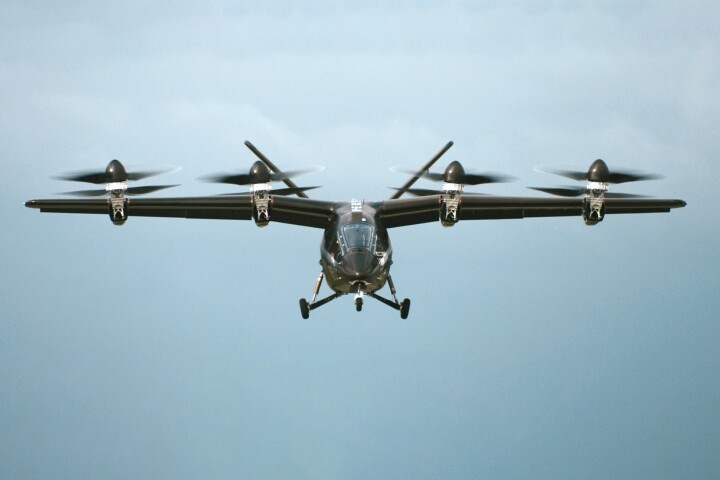 Leading UK eVTOL company Vertical Aerospace has suffered an expensive-looking setback just weeks into its off-tether flight test program. Its VX4 air taxi prototype reportedly hit the deck from about 20 ft up, snapping a wing and making quite a mess.
 -
 Last April, a hydrogen-powered ZeroAvia test plane lost power and crashed during flight tests. The UK's Air Accidents Investigation Branch has now completed its investigation into the incident, and confirmed that the hydrogen system was not to blame.
 -
 Ah, those magnificent men in their flying machines. They go up, diddly-up-up. They go down, diddly-own-down. French sky-surfer and Green Goblin lookalike Franky Zapata went down diddly-own-down in frightening fashion at an airshow on the weekend.
 -
 Joby Aviation has announced an accident during flight testing of its market-leading eVTOL aircraft prototype. Flight tracking data appears to show the aircraft was being pushed over 270 mph, well beyond its advertised top speed of 200 mph.
 -
 There was nobody in the driver's seat when a Tesla Model S ran off the road and crashed this week, killing two. No other manufacturer would be blamed for an incident like this, but does Tesla's audacious Autopilot rollout bear some responsibility?
 -
 A pilot somehow managed to escape injury as his multirotor hoverbike suffered a barometer failure at a 100-foot altitude over concrete in a Dubai test. Bucking like a mechanical bull, the machine crashed to Earth and flipped over its rider.
 -
 After wowing the crowds by flying over the Bastille Day celebrations in Paris earlier this month, Franky Zapata attempted to cross the English Channel today on his Flyboard Air jet-powered hoverboard. Sadly he didn't make it and dropped in the drink about half way across.
 -
 A new round of crash testing by the US National Highway Traffic Safety Administration (NHTSA) put the Tesla Model 3 sedan through its paces, finding it performed impressively across all categories.
 -
 Just one day after successfully completing its sixth test flight, the Airlander 10 has suffered a major setback. According to reports, the world’s largest aircraft apparently broke free of its mooring mast on Saturday morning and was deflated as a safety precaution. An investigation is underway.
Load More