Computer
Computer program stops sensors and satellites from 'crying wolf'
By Jeff Salton
17:52 January 31, 2010 PST

We rely so heavily on information gathered by satellites and weather instruments to help us program our daily lives, imagine what would happen if the data we received from these technologies went bad and foretold of cataclysmic outcomes in the days or weeks ahead? Panic could induce scenes on our streets reminiscent of Hollywood disaster movies. To avert such events - or just help get things right even if the forecast is more mundane - scientists at the National Center for Atmospheric Research (NCAR) and the University of Colorado at Boulder (CU) have devised an innovative computational technique called Intelligent Outlier Detection Algorithm, or IODA, that draws on statistics, imaging, and other disciplines in order to detect errors in sensitive technological systems. Read More
The board game V2.0
By Ben Coxworth
13:58 January 28, 2010 PST

Board games aren’t necessarily bound to become obsolete - at least, not if researchers at Queen’s University in Ontario, Canada have anything to say about it. They will change, however. Queen’s Human Media Lab (HML) recently unveiled a prototype board game that uses traditional flat cardboard tiles (i.e: cards), but the images on those tiles are projected onto them by an overlooking digital projector. The images stay on the tiles as they’re moved around by the players, courtesy of an overlooking camera that tracks their movements. This means that the tiles could display moving video, that their display could change entirely depending on what’s happening in the game, or that it could be customized by the players. Monopoly night may never be the same. Read More
AirMouse - the mouse that fits you like a glove
By Ben Coxworth
12:36 January 27, 2010 PST

It’s no secret... Studies have shown that excessive mouse usage can cause repetitive stress injuries. Unfortunately for most of us, “excessive” can mean anything more than a few hours a day. Fortunately, however, there are alternative styles of mice out there designed to be easier on the hands and arms. One of the more interesting ones to come along in a while is the AirMouse, made by Canadian firm Deanmark Ltd. What makes it unique is the fact that you wear it like a glove. Read More
HP's Touchless touchscreen wall
By Ben Coxworth
16:29 January 26, 2010 PST

About a year ago, HP began working on a ginormous touchscreen display for their PR firm’s Manhattan offices. The resulting product, called the Wall of Touch, was such a hit that it has found its way into the workplaces of other select clients, with more on the way. Ironically, despite its name, one of the things that makes the Wall unique is that users don’t have to actually touch it. Read More
B&W computer speakers bring true hi-fi to the desktop
02:29 January 11, 2010 PST

Bowers and Wilkins has taken its five decade's experience with loudspeakers and created a true hi-fi computer speaker, which it unveiled this week at CES. The MM-1 is a serious speaker made small, with two separate drive units including an aluminum dome tweeter, and Digital Signal Processing that uses USB streaming to bypass the computer's own soundcard. Read More
ClickFree adds new ‘auto-backup’ network solutions to its range
By Paul Lester
19:52 January 7, 2010 PST

Most Gizmag readers should be aware of the importance of backing up data, and this is probably because at one time or another countless hours of work have been lost due to hard drive failure or any other of a number of disaster scenarios. Taking the hassle out of backing up would therefore seem a good idea, and Clickfree is back at this year’s CES with some follow-ups to its 2009 Transformer. Read More
Cannondale presents Simon, the electronic one-legged suspension fork
By Ben Coxworth
23:55 January 5, 2010 PST

After five years of development, Cannondale has unveiled a new proof-of-concept prototype that could revolutionize bicycle suspension. Called Simon, it’s the newest member of their offbeat Lefty line of one-legged shock forks. According to Cannondale, Simon’s onboard microprocessor will allow users to customize their ride like never before. If that isn’t enough, it can also send the fork from being fully-open to fully-closed in just six milliseconds. Read More
The bewildering Minitopz PC from Artopz
By Paul Lester
15:31 December 28, 2009 PST

We’ve seen some weird and wacky PC designs in our time, but few are as surreal as the Minitopz range from US firm Artopz Technology. The fusion of art and computing is entirely a subjective one, so we won’t cast too many opinions on the actual design, but what is intriguing here is that the Minitopz range has chosen the humble desk lamp as the subject of its hybrid. Read More
30mm thick Piixl EdgeCenter 3770 Media Center PC lurks behind your TV
By Jeff Salton
23:57 December 15, 2009 PST

The Piixl Edge EdgeCenter 3770 computer is designed for those who love their media but also treasure their minimalist lifestyle. They also need to be prepared to pay a premium for a Media Center PC that doesn’t have any visible wires – in fact, it doesn’t have any visible parts at all because it hides discreetly behind any VESA-compliant flat panel TV, 37 inches or wider. Read More
Gestural interfaces make touch screens look so ‘last year’
By Jeff Salton
21:21 December 13, 2009 PST

The gestural interface used by Tom Cruise in the movie Minority Report was based on work by MIT Media Lab’s Hiroshi Ishii, who has already commercialized similar large-scale gestural interface systems. However, such systems comprise many expensive cameras or require the user to wear tracking devices on their fingers. To develop a similar yet cost effective gestural interface system that is within reach of many more people other researchers at MIT have instead been working to develop screens with embedded optical sensors to track the movement of the user’s fingers that could quickly make touch screens seem outdated. Read More
Feature: Decoding Bletchley Park's history
By Paul Ridden
17:36 December 7, 2009 PST

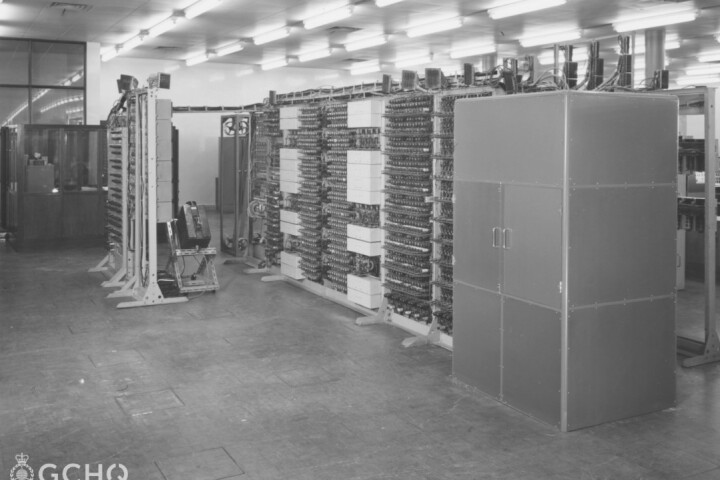
At first glance, even second glance, Bletchley Park could easily be just another beautiful British building deserving of some loving care and attention. But for many years its walls guarded one of the best kept secrets of the 20th Century. During the Second World War it was the top secret home to the cryptanalysts, mathematicians and military personnel later credited with shortening the war by at least two years and saving millions of lives by breaking the secret ciphers used in Nazi communications. Seventy years after war was declared on Germany, Gizmag's Paul Ridden takes a closer look at what went on at HMS Pembroke V, the people who worked there and talks to some of the those now dedicated to ensuring that its legacy lives on. Read More
Micron offers fastest SSD with RealSSD C300
By Jeff Salton
20:11 December 6, 2009 PST

Micron claims its recently-created RealSSD C300 is the industry’s fastest for notebook and desktop PCs, delivering faster operating system boot and hibernate times, speedier application loads, and quicker data transfer and file copying. Micron says benchmark tests have shown that the C300 SSD is the fastest PC SSD leveraging the industry standard SATA 3Gbps interface, while the Solid State Drive (SSD) performance is further boosted by natively supporting the next generation high-speed interface – SATA 6Gbps. Read More
Take note: the BrailleNote Apex
By Jeff Salton
16:18 December 1, 2009 PST

When you’re busy working or studying, it’s important to maximize the available technology for productivity, accuracy and even comfort. But for blind people, not all technology is easily adaptable. The new BrailleNote Apex from HumanWare has been designed to enhance the reading and writing experience of blind people with improvements over previous models in connectivity, design and ergonomics. Read More
NIST develops the world's first two-qubit programmable quantum computer
19:55 November 17, 2009 PST

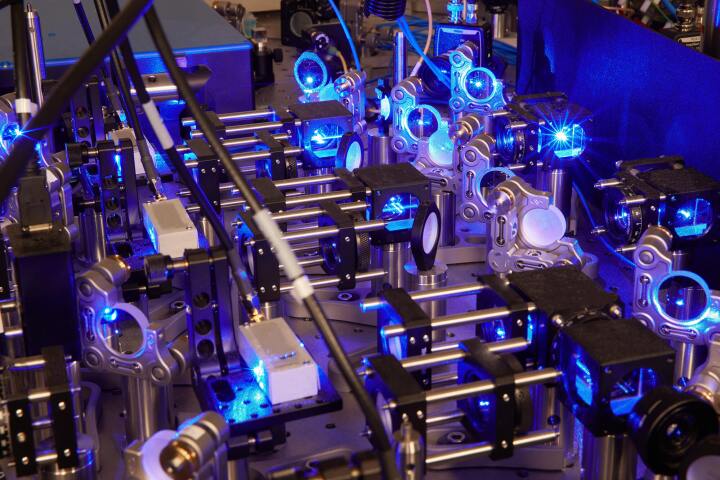
In a paper recently published on Nature Physics, the National Institute of Standards and Technology (NIST) documented the implementation and verification of a two-qubit quantum computer that, according to researchers, is a truly general-purpose machine and could soon be used as a building block for much larger quantum computers. Read More
litl webbook aims to be a big deal for the household
By Darren Quick
21:03 November 15, 2009 PST

The creators of the litl webbook have designed everything, including the hardware, software and operating system, to make it easy for users to blend “lean-forward” web-based content with “lean back” TV-like viewing of photos and other digital content. Aimed at every member of the family, the litl can be used as a regular laptop and the display also flips through 180 degrees into easel mode, which allows it to stand upright like a digital photo frame. Read More
Esquire magazine to release augmented reality edition
By Paul Ridden
15:04 November 15, 2009 PST

After experimenting with things like origami (May edition) and e-ink (October 2008 edition), Esquire magazine is running a special "augmented reality" edition in December where readers use custom-designed software and a webcam to interact with the pages being viewed and get access to 3D animated video content. Read More
AsusTek unveils the ESC 1000 - 1.1 teraflop ‘personal supercomputer’
By Paul Lester
19:26 October 29, 2009 PDT

Goodbye to the days when supercomputers had to fill a room and welcome Asus, purveyor of all things Eee and its first ever supercomputer - the ESC 1000. Produced in conjunction with NVIDIA and the National Chiao Tung university in Taiwan, the desktop-sized machine is capable of speeds up to a mighty 1.1 teraflops, which may pale in comparison to the petaflop Roadrunner, but then so does the footprint. Read More
Pocket projector meets handheld computer - the Allcam CP1
By Jeff Salton
17:24 October 28, 2009 PDT

Allcam has crammed a lot of technology into a very small space to create the CP1 - a handheld computer/pico projector that runs Windows CE and is designed for the business professional who conducts presentations on-the-fly. It's got a built-in mouse-pad, but it also has mini-USB connector for keyboard and mouse (or any other USB device). There's also it a speaker, around four hours of battery life and it weighs just under 1kg (2.2lbs). Read More
Apple iMac updates - new features including 27-inch widescreen model
By Jeff Salton
01:16 October 21, 2009 PDT

We’ve featured plenty of news lately about updates to laptops but here’s news for Mac-lovers who like their computers to "stay at home". Apple has unveiled an all-new iMac range featuring bigger and brighter LED-backlit 21.5 and 27-inch widescreen displays in a new edge-to-edge glass design and seamless all-aluminum enclosure. Apple says the new models are the fastest iMac’s ever, with Intel Core 2 Duo processors starting at 3.06GHz, and Core i5 and i7 quad-core processors for extra performance. What’s more, new iMacs come with a wireless keyboard and the all-new wireless Magic Mouse, the world’s first mouse with Multi-Touch technology pioneered by Apple on the iPhone. Read More
10/GUI the human computer interface of the future for people with more than two fingers
By Darren Quick
03:43 October 14, 2009 PDT

Those old enough to remember the command line interfaces of yesteryear are only too aware of what a godsend the Graphical User Interfaces (GUI) of today are. However, the human computer interface (HCI) developed in the 1970s at Xerox PARC, combining a desktop metaphor GUI and mouse controller, has remained largely unchanged ever since. Now R. Clayton Miller proposes the next step in the evolution of HCI's with his 10/GUI concept that harnesses the power of multi-touch by removing the touch surface from the screen. Read More
New advances in excitonics promise faster computers
16:44 October 1, 2009 PDT

Much of today's research in electronics is geared towards obtaining faster computing and higher communication speeds. Researchers at UC San Diego are no exception, and have recently announced they have made another important step towards achieving exciton-based computation at room temperatures. Excitonics exploits the unique properties of excitons instead of the usual electrons, and promises much faster performance by interfacing more naturally with optical communications such as fiber optics. Read More
Cyber 'ants' patrol PC networks against computer worms and other threats
00:46 September 29, 2009 PDT

In looking for highly efficient ways to solve complex problems, we've often seen researchers mimic the solutions found by nature over billions of years: smart fabrics inspired by pine cones, spectrum analyzers modeled after the human ear and powerful search-and-optimization genetic and evolutionary algorithms, to name just a few. The latest piece of news comes from Wake Forest University, where the group dynamics of ant colonies have inspired security software to fight computer worms and other threats. Read More
New computer tool could lead to better crops and safer pesticides
By Jeff Salton
21:11 September 23, 2009 PDT

Researchers engaged in developing new strains of crops, such as drought-resistant wheat and new pesticides that are more environmentally-friendly, are also creating a computing tool that could help scientists predict how plants will react to different environmental conditions. It’s hoped their findings will help create better crops, such as tastier and longer-lasting tomatoes. Read More
The multimedia Athena sofa
By Jude Garvey
17:19 September 20, 2009 PDT

Call me crazy, but isn’t a sofa meant to be a place of relaxation? Apparently, it’s not any more. Swiss-based Artanova has created a modern, upholstered sofa that incorporates multimedia into its design. Featuring creamy upholstery and stainless steel feet, this is one stylish-looking piece of furniture on its own, but it also boasts a computer, wireless MP3 player and iPod/iPhone dock, as well as subwoofer and loudspeakers. Read More
Freeze your hard disk with the USB Windows Icebox
15:16 September 20, 2009 PDT

Almost every PC user knows about the importance of making regular data backups — often from their own, unfortunate personal experience. But, due to laziness and technical difficulties, only a small percentage of users actually performs regular maintenance other than updating antivirus software. The Windows IceBox is a convenient solution to this problem that plugs into your USB port and immediately freezes changes on your selected hard drive partitions, virtually eliminating the need for maintenance. Read More


Rod
- February 9, 2010 @ 23:30 UTC