
Comets
-
 A huge comet will grace our skies over the next few months, putting on a grand show through binoculars or telescopes, and will even be visible to the naked eye. So how and when can you see it?
 -
 You can breathe easy and take the sticky tape off the windows because the solar system won't be hit by the rogue white dwarf WD 0810-353 in 29,000 years. ESO’s Very Large Telescope (VLT) shows that early calculations were a bit off.
 -
 The annual Astronomy Photographer of the Year competition highlights the beauty of the night sky. The shortlist for 2023 has now been published, starring some stunning shots of the Sun, our majestic Milky Way, and awe-inspiring aurorae.
 -
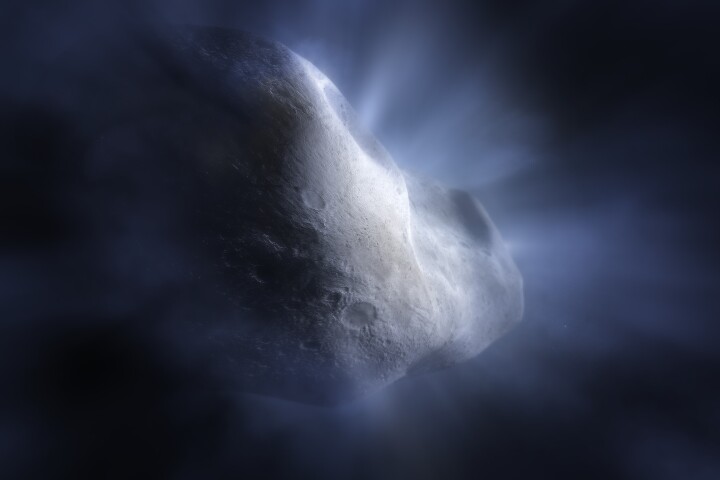 The James Webb Space Telescope has detected water vapor on an object in the asteroid belt, a region of the solar system where it wasn’t known to survive. The new observations also reveal something unexpectedly missing.
 -
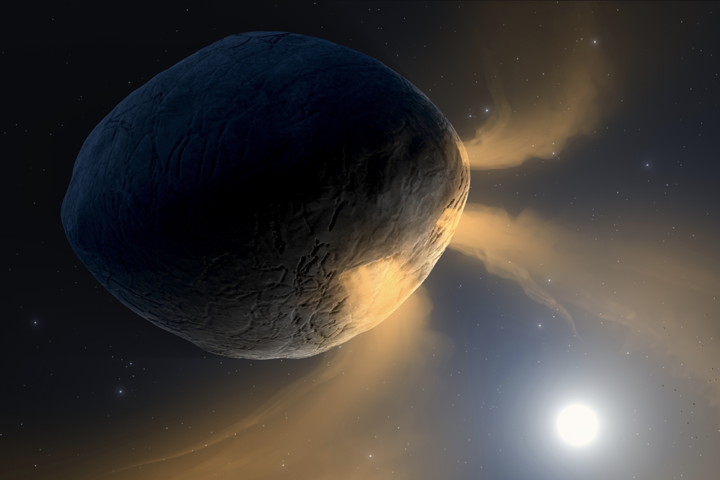 This space oddity has long puzzled scientists for its peculiar non-asteroid-like behaviors. Researchers have now uncovered another curious characteristic of 3200 Phaethon, this time with its dazzling tail, rewriting 14 years of science knowledge.
 -
 Geologists claim to have discovered a long-term cycle that may link the formation of Earth’s continents to our travels through the galaxy. The team claims a correlation between increased comet impacts and Earth crossing the galactic spiral arms.
 -
 An absolutely gigantic comet is currently barreling towards the solar system – and new observations have pinned down its size. Astronomers have measured C/2014 UN271 to be 150 km wide, making it comfortably the largest comet ever discovered.
 -
A huge comet making its journey towards the solar system has begun to show a tail. A newly released image shows the fuzzy coma, confirming that it is indeed a comet and may be one of the largest ever discovered.
-
 Editor’s note: New details about this fascinating object have emerged since we wrote this article – here's the latest update.
 -
 The first comet known to visit our Sun after being born around an alien star may be the most pristine comet ever discovered, new research has found.
 -
 A bizarre object named ‘Oumuamua, defying classification, was the first interstellar object ever discovered. Now a newly proposed origin story neatly explains all of its observed oddities – it may be a piece of nitrogen ice from an “exo-Pluto.”
 -
 A new study has analyzed asteroid dust recently discovered in the Chicxulub asteroid crater. The findings further support the theory that the dramatic impact was the cause of the mass extinction event that wiped out the dinosaurs.
Load More