
Clothing
-
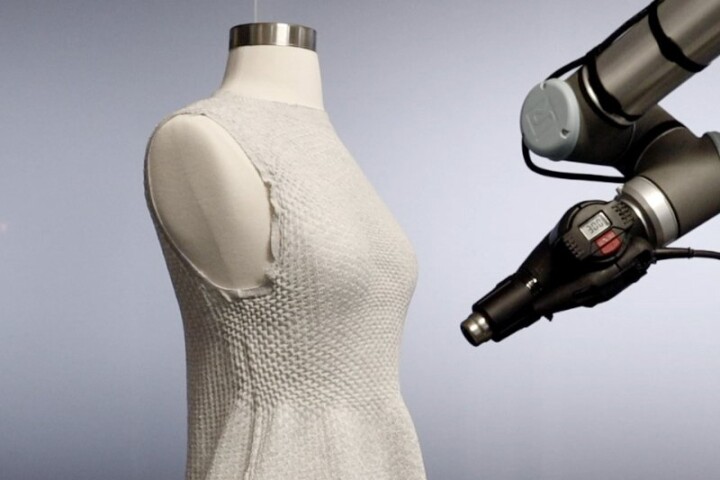 Custom-fit clothing is usually quite expensive, but perhaps it doesn't have to be. MIT's 4D Knit Dress is an example of a new type of clothing that a robot could selectively shrink to fit the wearer, perhaps right in the store.
 -
 Researchers have created a low-cost fiber that contracts in response to heat, resuming its shape when the heat is removed. Compatible with existing textile-producing machinery, the shape-shifting fiber could have a myriad of uses.
 -
 The company that pioneered digital image editing is taking design to a new level with Project Primrose, centered around a material that changes color and pattern in real time, redefining 'fashion statement.' Adobe, though, says it's just the beginning.
 -
 While it's often important for doctors to monitor a patient's physical activity throughout the day, placing cameras in their home is an obtrusive way of doing so. Scientists have now developed an alternative, in the form of activity-tracking pants.
 -
 They may be a little brutal on the eye, but Capable says its visually confusing and very pricey cotton knits are designed to throw off AI facial recognition systems, by fooling machine learning systems into thinking you're an animal and not a human.
 -
 For the past year or so, a student team from the Eindhoven University of Technology has been working on a wearable that could allow folks to understand what's being said in another language through vibrations on the arm.
 -
 Although we've heard about "smart" fabrics which could be used in clothing that displays data, it's unlikely that most garments will ever be made of such materials. The PocketView system, however, shines its display through existing "dumb" textiles.
 -
 While we may think of blue jeans as kind of earthy, basic clothing, the process by which they're dyed is definitely not eco-friendly. That may soon no longer be the case, however, thanks to the development of a new coloration technique.
 -
 MIT engineers have found a new use for a common plastic, spinning polyethylene into fabric that can passively cool the wearer by allowing heat through and moisture to evaporate. The discovery could see waste plastic bags being turned into sportswear.
 -
 A new breakthrough could overcome some of the problems around recycling cotton clothing, with scientists demonstrating a new technique that converts cotton into a yarn suitable for the mass manufacture of textiles
 -
 If you're a wardrobe manager on a film, TV or theater set, then you likely have to send a lot of clothes out for dry cleaning. That's where Presso is intended to come in – it's a portable device that dry cleans clothing on-location, in five minutes.
 -
 Although we've recently seen numerous "electronic skin" sensor patches that monitor the wearer's vital signs, the things do have their drawbacks. Scientists at MIT have therefore developed an alternative, in the form of a vitals-monitoring shirt.
Load More