
Clock
-
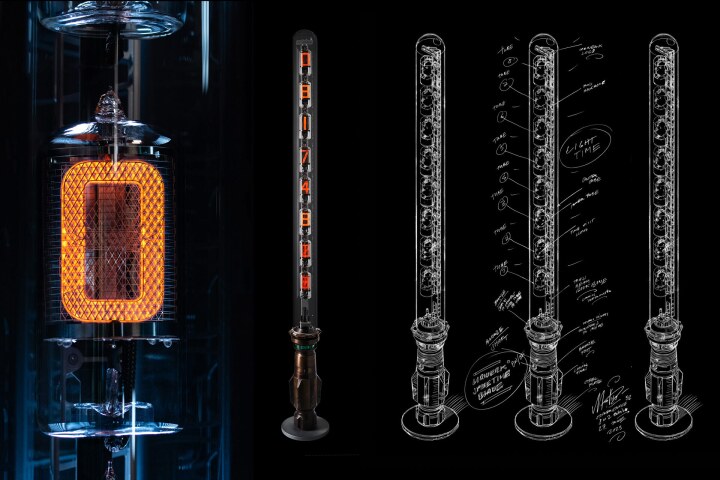 If you wished your lightsaber could tell you the time, Urwerk has now got your back. For around $60,000, the limited edition SpaceTime Blade clock uses good old Nixie tubes to display a quirky collection of time and astronomical measurements.
 -
 Despite a 2024 so far marked with serious conflicts that threaten to escalate further, climate uncertainty and the rapid ascension of AI technologies, the famous Doomsday Clock has remained paused at 90 seconds to midnight, the same time as last year.
 -
 University of Oxford physicists have linked two atomic clocks through quantum entanglement for the first time. The feat can help make these clocks so precise that they begin to approach the fundamental limit of precision set by quantum mechanics.
 -
 The movements of the Sun, Moon and stars have long been used to keep track of time, and now engineers from the University of Tokyo have proposed a new way to use the cosmos to precisely track time, using showers of particles from cosmic rays.
 -
 Britain's supercarrier HMS Prince of Wales has become the first surface ship to be equipped with a state-of-the-art atomic clock as it departs for the Exercise Cold Response 2022 NATO joint exercises off the north coast of Norway.
 -
 Whether you're a surfer, a sailor or simply a beachcomber, it's important to know the current cycle of the tide at your favorite beach. And while apps do provide that info, the Tidey tidal clock does so in a much easier-to-understand fashion.
 -
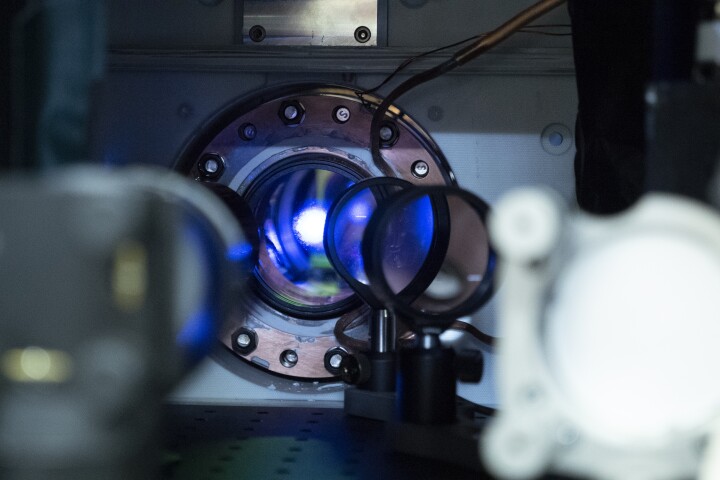 The flow of time isn’t as consistent as we might think – gravity slows it down, so clocks on Earth tick slower than those in space. Now researchers have measured time passing at different speeds across just one millimeter, the smallest distance yet.
 -
 DARPA has announced a new initiative called the Robust Optical Clock Network (ROCkN) program, which will look to develop a practical, super-accurate optical atomic clock robust and small enough to fit in a military aircraft, warship, or field vehicle.
 -
 MB&F and L’Epée 1839 have released another playful clock that looks like it's half timepiece and half puzzle. At first glance, the Orb looks like a huge enameled eye, but opening the four beetle-like wings provides some versatile display options.
 -
 For many of us, cuckoo clocks are something quaint that we remember from our grandparents' homes. Nonetheless, Amazon is now looking at giving the device a 21st Century makeover with its Smart Cuckoo Clock.
 -
 Atomic clocks are our most precise timekeepers, with the best ones keeping time to within one second in 15 billion years. But there’s always room for improvement, as researchers at MIT have now demonstrated with a new quantum-entangled atomic clock.
 -
 The Trinity is the latest futuristic, minimalist mechanical desk clock from MB&F and Swiss clockmaker L'Epee 1839 that mixes innovation and whimsy in a design that's definitely going to be noticed.
Load More