
Biosensors
-
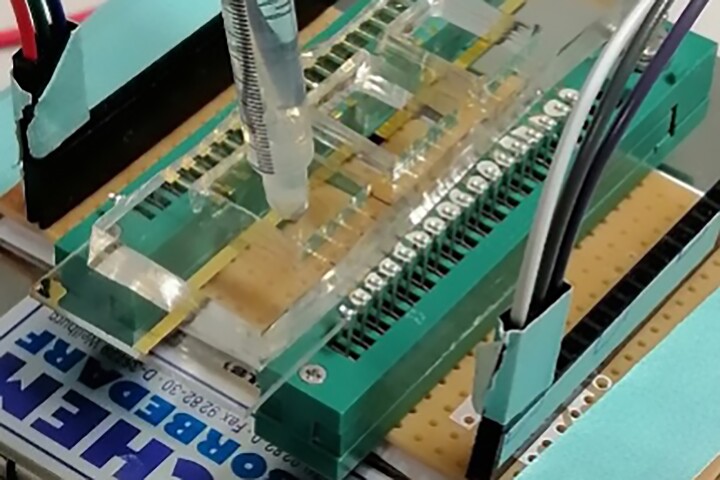 Researchers have used off-the-shelf components to create a sensor device that is not only cost-effective but can quickly detect 32 different pathogens and has sensitivities on par with the state-of-the-art biosensors used in pathology labs.
 -
 A novel device can detect the COVID-19 virus in one minute using just a couple of breaths of exhaled air. The device could revolutionize the testing process, especially at large-scale social gatherings like concerts or sporting events.
 -
 Intestinal glucose levels are a major indicator of gastrointestinal health, and the current method of measuring them involves putting a catheter down the patient's throat. Soon, however, a swallowable "smart pill" could do the job less intrusively.
 -
 As digital music files become increasingly popular, compact discs are likewise becoming obsolete. There may still be a use for some existing CDs, however, as the gold foil in them could be used in the production of wearable biosensors.
 -
 Researchers have developed a face mask that can detect SARS-CoV-2 in a wearer’s breath within just 90 minutes. The sensor technology can be programmed to detect any kind of virus or toxin and is small enough to be integrated into clothing fabrics.
 -
 When a patient is receiving medication, it can be difficult to determine how much of the drug is actually making its way into their bloodstream. A new subdermal "tattoo" could help, thanks to its color-changing gold nanoparticles.
 -
 New research out of Texas A&M University could lead to a simple system using a subdermal implant and a light-measuring computer peripheral to give gout patients real-time readouts of their blood urate levels, helping them avoid flare-ups.
 -
 A research team at the University of Illinois at Urbana-Champaign has uncovered an exciting new possibility for crumpled graphene, finding it can serve as the basis of an ultra-sensitive biosensor for early cancer diagnosis.
 -
 We've recently seen a number of battery-free implantable biosensors, that are activated by the handheld device that reads them. Scientists have now created another such sensor, that's smaller than any that have come before.
 -
 Over the past few years, Profusa Inc has been developing tiny biosensors that get injected under the skin, and then provide the user with health information via their smartphone. The technology was recently approved for marketing in Europe, with US approval possibly following soon.
 -
 Despite the advances in sweat-monitoring biosensors the technology has had one major hurdle to overcome: the patient needs to sweat to make it work. Now a team has developed a sweat-stimulating biosensor that activates perspiration while the subject relaxes.
 -
 Getting the correct drug dose for every patient is a challenge: too much or too little can be dangerous. A new tool developed at Stanford could keep the dose just right, using a biosensor to monitor the drug levels in a patient's bloodstream in real time, and administering extra doses as needed.
Load More