
Biomimetic
-
 BlueNav is bringing a more natural spin to its electric marine drive lineup. The all-new Whale Design propeller features blades that follow the contours of a whale to improve system efficiency.
 -
 Researchers regenerated damaged bone in mice by creating a scaffold that combines a piezoelectric framework and the growth-promoting properties of a naturally occurring mineral. The novel “bone bandage” has wide-ranging potential applications.
 -
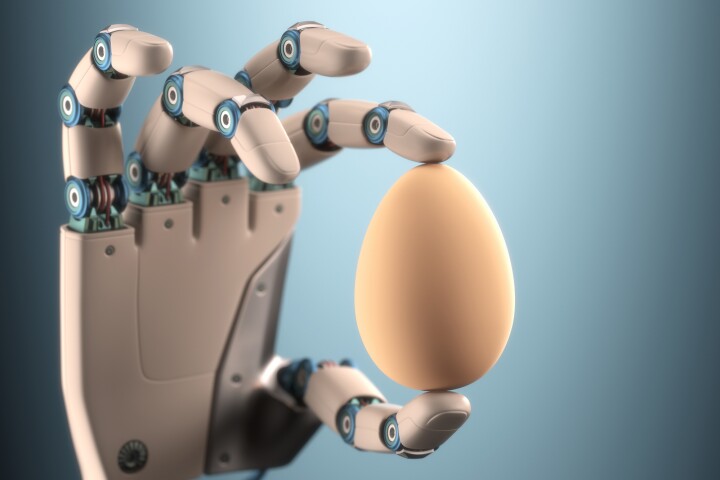 Researchers have overcome a challenge in robotics by developing a sensor that can slide over braille, accurately reading it at twice human speed. The tech could be incorporated into robot hands, providing fingertip sensitivity comparable to humans.
 -
 The microscopic structure of the feathers of the eastern bluebird, a type of North American thrush, has inspired the creation of a simple-to-produce, scalable and robust novel synthetic material that could be used in batteries and water filters.
 -
 Inspired by a water-dwelling spider, researchers have created a novel surface material that stays dry for months underwater. They say the surface is easy to produce, scalable, and has a wide range of practical applications.
 -
 Avoiding eating your favorite ice cream because you don’t want to experience the pain caused by sensitive teeth may soon be a thing of the past, with researchers offering a. long-term fix by developing a novel way of rebuilding lost tooth minerals.
 -
 Once again, technology has been inspired by nature. After examining how centipedes traverse rough terrain, researchers created a multi-legged robot that mimics their curved, side-to-side movement, providing greater stability and maneuverability.
 -
 Inspired by the wings of dragonflies and cicadas, researchers have developed a new coating for orthopedic implants. It not only shreds harmful bacteria, but also monitors stress on the system, meaning it could warn of impending implant failure.
 -
 Italian researchers have created a novel 4D-printed biodegradable 'seed robot' that changes shape in response to changes in humidity and can navigate through the soil. The device has great potential as a new way of monitoring the environment.
 -
 Scientists studying the makeup of limpet teeth have drawn inspiration from the way they form to create a composite biomaterial with extreme strength that could provide a more sustainable alternative to high-performance materials such as Kevlar.
 -
 Researchers have developed a simple new way to make material surfaces with intricate nanoscale textures, all inspired by nature. Different patterns have a range of applications, like making antimicrobial surfaces or reducing ship hull friction.
 -
 Ducks have specialized feathers that keep them from getting too wet. Now, engineers at Virginia Tech have investigated the physics behind how they work and developed synthetic feathers that could help ships glide through the water more easily.
Load More