
Biometrics
-
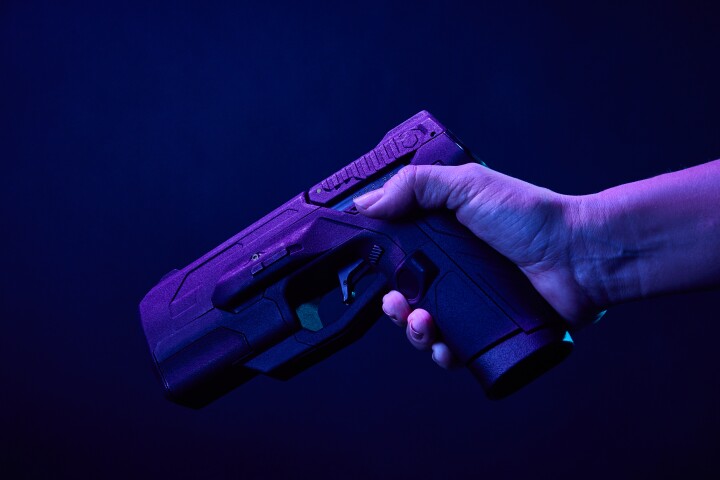 A 'safe' handgun is a relative term, but Colorado-based Biofire Technologies is taking a high-tech crack at the idea with its Biofire Smart Gun, which uses an electronic identification and firing system to prevent accidental or unauthorized use.
 -
 If someone steals your smartphone, the harder it is for them to unlock it, the better. New research shows how gait analysis could provide an added layer of security, by authenticating a user's identity based on the way they walk.
 -
 Just like our fingerprints, the shape and pattern of each dog's nose is unique to that animal. Bearing this in mind, pet food company Iams has launched a "nose-centric" app for identifying lost dogs – appropriately enough, it's called NOSEiD.
 -
 Although facial ID verification tech may seem pretty impressive, it can be thwarted. An experimental new system is claimed to be more foolproof, by requiring users to make specific facial movements.
 -
 It sometimes seems that as soon as another form of biometric ID authentication is developed, someone devises a way of fooling it. According to its creators, however, a new 3D finger vein-scanning system cannot be duped.
 -
 Might it be possible that someday, an official might get you to dance around in order to confirm that you're really you? Perhaps not, but nonetheless, a study has determined that people's identities can be matched to their unique style of dancing.
 -
 Clinicians soon may be able to accurately diagnose what kind of dementia patients are suffering from by studying their unique walking patterns.
 -
 More and more, we're seeing bike locks that open not with a key or combination, but with a fingerprint or Bluetooth signal. Almost all of those, however, are U-locks. What if you prefer the more compact form factor and wider reach of a folding lock? Well, that's where the ZiiLock comes in.
 -
 ScienceAlthough biometric face-recognition security tech is now becoming quite common on devices such as smartphones, it does still require a lot of processing power. In the not-too-distant future, however, the same purpose could be served by an integrated piece of analog glass.
 -
 ScienceHave you ever said of a person, "You can see it in the way they walk"? Well, if it was their identity that you were referring to, then you were right. To that end, scientists have now created an artificial intelligence-based system that identifies people via their footsteps.
 -
 Let's face it – thieves know that high-end SUVs like the Bentley Bentayga are likely to contain stuff worth stealing. The automaker's Mulliner division obviously realizes that, because it's introducing an optional biometric secure stowage unit for the vehicle.
 -
 Biometric security is becoming an increasingly popular option for tech companies wanting to offer peace of mind to their users, because it's harder to spoof a fingerprint than steal a password. Now Fujitsu has unveiled the latest unlocking method for Windows 10: palm vein recognition.
Load More