
3D
-
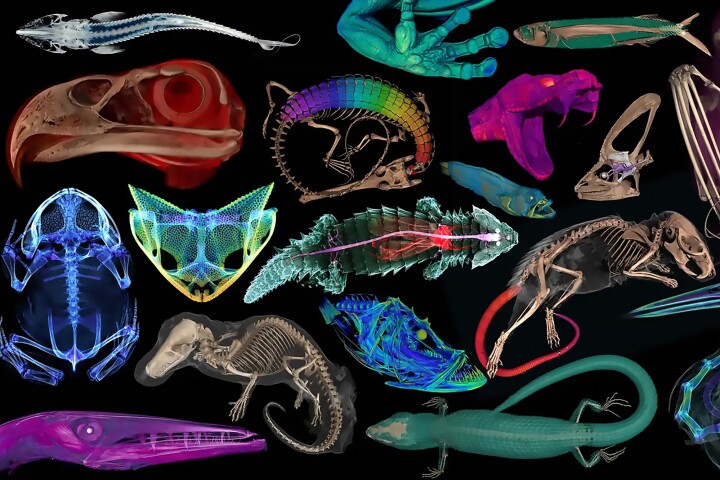 The openVertebrate project is a significant milestone for natural history museums, researchers, educators, students, and the public, creating the first digital library to offer free access to stunning 3D images of over 13,000 vertebrates.
 -
 Producing music these days can be something of a flat experience, undertaken using powerful software running on a computer. With the sales launch of the Apple Vision Pro, DAW maker Hit'n'Mix is planning to immerse musicians in their creations.
 -
 The Looking Glass Factory brought personal holographic imagery to the desktop back in 2020 with the launch of the Portrait. Now the company has again taken to Kickstarter for what's billed as the "world's first portable holographic display."
 -
 Move over, quantum dots – quantum rods could be the next big display technology. These tiny sticks could improve 3D displays for VR headsets, and now engineers at MIT have overcome a logistical hurdle by arranging them onto a scaffold made of DNA.
 -
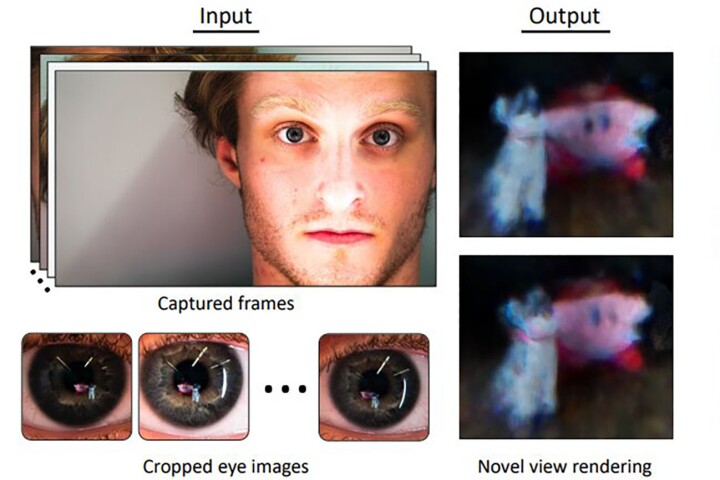 Neural radiance field (NeRF) technology is starting to show some incredible capabilities in turning 2D images and videos into 3D models, but University of Maryland researchers are taking things to another level, using nothing but eye reflections.
 -
 Taking 3D images underwater is tricky due to inconsistent lighting conditions and particles in the water that cause distortion. Researchers have created a novel prototype system that uses quantum technology and LiDAR to overcome these difficulties.
 -
 Back in 2020, Sony unveiled a 15.6-inch display that used eye tracking and a micro-optical lens to deliver 3D visuals without the need for glasses or VR headsets. Now a 27-inch, 4K model has joined the Spatial Reality Display lineup.
 -
 Scientists at Duke University have developed an incredibly powerful new camera that combines dozens of lenses to capture images and video at resolutions of thousands of megapixels, in three dimensions.
 -
 Researchers have developed a platform that allows wireless ingestible devices to be tracked in 3D as they travel through the gut, which may provide a cheaper, less invasive way of investigating disorders that affect gastric motility.
 -
 Scientists have created “acoustic holograms” that can assemble matter into 3D objects, using just sound. The technique works with various types of particles and even living cells, allowing for a new kind of 3D printing that’s fast and contact-free.
 -
 Video chats came into their own during the COVID-19 pandemic, providing an audiovisual lifeline for fragmented families and remote colleagues in touch. But they seem rather flat compared to Project Ghost presented by Logitech at ISE 2023 this week.
 -
 Scientists at Duke University have created a real-time video that captures the frantic movements of a single virus as it tries to infect a cell. The video shows a part of the process that’s normally hard to see.
Load More