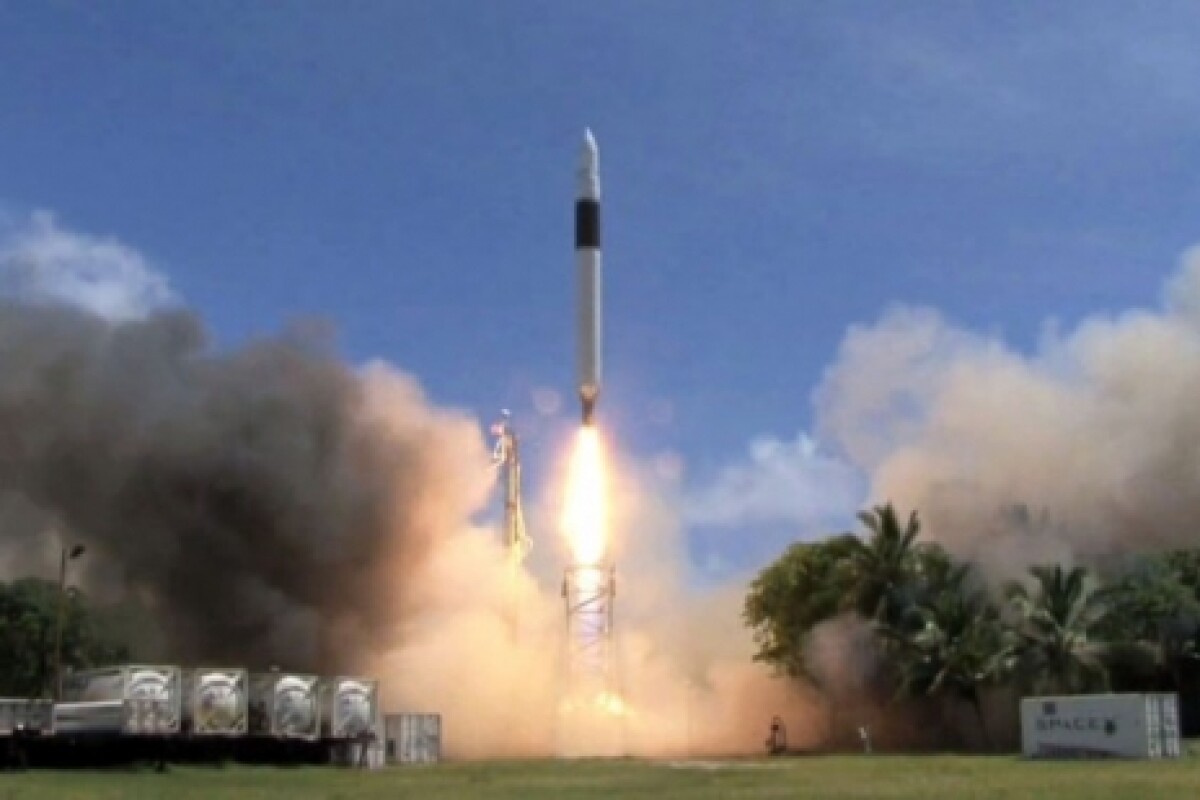


October 1, 2008 With the Space Shuttle scheduled to retire in 2010, alternative transport vessels will need to be developed to keep the International Space Station manned, and to keep options open for possible manned lunar missions. While NASA and Lockheed Martin work on the Orion, Space Exploration Technologies Corp is using private funding to develop the Falcon line of launch vehicles, and the SpaceX Dragon. After three failed attempts, the Falcon 1 launch vehicle has successfully achieved Earth orbit – the first privately developed liquid fuel rocket to do so.
The Falcon 1 launch vehicle is capable of injecting up to 420 kg into a 185 km circular orbit, allowing spacecraft equipped with kick-motors to reach sufficient velocity for Trans Lunar Injection. Preliminary data from the test launch indicates that Falcon 1 achieved the desired elliptical orbit of 500 km by 700 km, 9.2 degrees inclination, carrying a payload of 165 kg.
The launch marked the second flight of the SpaceX-developed Merlin 1C regeneratively-cooled engine, which has a sea level thrust of 78,000 pounds, a vacuum thrust of 90,000 pounds, and a vacuum specific impulse of 301 seconds. A “hold before liftoff” system was used to enhance reliability by permitting all launch systems to be verified as functioning nominally before launch was initiated. A single SpaceX-developed Kestrel engine powered the Falcon 1 second stage.
“This is a great day for SpaceX and the culmination of an enormous amount of work by a great team,” said Elon Musk, CEO and CTO of SpaceX. “The data shows we achieved a super precise orbit insertion – middle of the bull’s-eye – and then went on to coast and restart the second stage, which was icing on the cake.”
Kyle Sherer