
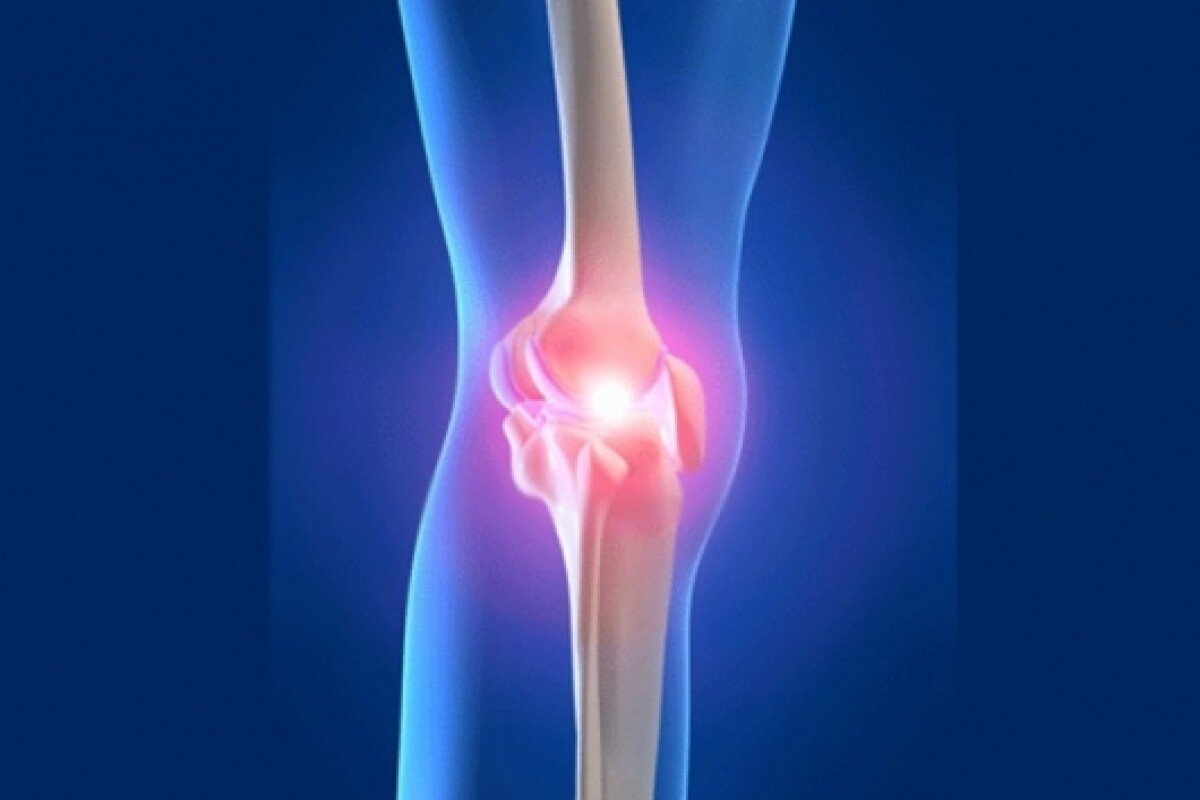


May 17, 2009 Damage to knee cartilage is one of the more common types of sports injuries. Treatment often involves drilling a hole through the cartilage into the bone to stimulate the bone marrow to release stem cells, transplanting cartilage and the underlying bone from another part of the joint, or removing cartilage cells from the body, stimulating them to grow in the lab and re-implanting them. Now MIT engineers have built a new tissue scaffold that can stimulate bone and cartilage growth when transplanted into knees and other joints, potentially offering a more effective, less expensive – and painful – option to more conventional therapies.
The scaffold developed by MIT has two layers, one that mimics bone and another that mimics cartilage. When implanted into a joint, the scaffold can stimulate mesenchymal stem cells in the bone marrow to produce new bone and cartilage.
To develop the bone-mimicking layer, the team started with an existing method of producing a skin scaffold, made of collagen (from bovine tendon) and glycosaminoglycan, a long polysaccharide chain. To mimic the structure of bone, researchers developed a technique to mineralize the collagen scaffold by adding sources of calcium and phosphate.
Once that was done, the team decided to try to create a two-layer scaffold to regenerate both bone and cartilage, known as an osteochondral scaffold. This produced two layers with a gradual transition between the bone and cartilage layers, which is similar to the transition found in the body.
The researchers demonstrated the scaffold's effectiveness in a 16-week study involving goats. In the study, the scaffold successfully stimulated bone and cartilage growth after being implanted in the goats' knees. Although the technology is still limited to small defects, using scaffolds roughly 8 mm (0.3-inches) in diameter, the scaffold offers a potential new treatment for sports injuries and other cartilage damage, such as arthritis.
The scaffold is described in more detail in a series of recent articles in the Journal of Biomedical Materials Research. The technology is undergoing clinical trials in Europe.
Darren Quick