Health and Wellbeing
Starve yourself and live longer
By Darren Quick
19:30 November 24, 2009 PST

Researchers at Mount Sinai School of Medicine have unraveled a molecular puzzle to reveal why a lower-calorie diet slows the development of some age-related conditions such as Alzheimer’s disease, as well as the aging process itself. In their search for an answer they discovered that it doesn’t seem to matter how the diet is restricted – whether fats, proteins or carbohydrates are cut – to produce protective effects against aging and disease. Read More
Dissolving wound dressing could vastly improve treatment for burns victims
By Jeff Salton
22:15 November 23, 2009 PST

In today’s environment of advanced medical treatments where high success rates are achieved in amazingly delicate operations that until recently weren’t thought possible, a staggering 70 percent of people with severe burns still die from related infections. It is hoped that a revolutionary new wound dressing developed at Tel Aviv University (TAU) could cut that number dramatically. Read More
Glucocard Vital glucose tester promises a quick, easy and more accurate test
By Jude Garvey
20:58 November 16, 2009 PST

Diabetes care specialist Arkray recently announced that it has received clearance from the US Food and Drug Administration (FDA) for its Glucocard Vital blood glucose monitoring system. The tester, which consists of a meter and test strip, is very accurate, requires a tiny drop of blood, takes as little as seven seconds and has a unique glucose oxydase (GO) strip chemistry that is reportedly not affected by interferences that cause testing errors in other common test strips. Read More
SmartHand brings movement AND touch to amputees
By Darren Quick
02:49 November 5, 2009 PST

Scientists have successfully wired a state-of-the-art artificial hand to existing nerve endings in the stump of a severed arm. Its creators say the device, called “SmartHand,” resembles a real hand in function, sensitivity and appearance. In order to develop such an intelligent artificial prosthetic hand with all the basic features displayed by a real one, the SmartHand team integrated recent advances in nanobioscience, cognitive neuroscience and information technologies. Read More
Nanosized drug delivery systems take a leap forward
19:03 November 3, 2009 PST

Blood vessels that supply tumors are more porous than normal vessels, makes nanoscale drug delivery systems a particularly attractive prospect. If properly engineered, nanoparticles can in fact get inside a tumor, targeting it precisely and allowing much higher drug dosages as they reduce side effects to a minimum. Two recent studies featured in the latest issue of the journal Nature Materials specifically address these issues and give us promising leads in the fight against cancer. Read More
Sweep Technology touch interface for hearing aids
By Darren Quick
18:04 November 1, 2009 PST

Touch-screen interfaces have already usurped traditional buttons on a range of mobile devices that boast a larger screen size and/or smaller form factor by doing away with a wide range of buttons or dedicated keypad. Now buttons of all sorts on all sorts of devices are under assault. Just last week Apple declared war on mouse buttons, and now hearing technology company, Starkey Laboratories, has taken aim at fiddly hearing aid buttons with its "Sweep Technology" touch-based interface for hearing aids. Read More
New pill promises to put an end to period pain
17:13 November 1, 2009 PST

For anyone who has ever experienced or witnessed the debilitating effects of period pain, they’ll be glad to know that the suffering may soon be at an end. Vantia Therapeutics has announced that its new development, an oral small molecule drug for now known simply as VA111913, has entered its second phase of testing as a treatment for dysmenorrhoea (painful menstruation). If results are successful the drug could be available for commercial use within four years. Read More
Worm glue could help repair broken bones
By Jeff Salton
01:28 October 28, 2009 PDT

A sea creature called the sandcastle worm could hold the secret to repairing broken bones in humans. The screws and pins favored by many surgeons today have achieved much success over the years, but they are not suitable for repairing all kinds of fractures. For more precise reconstruction of compound fractures and shattered bones, bioengineers have looked beyond metal hardware and have now duplicated a natural glue secreted by the tiny sandcastle worm. The research team hopes it will provide a better solution to fixing small bones broken in battlefield injuries, car crashes and other accidents. Read More
Researchers ease monthly burden for world's poorest women
16:16 October 25, 2009 PDT

For most women the obligatory monthly visit that is the menstrual cycle is a quietly endured and discreetly dealt with occurrence. Feminine products in every size, shape and color, and available for purchase from supermarkets to public restrooms, lessen the burden. But contrast this reality with that of women living in impoverished countries for whom these commonplace hygiene products are unaffordable luxuries. This glaring discrepancy has prompted Sustainable Health Enterprises (SHE), together with researchers from North Carolina State University, to create affordable, quality sanitary pads to ease the lives of millions of women who, for several days a month, know another kind of period pain. Read More
GE Vscan portable ultrasound scanner unveiled
By Paul Ridden
07:56 October 23, 2009 PDT

General Electric has unveiled a pocket-sized ultrasound scanner at the Web 2.0 Summit in San Francisco. Looking very like (and not much bigger than) a clam-shell mobile phone, the device allows physicians to scan any part of the body by placing the attached wand on it. The system will be able to see real-time black and white or color inner body images on the screen of the Vscan and data can be also be saved and reviewed at a later date. Read More
Magnetic nanotags detect cancer much earlier than current methods
By Jeff Salton
23:37 October 19, 2009 PDT

Extremely sensitive nanosensor chips are being developed by Stanford University researchers in an attempt to detect the early signs of cancer, called biomarkers, in humans. The researchers say their sensor is around 1,000 times more sensitive than current technology and is accurate regardless of which bodily fluid is being analyzed. It can also detect biomarker proteins over a range of concentrations three times broader than any existing method. It is forecast that earlier detection of cancer biomarkers will lead to improved survival rates among cancer sufferers. Read More
Diagnosing depression in less than an hour using an ‘ECG for the mind’
By Darren Quick
01:00 October 16, 2009 PDT

Central Nervous System (CNS) disorders such as depression, schizophrenia and Attention Deficit Hyperactivity Disorder (ADHD) cost upwards of US$2 trillion globally every year and affect one in four people in their lifetime. At present, diagnosing these conditions relies on an often unreliable process of questions and interviews, which means it can take many years for sufferers to be correctly diagnosed. A new diagnostic technique that measures the patterns of electrical activity in the brain’s vestibular (or balance) system could dramatically fast-track the detection of mental and neurological illnesses. Read More
Bioengineered scaffold could restore sense of touch to prosthetic limbs
By Darren Quick
00:15 October 15, 2009 PDT

Existing robotic prostheses have limited motor control, provide no sensory feedback and can be uncomfortable to wear. In an effort to make a prosthesis that moves like a normal hand, researchers at the University of Michigan have bioengineered a scaffold that is placed over severed nerve endings like a sleeve and could improve the function of prosthetic hands and possibly restore the sense of touch for injured patients. Read More
Vioguard Self-Sanitizing Keyboard
By Paul Ridden
14:43 October 13, 2009 PDT

Does your job require you to move from workstation to workstation on a regular basis? Does your nursing station have only one computer terminal? Is all the experimental data input via one interface? If the answer to any of these questions is in the affirmative, then Vioguard thinks its self-cleaning keyboard system might be just what you need to keep your PC safe from harm. By flooding the input device with germ-killing ultra-violet light for 90 seconds, Vioguard claims that nasty microbes will cease to exist and so reduce the risk of users inadvertently spreading infection. Read More
Scientists grow patch to heal a broken heart
By Darren Quick
00:48 October 13, 2009 PDT

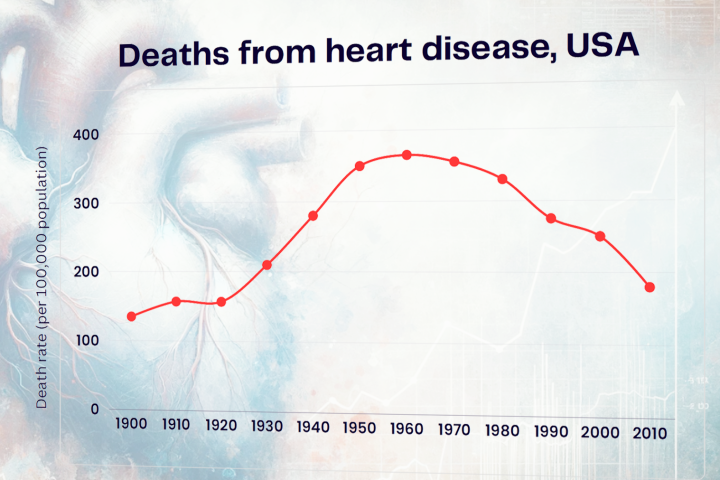
Heart disease is the leading cause of death in many parts of the world, including the U.S., England and Canada, so it's not surprising that bioengineers at Duke University are excited by what they believe could be an important first step toward growing a living “heart patch” to repair damaged heart tissue. In a series of experiments using mouse embryonic stem cells, the bioengineers used a novel mold of their own design to fashion a three-dimensional "patch" made up of heart muscle cells, known as cardiomyocytes. The new tissue exhibited the two most important attributes of heart muscle cells - the ability to contract and to conduct electrical impulses. Read More
Breathing easier could be as simple as crossing the street
By Darren Quick
20:01 October 7, 2009 PDT

Low emission vehicles, such as the Toyota Prius, promise to dramatically cut levels of noxious fumes on city streets. But, until such vehicles start to dominate the roads, people still have to cope with what spews forth from the tailpipes of their fossil fuel-powered cousins. However, researchers have recently found that pedestrians may be able to reduce the amount of traffic pollution they breathe in simply by crossing the street. Read More
3D cryo-imager can identify a single cancer cell
By Mick Webb
10:22 October 1, 2009 PDT

Recent developments in the fight against cancer have promised better ways to both identify and treat the disease. Adding to the ever growing list of advancements is Dave Wilson, a Professor of biomedical engineering at Case Western Reserve University in Cleveland. Frustrated by blurry low resolution optical images of diseased tissues, he has developed a cryo-imaging system which can identify and pinpoint the exact location and number of cancer cells in a particular area while displaying the findings as a detailed three dimensional color cyber model. Read More
Fitbit activity monitor keeps tabs on your every move
By Paul Ridden
04:19 October 1, 2009 PDT

Fitbit is an activity monitor which conveniently clips to pants, shirt or wristband and pays careful attention to what you are doing. It counts your steps, records distance traveled and tells you how many calories you've burned. When you're not being active it'll record data on how long it takes you to fall asleep, how many times during the night you awoke and how much sleep you actually managed to get. Go within a few feet of its base station and it will automatically upload the data to a website for subsequent detailed analysis and storage. Read More
Diamonds could soon be used to probe living cells and drug molecules
18:41 September 30, 2009 PDT

While working on their long-term goal of achieving a true quantum computer, a team of researchers from Stanford University, the Joint Quantum Institute, MIT and Texas A&M University has recently discovered that tiny nitrogen impurities in diamonds make outstanding magnetic probes in the cellular and molecular scale, with important applications that could truly benefit medical research. Read More
The River Gym - harnessing renewable energy from burnt-off calories
By Paul Lester
18:00 September 30, 2009 PDT

It seems clear that our ability to more efficiently harness forms of renewable energy is vital to the future of our planet, but aside from the archetypal 'hamster in a wheel', few models have effectively relied on energy generated from living creatures. The River Gym is one of the more innovative concepts to break water in recent times and looks to cash in on our desire to exercise to stay fit and healthy by capturing the energy we expend when burning calories. Read More
A microchip that detects the type and severity of cancer in just half an hour
By Darren Quick
21:13 September 29, 2009 PDT

Because the signature biomarkers that indicate the presence of cancer at the cellular level are generally present only at low levels in biological samples, detecting them is a procedure that usually takes days and involves a room filled with computers. Now researchers have used nanomaterials to develop a microchip small enough to fit in a device the size of a mobile phone, and sensitive enough to do the job in 30 minutes. Read More
Cochlear launches next-generation BAHA hearing aid that's iPod, Bluetooth ready
10:33 September 29, 2009 PDT

Hearing aids have come a long way since the ear trumpet; from the traditional aid that simply amplified sound and delivered it to the ear via an earpiece (air conduction), to the so-called "bionic ear" that works by directly stimulating auditory nerves inside the cochlea with an electric field. But the journey continues, with newer technologies which use the bones of the skull to conduct sound. Now Cochlear has launched a new direct bone conduction device, the BAHA BP100, that delivers significant improvements in speech understanding in noisy situations (about 25%) and better bone conduction hearing performance than ever before. It can also integrate with other lifestyle accessories such as iPods and Bluetooth adapters. Geoffrey Baird spoke with audiologist Anthea Arkcoll about the new device - listen to the Podcast or Read More
Hookworms may protect against asthma and other allergies
By Darren Quick
00:24 September 29, 2009 PDT

There has been a worldwide increase in the prevalence of asthma and other allergies over the last century. With the biggest jump in cases coming from the developed world, it's been theorized that the rise in such diseases could be the unintended result of the success of modern hygiene in preventing childhood infections. A new study conducted in Vietnam has added credence to the view that parasitic gut worms, such as hookworm, could help in the prevention and treatment of asthma and other allergies. Read More
Breathe easy (or not) with the Dust Alert sensor
By Darren Quick
02:48 September 28, 2009 PDT

Out of sight might mean out of mind, but it doesn’t necessarily mean out of danger, particularly in the case of small airborne particles. Such particles can severely affect your health, with effects ranging from asthma and bronchitis to lung cancer. If you’re worried about the possible presence of airborne particles in your home researchers at Tel Aviv University (TAU) have developed a sensor called ‘Dust Alert’ that could confirm your suspicions or better yet, set your mind at ease. Read More
Nanotech battlefield treatment to ease pain and limit dangerous side effects
By Jeff Salton
00:59 September 28, 2009 PDT

The threat of injury and even death hangs over the head of most active men and women in the armed forces. However, the treatment for some injuries can be life-threatening as well. Soldiers unfortunate enough to be injured in the line of duty are usually given morphine for pain relief in the field. However, morphine also depresses normal breathing and blood pressure, sometimes to near-fatal levels. So medics need a short-acting drug that aids normal respiration and heart beat, but in doses that still allow effective morphine pain relief. It’s a bit like a dangerous ‘balancing act’, made worse because it’s often performed under extreme circumstances. Using nanotechnology, University of Michigan (U-M) scientists have developed a combination drug that promises a safer, more precise way for medics and fellow soldiers in battle situations to give a fallen soldier morphine, together with a drug that limits morphine’s dangerous side effects. Read More


Freedom Glen
- November 25, 2009 @ 02:47 UTC