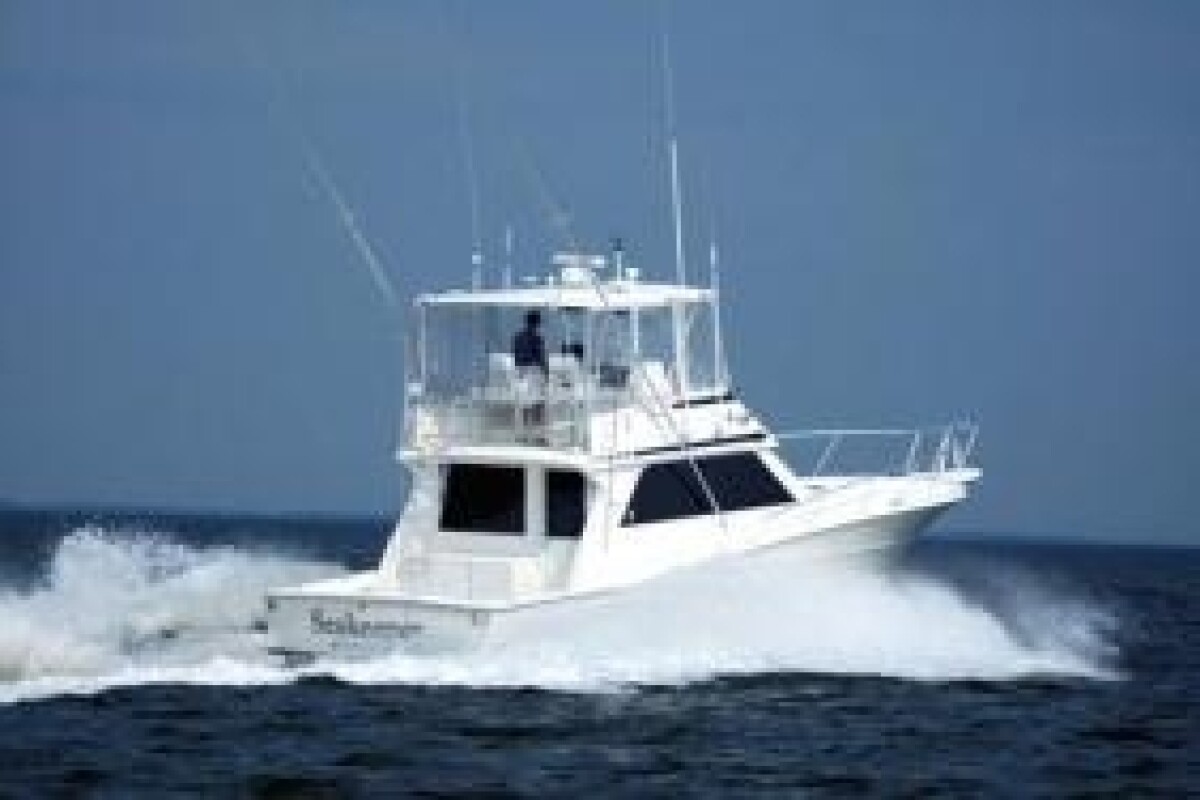



July 13, 2007 The experience of cruising the ocean waves is a joy for some, but as anyone who suffers from sea sickness can attest, it can also be completely unbearable. Boats pitch, roll and yaw much like aircraft and to counter the disorientation this causes to our bodies gyroscopic stability systems and trim tabs have been developed to combat the rolling seas. Seakeeper is one company addressing this issue through the research and development of stability devices for small boats under 100 feet that include products for both low and high speeds. The company has developed different systems depending on the size of their craft and how it is used. The first is a gyroscopic stability system designed to combat what’s considered the worst part of the boating experience - low speed boat roll - and the second is a stability system that makes use of sensor-adjusted small control surfaces (like a more advanced form of the traditional trim tabs) that adjusts the motion of a boat moving at speed and improves comfort, handling, and safety.
The Seakeeper Gyro stability system is quite unique in that unlike other products, which the company claims are heavier and less efficient, it uses a computer controlled flywheel rotating in a vacuum-enclosed sphere. The reduced air friction of the vacuum enclosure enables the flywheel to spin at higher speeds, thus producing a greater stabilizing effect. The system is suitable for boats upwards of 35 feet and multiple units can be fitted to boats larger than 55 feet. The advantage of the gyroscopic system is that it is efficient at low speeds, reducing low speed boat roll. As the system is controlled by a motion-sensing computer, unlike more common passively regulated systems, it adjusts to a wide range of wave conditions, giving it a performance edge over competitors.
Also available is the Seakeeper stability control system which features transverse blades that act as control surfaces (much like the rudder on a boat or aircraft) that instead of being actuated by the pilot are automatically adjusted by sensors. The system is suited to craft of all sizes but efficiency is limited below 20 knots.
The Seakeeper Gyro is available for US$55, 000 plus installation and the Seakeeper stability control system costs US$21,500 plus installation.
A video demo is available at the Seakeeper website.
Systems designed specifically for boats at anchor like this one from Quantum are also available and an informative discussion of some of the different stabilization systems can also be found here.