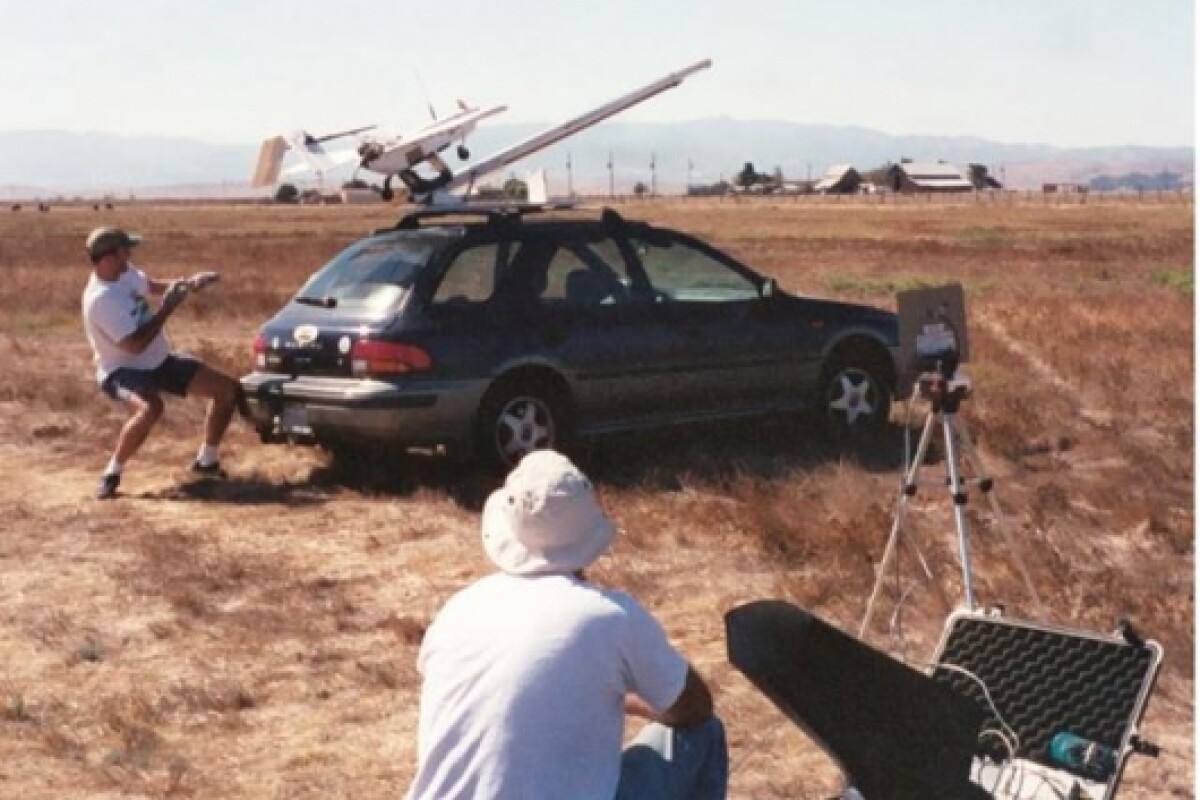



March 12, 2005 The MLB Bat is a small, unmanned aerial vehicle (UAV) that has capabilities typically found only in much larger and more expensive UAVs. The Bat is a complete UAV system that can operate autonomously, deliver high quality video imagery, and fits into two suitcase-sized containers. The aircraft operates autonomously, has a 6-hour duration, and telemetry range of up to 10 miles and can be launched from the roof of a car. Currently being evaluated to assist in protecting the soldiers traveling the dangerous dusty roads of Iraq, the Bat has many potential applications in peacetime operations too.
Because of its small size and lightweight, the Bat is launched using a car-top, bungee-powered catapult and lands autonomously on wheels. A small clearing is adequate to operate the Bat. A 2.0 cubic inch gasoline or JP-8 fueled engine powers the aircraft and its muffler reduces the noise level to nearly inaudible at a distance of 750 feet.
The engine can operate from several fuel types (gasoline, Jet-A, pump diesel, JP-8) without modification in the field. Typical altitude for operation is 100 to 1500 feet above the local terrain, with a cruising speed of 30 mph. The Bat can easily operate in limited visibility conditions without danger to persons on the ground or possibility of detection. Our aircraft have flown under 200 foot cloud ceilings and in gusty winds exceeding 25 mph.
A pusher engine configuration is used to permit unobstructed installation of sensors in the nose and the Bat has uses gimbal turret camera system that is automatically aimed at locations specified by the operator.
The turret carries both EO and IR cameras and the camera choice is specified by the operator through the MLB ground station. The aircraft and its systems are modular in design for simple maintenance and replacement of damaged components. The airframe is constructed of Kevlar, carbon fiber, and aluminum. The Bat has a 72 inch wingspan and a ready-to-fly weight of 22 pounds.
MLB has developed a compact ground station for operating the Bat using a laptop PC as the primary control console. The PC has a moving map display showing the aircraft’s location, speed, and height in real time. There are system monitoring windows to keep track of the Bat’s performance and a live video capture window. The flight path is specified as a series of mission legs, each with its own altitude, speed, and waypoint. The operator can change the mission plan by “dragging and dropping” waypoints over the map display and then uploading the new flight plan to the aircraft.
Specifications:Name: MLB Bat 3Uses: Short range surveillanceCountry: USAPowerplant: 26cc 2-stroke engineFuel: Gasoline, JP-8, Jet-A, pump diesel, or Kerosene. 50:1 oil mixed in.Dimensions: 6 x 4 x 1.25 feet assembled, 3.5 x 1.25 x 1.5 packed.Weight: 22.0 lbs with full fuel and payload.Performance: 30 to 65 mphDuration: 6 hours (8 hours with optional wing tanks)Ceiling: 10,000 feetRange: 10 mile radius (telemetry limited), 180 miles fuel limited.Sensor: Sony HAD color video camera with variable zoom (25x) 480 lines resolution. 3-axis gimbal camera aimed by flight computer for geo-referenced imagery. Optional thermal IR camera. Payload:5.0 lb max assuming sensor payload is removed, 2.5lb otherwise
Data Link: 2.4 GHz video downlink, 900 Mhz 2-way modem, 72 Mhz uplink RCLaunch: Bungee-catapult launchedGuidance: Autonomous flight operation. Mission plan created with MLB ground station GUI. Optional manual RC control for landing in restricted areas.Recovery: Land on wheels autonomously in 100 x 50 meter area.Operational: Winds up to 25 kts, operable in moderate precipitation.
Price:US$48,000 (includes one aircraft with 3-axis turret, color cameras, complete ground station, catapult launcher, support equipment, basic flight training. Additional aircraft are US$25,000 each). Optional IR camera is US$15,000.
Available from MLB